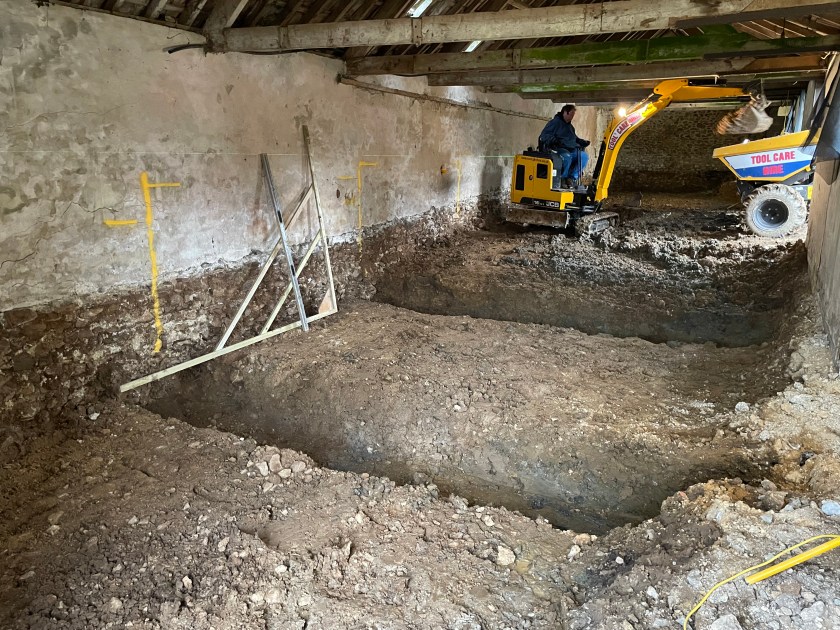
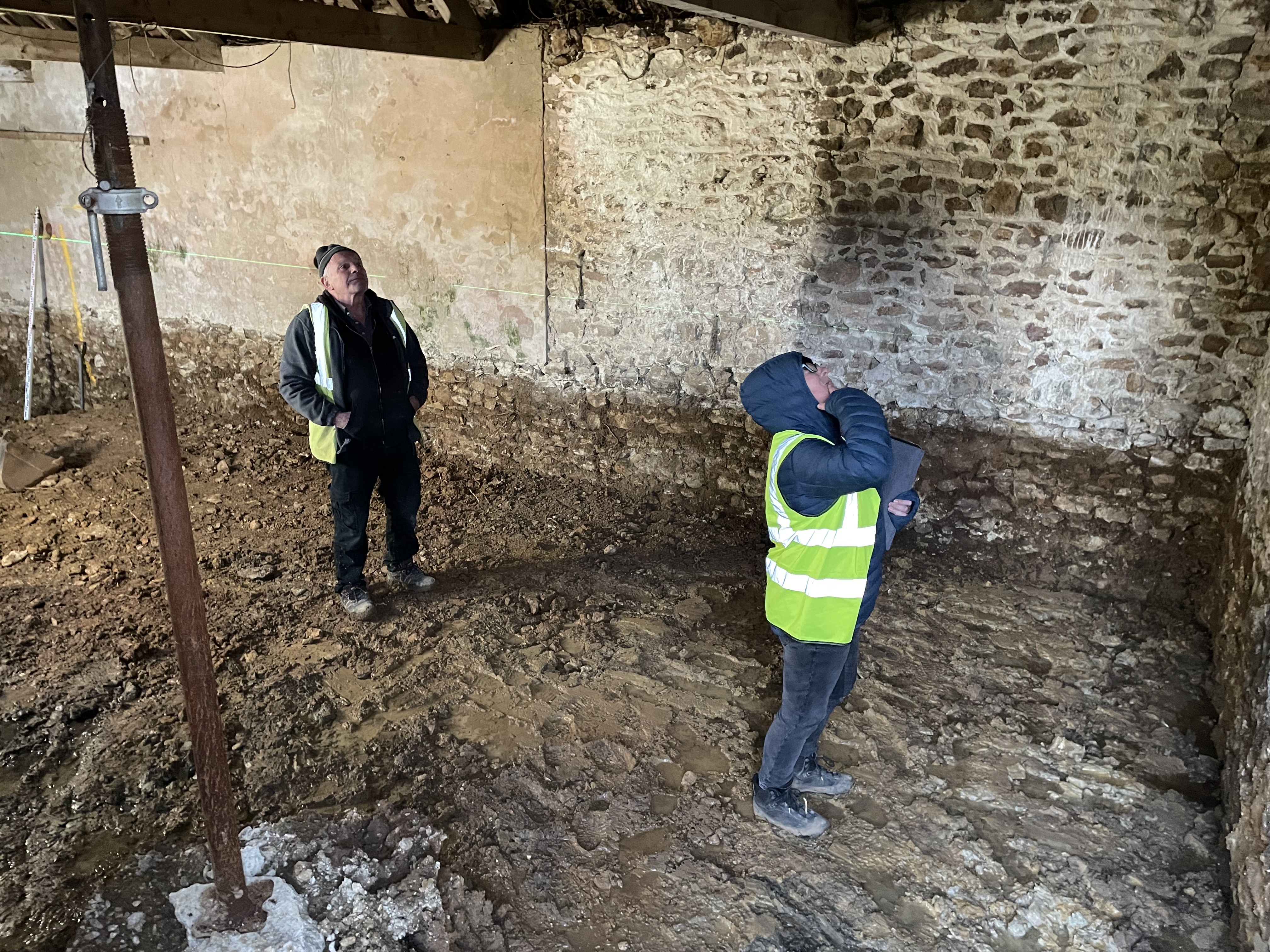
Week two, and building work seems to be progressing well. Our builders have dug out the concrete from the shippon floor, and have taken down the internal wall to open up the space completely. They’ve had to dig quite deep because the roof beams are fairly low (cow sheds don’t need much headroom), and we need to allow space for the various flooring elements, as well as making sure there’s enough height once it’s completed. Luckily the existing foundations seem to be very deep, so there’s not much underpinning required to support them (this could have been expensive!)
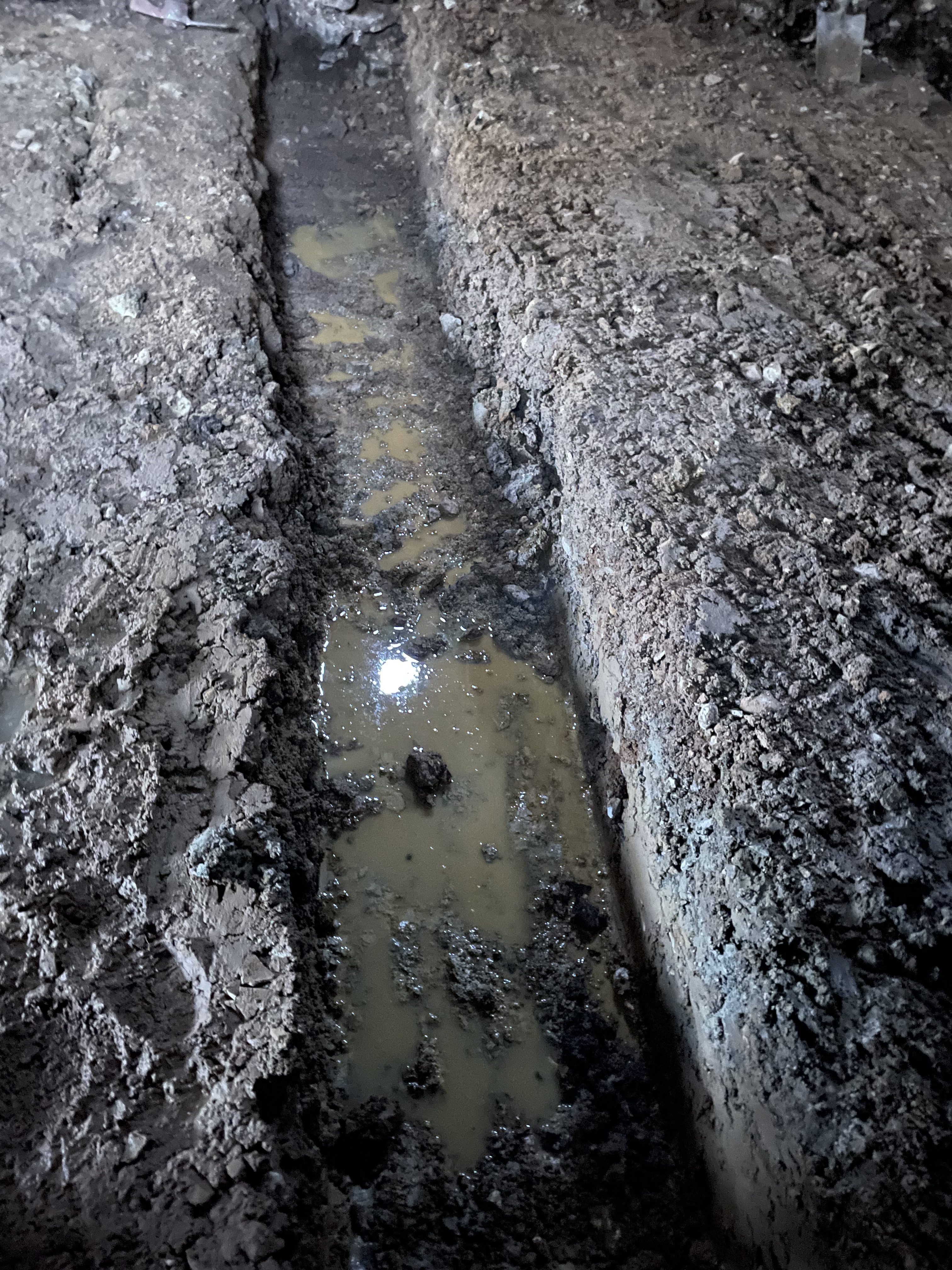
However, as they’ve been digging out the trenches for the load-bearing walls, groundwater has been coming up. This called for a visit from the damp-proofing expert, who confirmed that the whole building needs tanking (essentially covering the ground and lower walls with waterproof membrane to stop the water coming up into the building). This isn’t a cheap exercise, so it’s a bit of a headache.
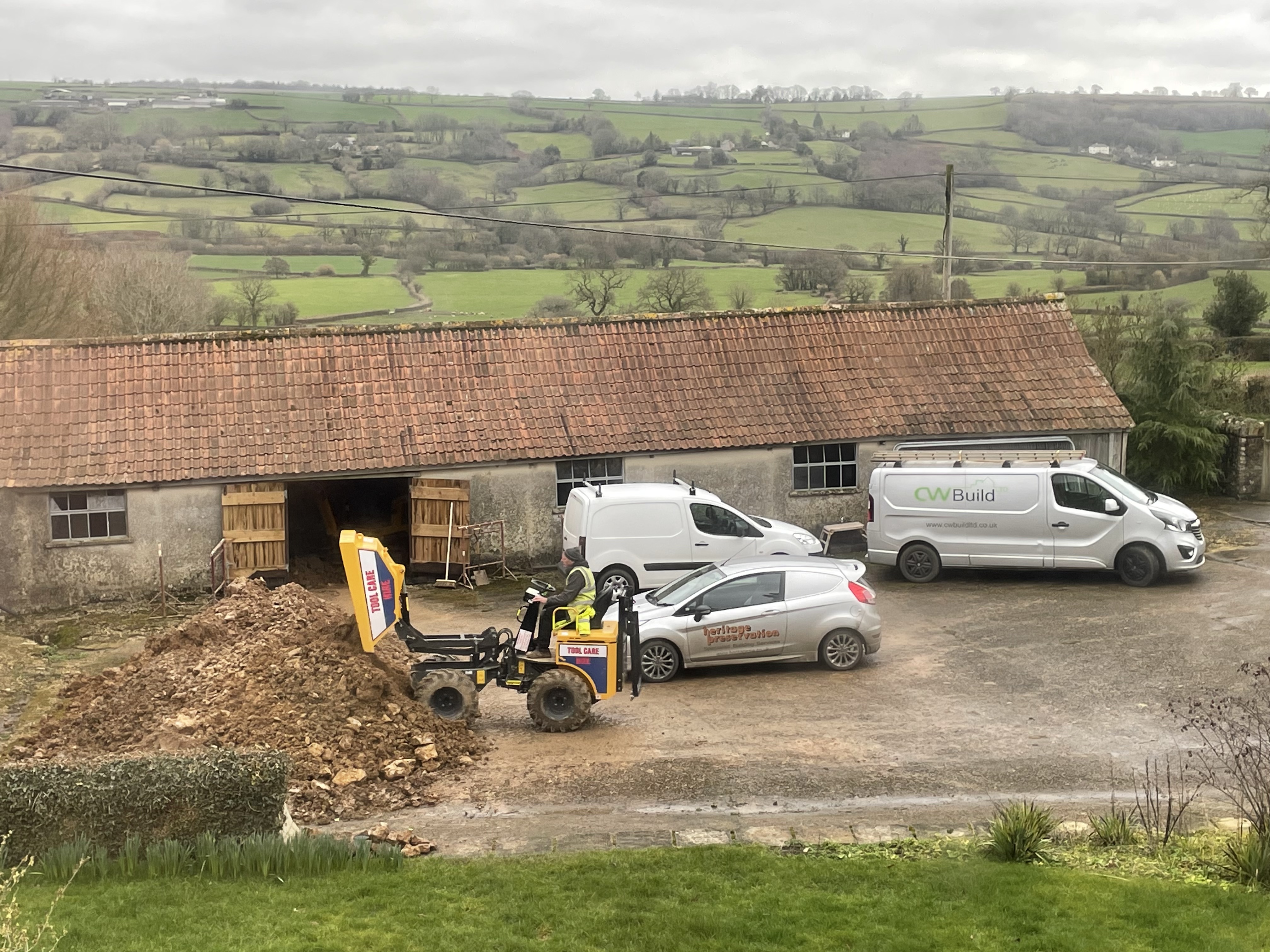
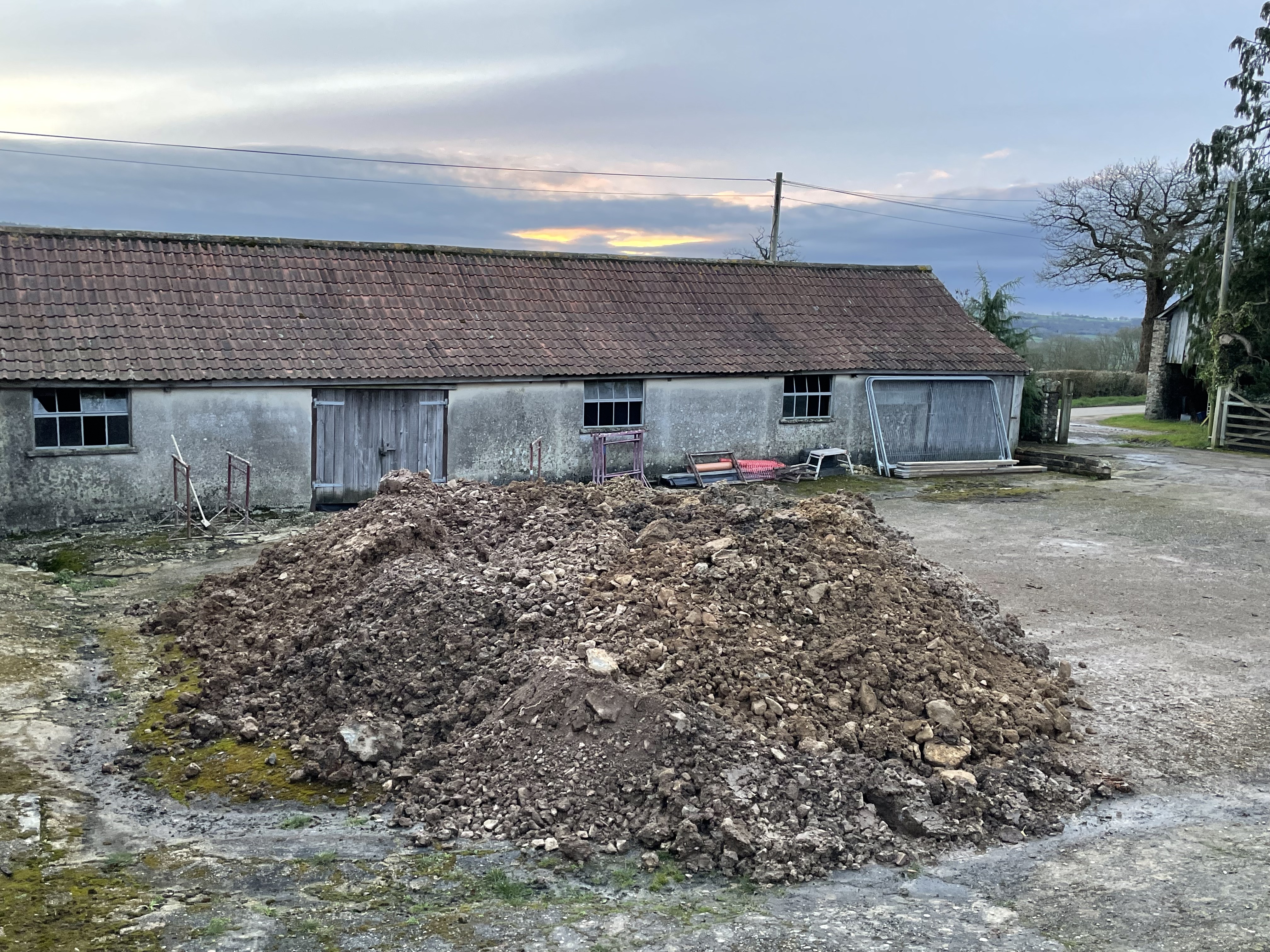
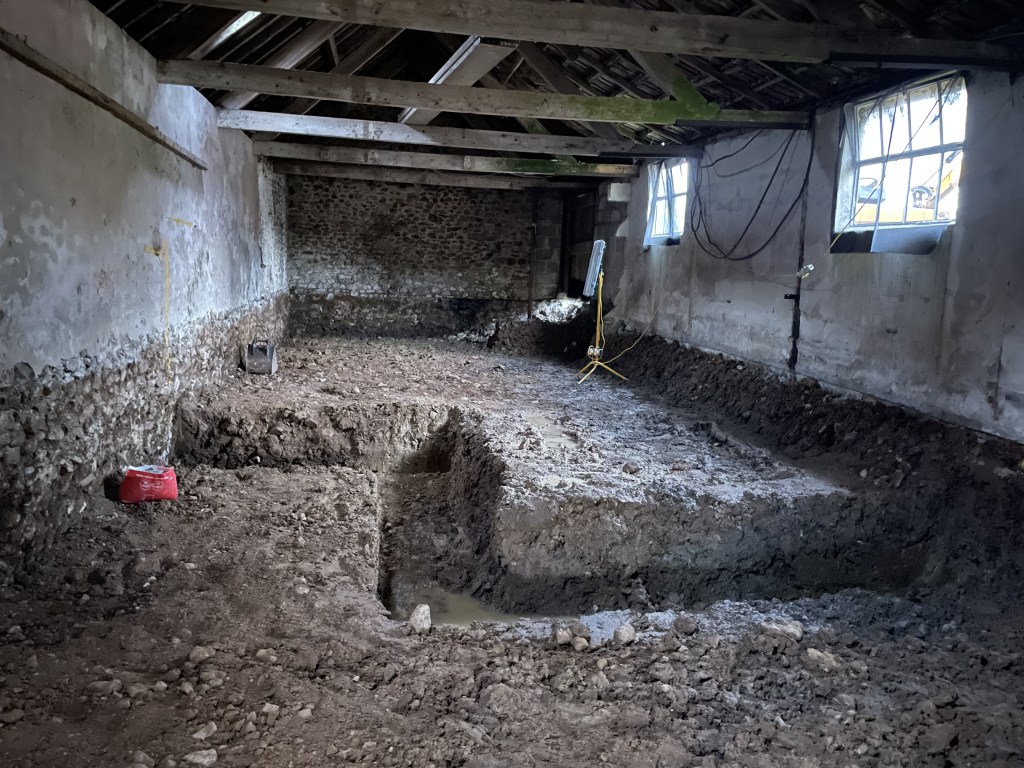

Luckily we’ve been able to save elsewhere by modifying another part of the build. The derelict barn that we’re turning into a laundry and communal area (maybe a games room, or a large meeting room if we manage to attract businesses running team-building events) is built into the hill. The original intention was to build a thick retaining wall into the hill to hold the soil back. Instead, we’re not quite sure how it works, but digging back a bit further and building two walls with a gap in-between will be as effective, and cheaper than a retaining wall, which we’re very happy about!
Thursday was a particularly busy day on site, starting with our first meeting with our builder, electrician and plumbers to discuss the different renewable technology we’re having across the site, and how everything will work together. Each building has a slightly different set-up so it’s easy to get confused! It was reassuring though to talk it through with the team as no-one seemed fazed by any of the plans. The one thing outstanding is the heating design for the communal space – its intermittent use means an air source heat pump isn’t really suitable, and electric heating will be expensive, even with the solar tiles. One for our electrician to think about!
On Thursday afternoon John also had the first official site meeting with our architects, builder, and site manager to go through more of the detailed aspects of the build. The latest view of costs and the programme timeline is dependent on finalising these (specifically confirming our window design and choosing a supplier, as this has a long lead time), so we set time aside this weekend to double-check everything, to avoid holding the build up.
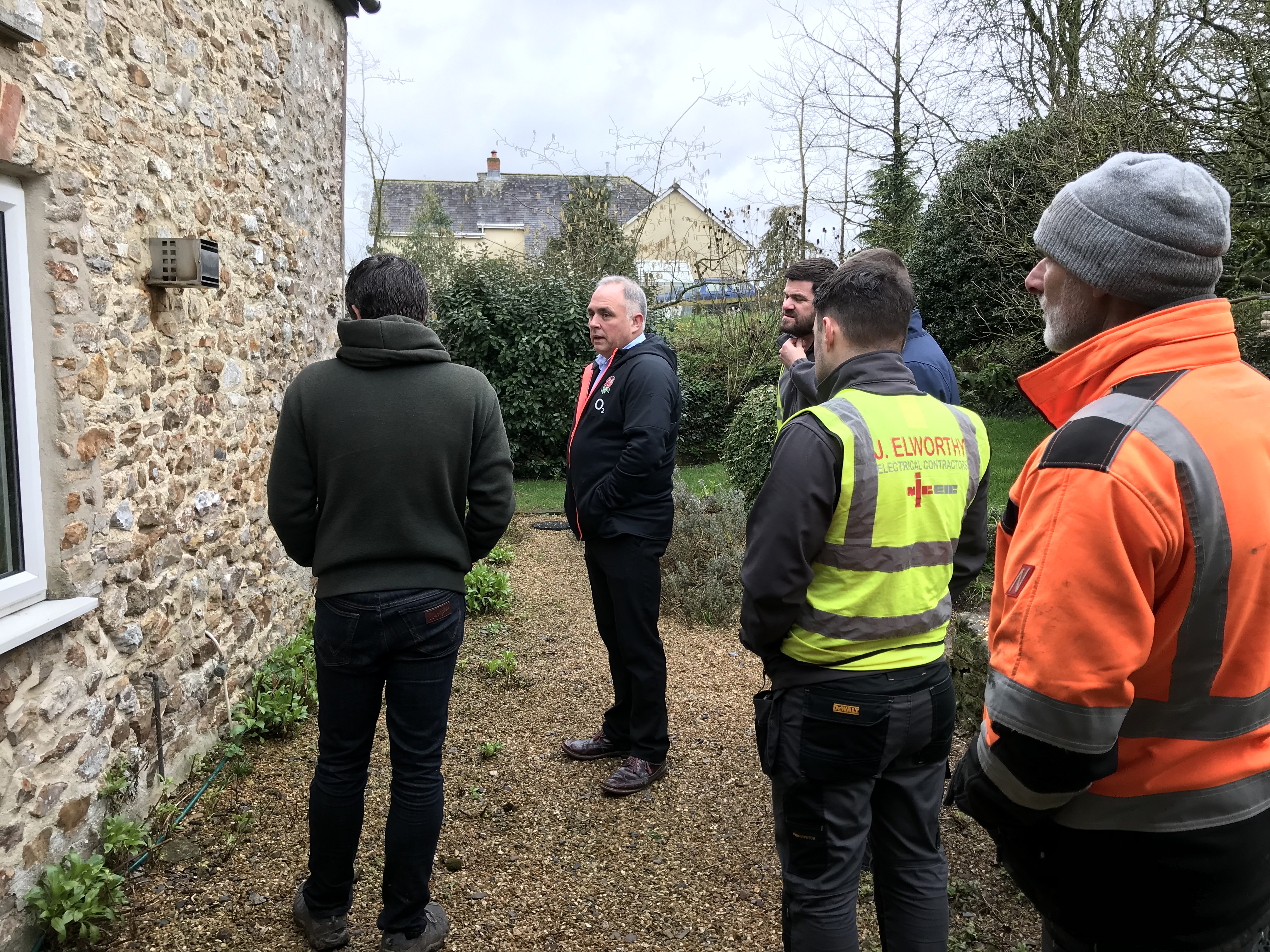
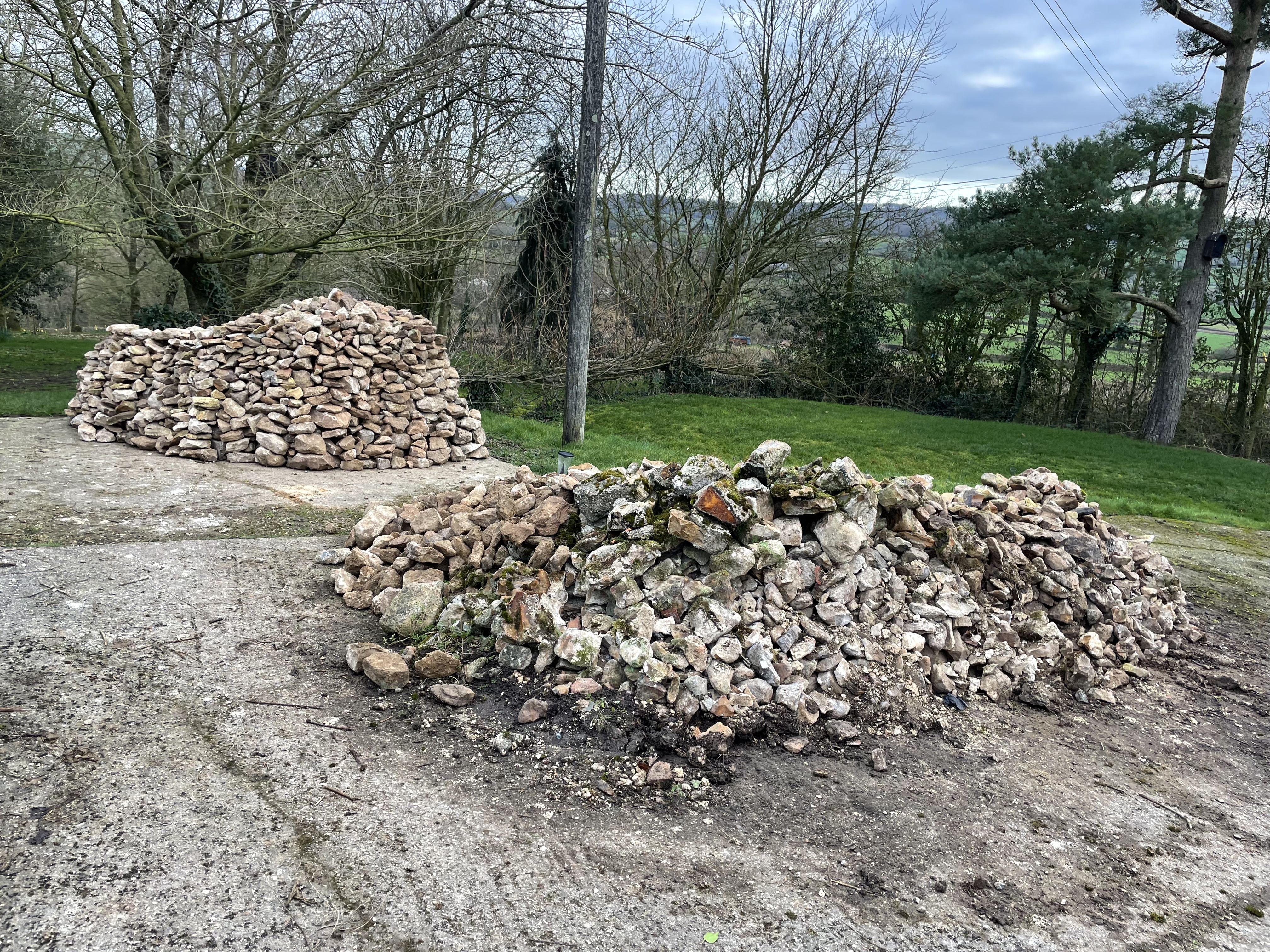
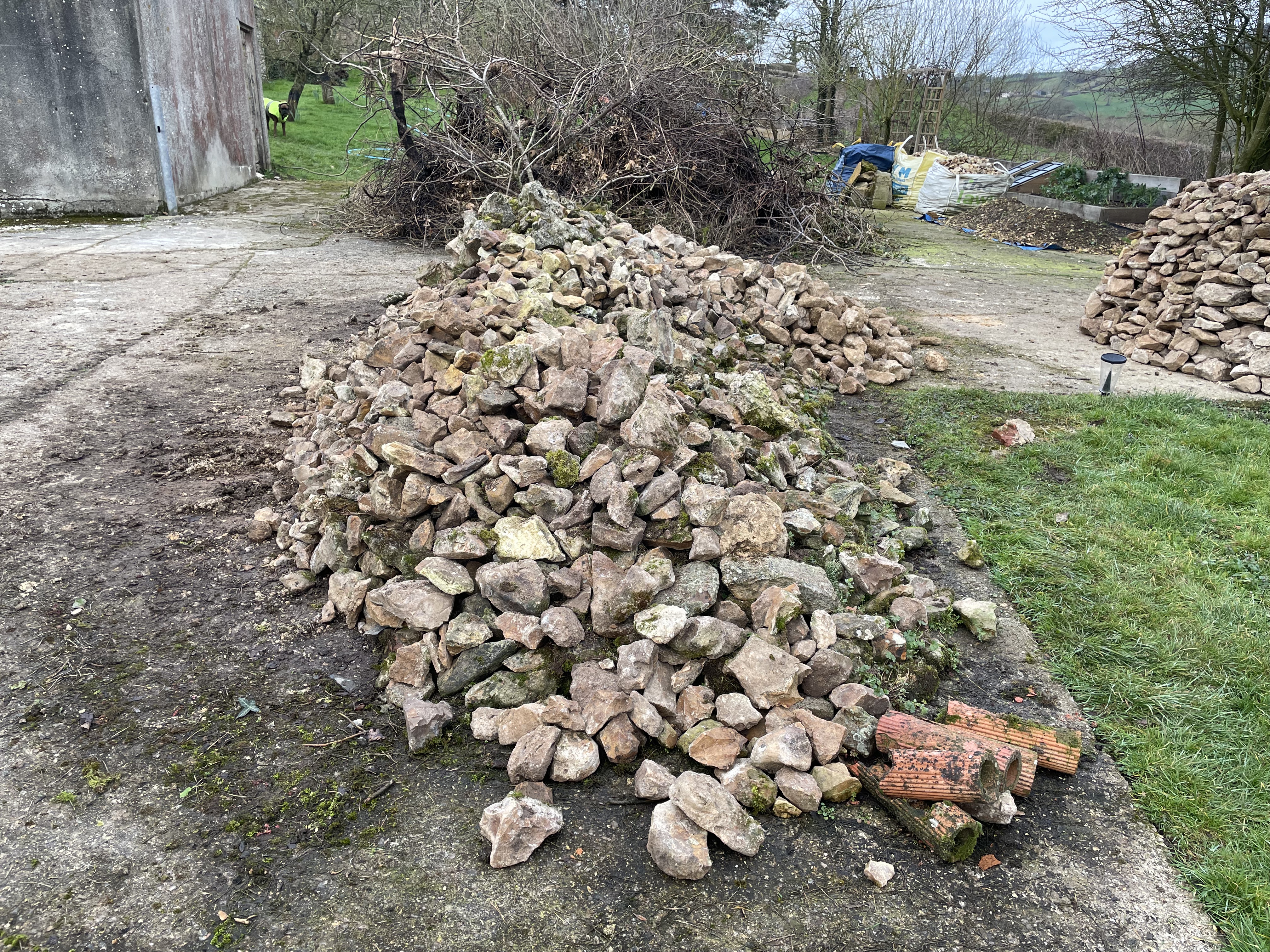
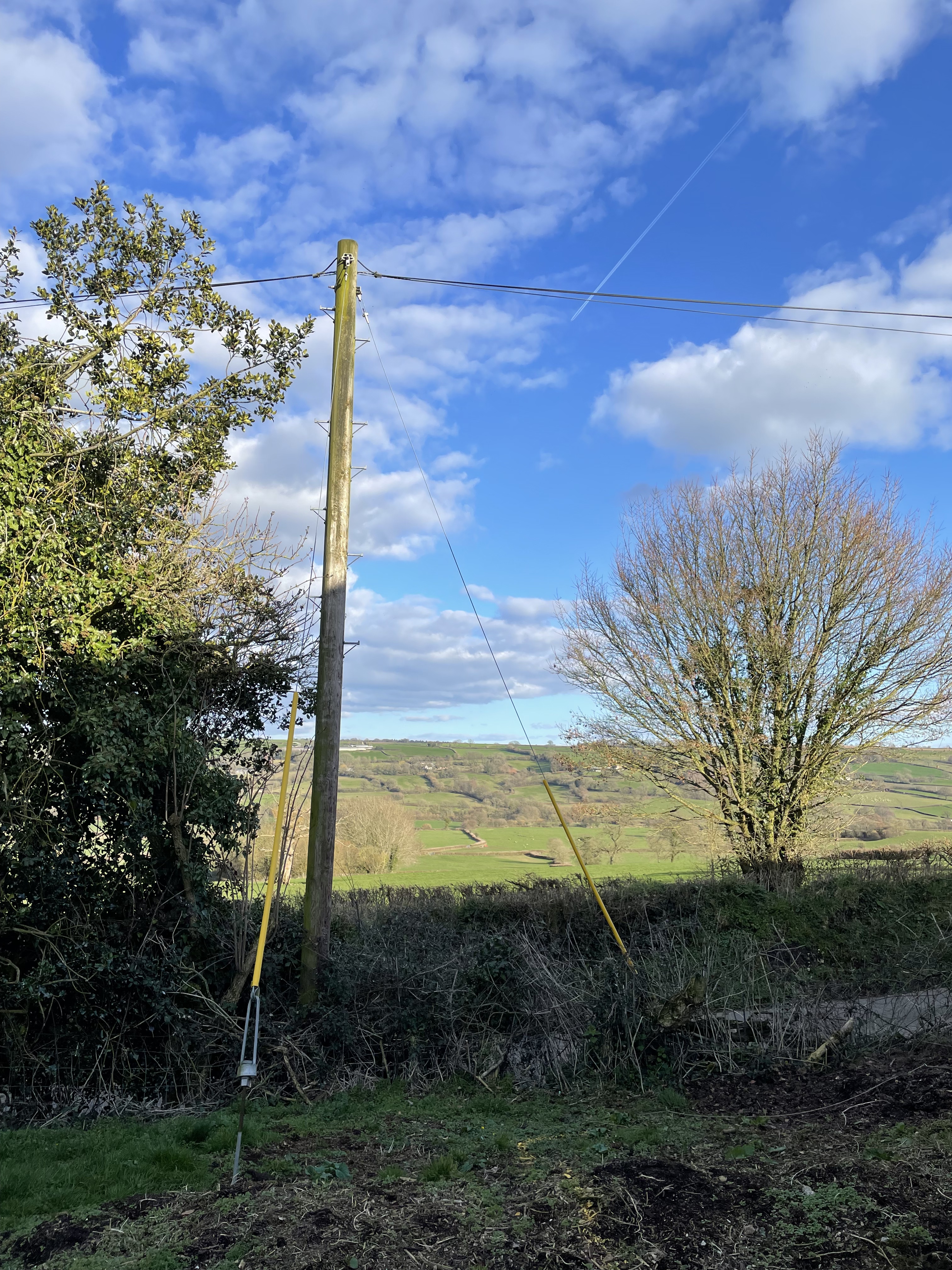
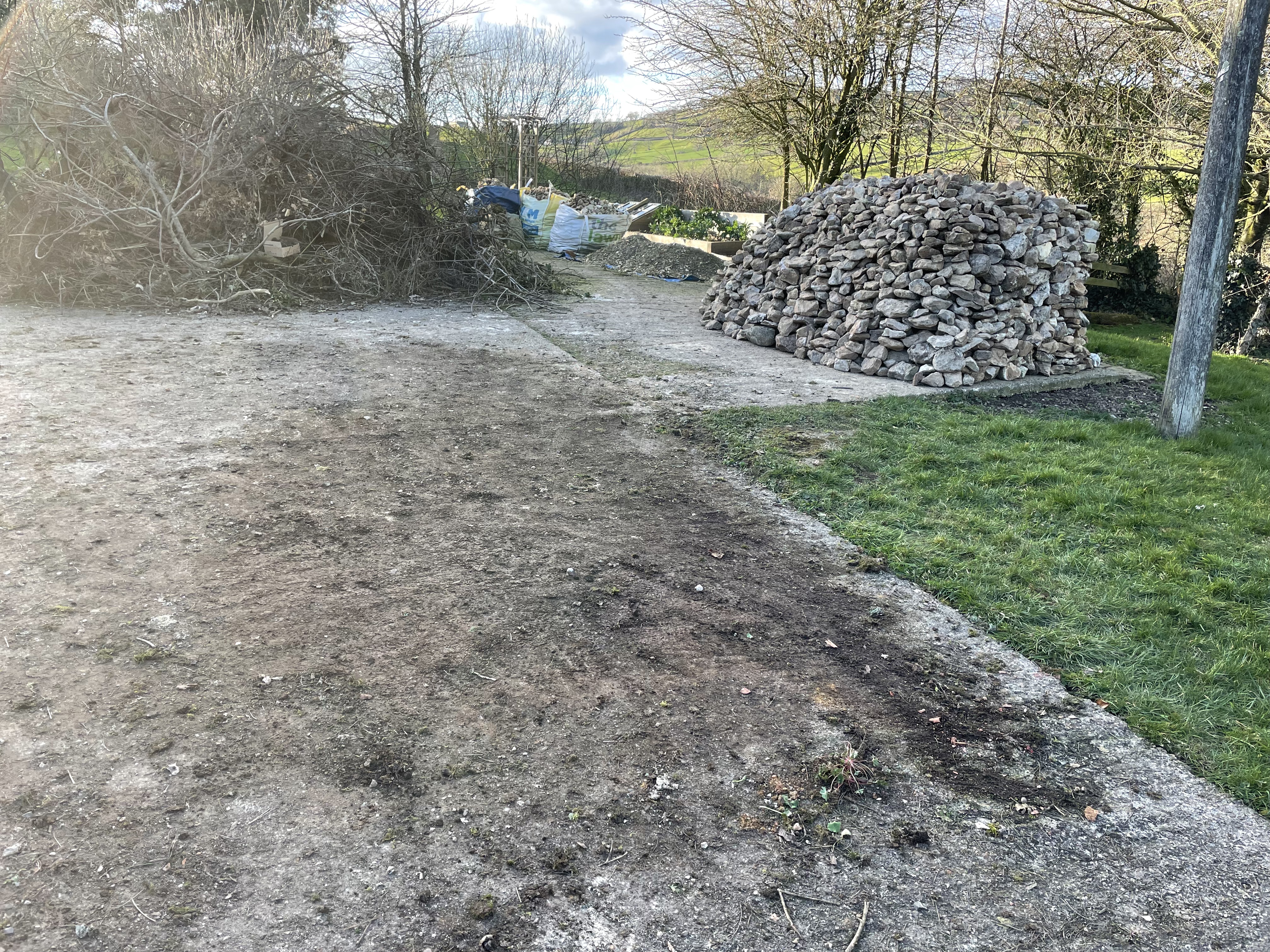
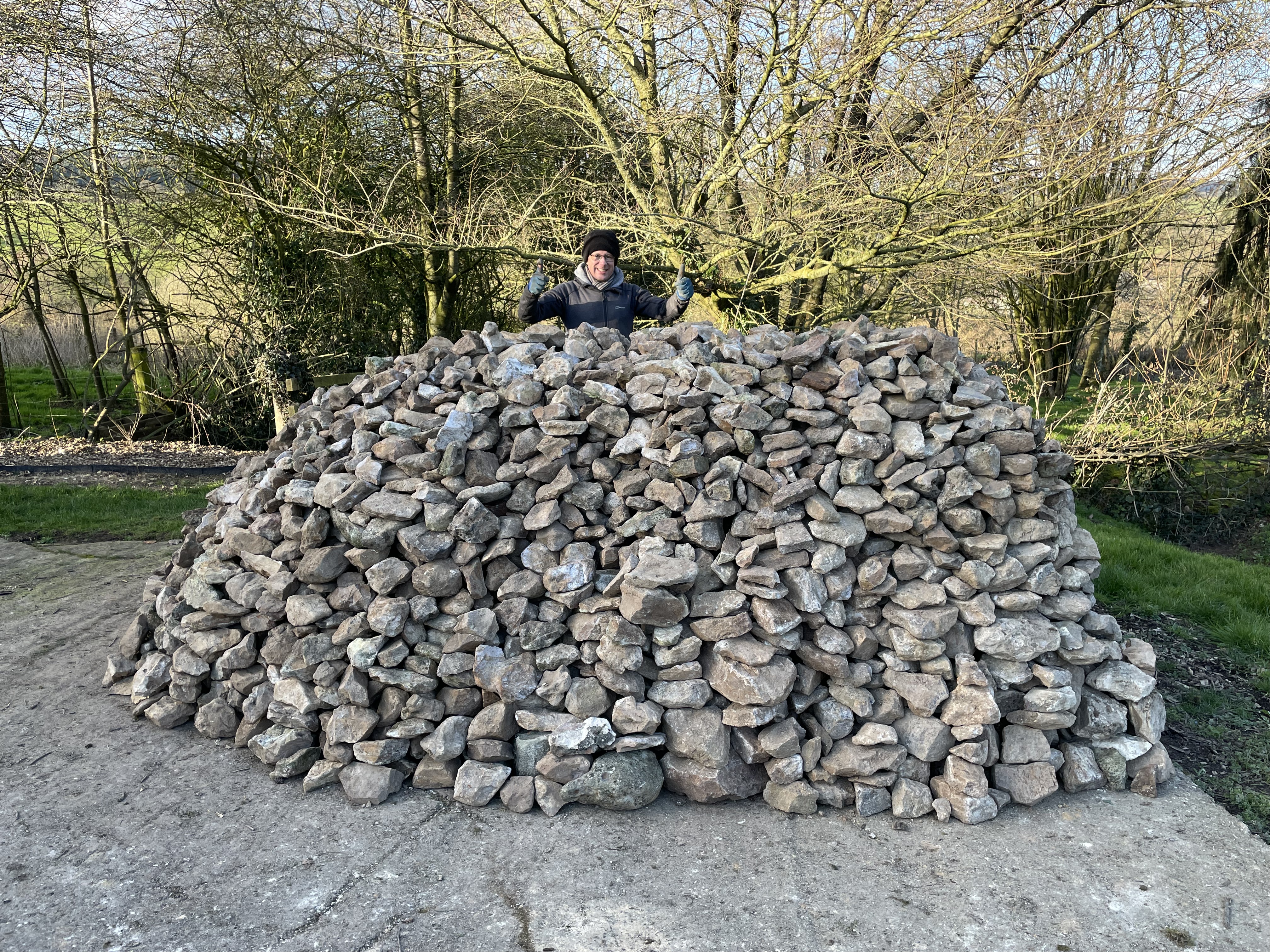
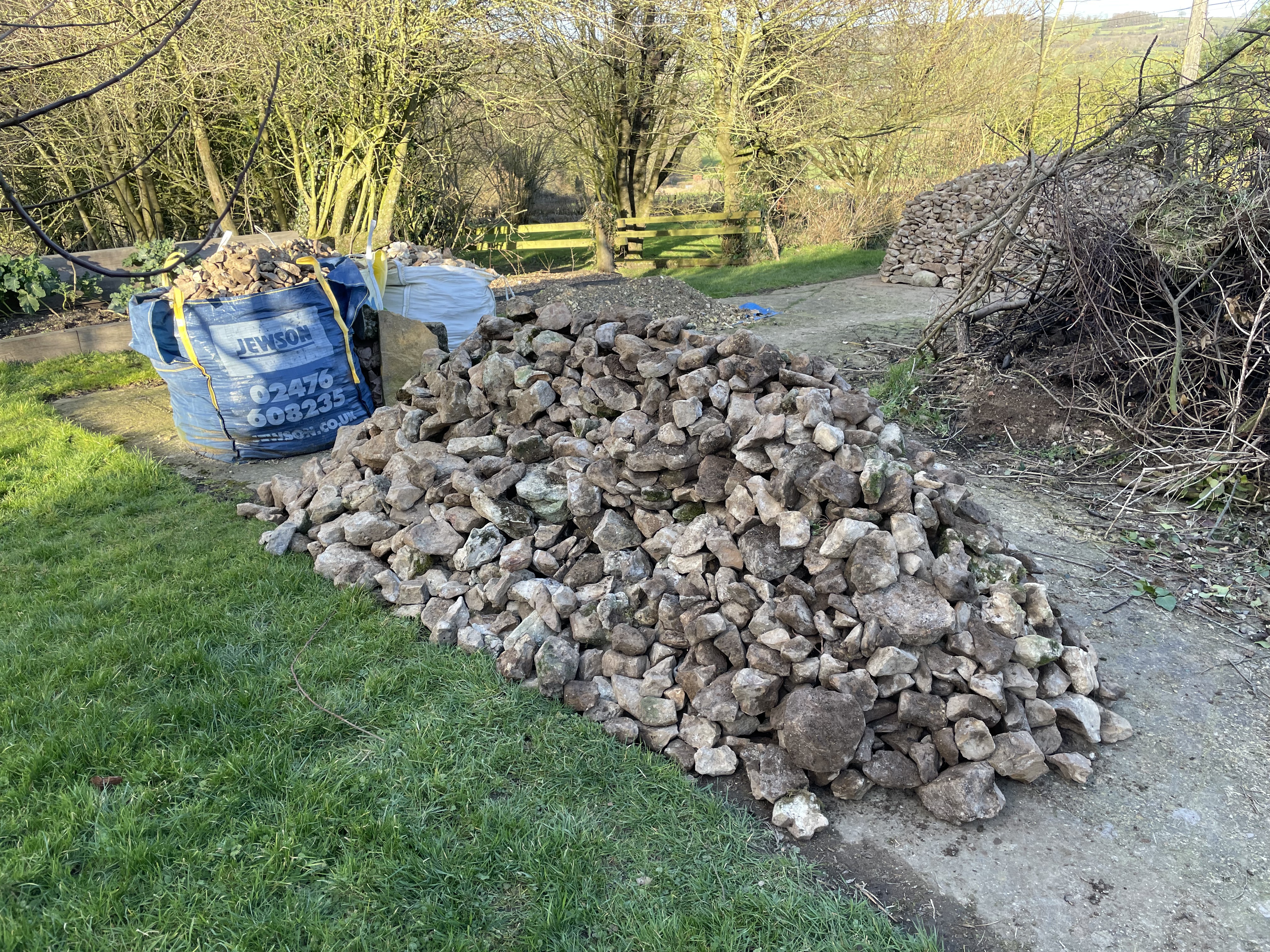
We had more positive news this week in the form of a visit from BT Openreach about the telegraph pole and bright yellow supporting cables that are just outside our new lounge window. We’d previously asked them about options to remove the cables, and were fully expecting to have to pay for a thicker replacement pole that could stand by itself. Instead, it turns out that the cables aren’t actually holding the pole in place at all (one has been uprooted by vegetation over the years, and the other one isn’t tensioned so is effectively doing nothing) – which is fantastic news as it means they can be removed easily. The only challenge is that – where the telegraph pole is next to the road on the border of our land – we’d either need to provide access from our side, or pay to close the road (also a ‘main’ route between villages). The huge pile of stones we’ve been saving to face our new barn is right in the way, so we needed to move this before Openreach come out.
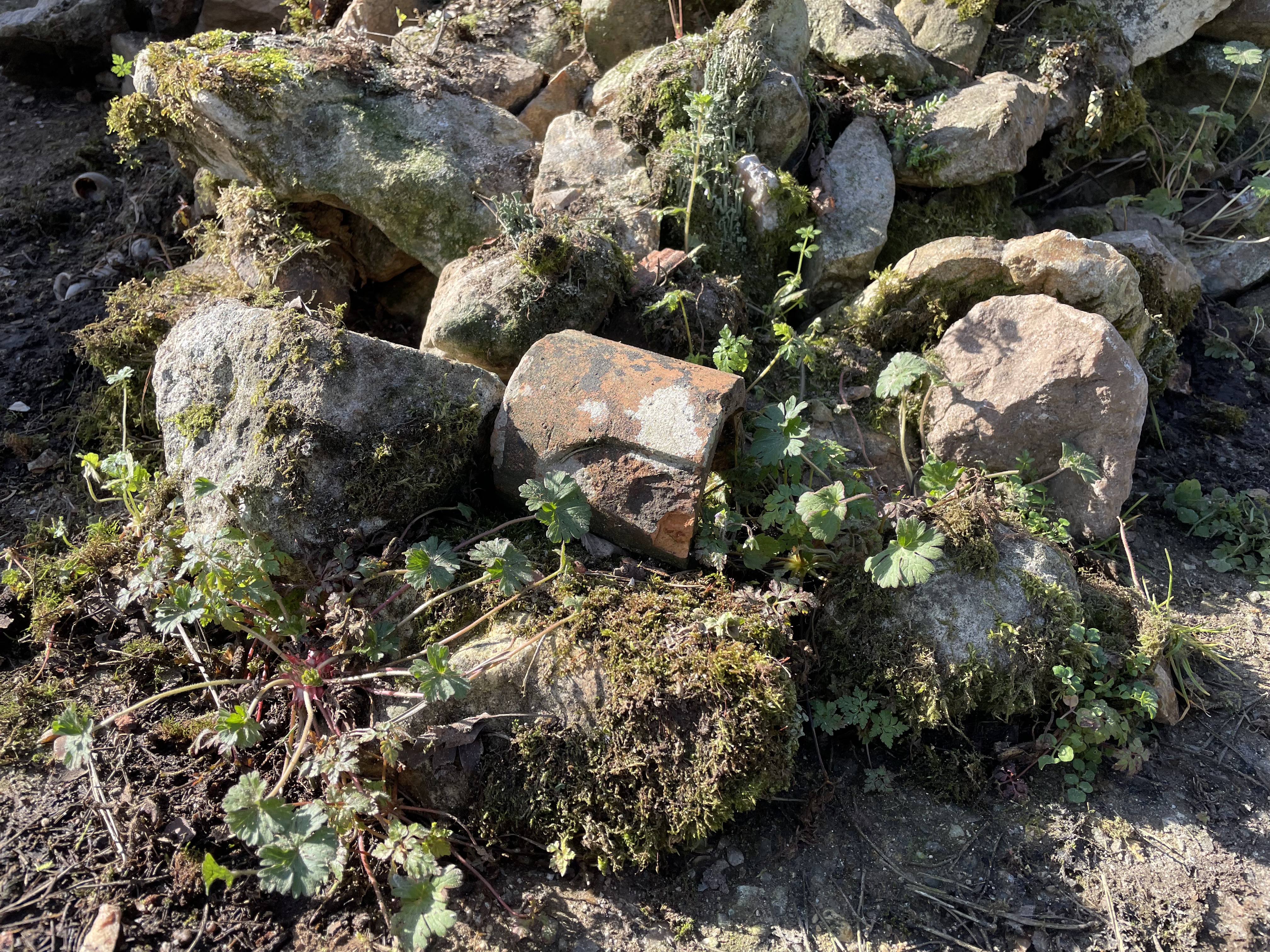
We’ve been working through the pile of stones for the last few weeks, cleaning all the dirt and moss off before stacking them ready to be used – but it’s not an easy or quick job. We’re running out of time as Openreach also need to do their work before our builders start digging the foundations for our extension, which will block access to the telegraph pole. So we’ve spent most evenings and all weekend working our way through the pile. We managed to clear about two-thirds of it, before deciding to move the rest to another part of the garden, giving us a bit more time to clean them. It’s frustrating having to move them about the place so much, but it can’t be helped – and it’s better than spending a thousand pounds to close the road!
 Ley Farm Cottages
Progress is good and all the expert advice is proving very valuable!
LikeLike