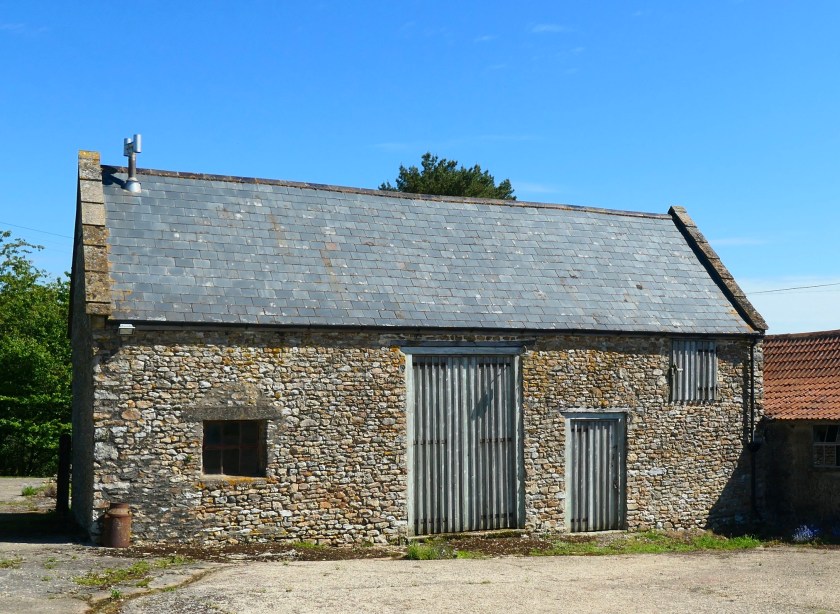
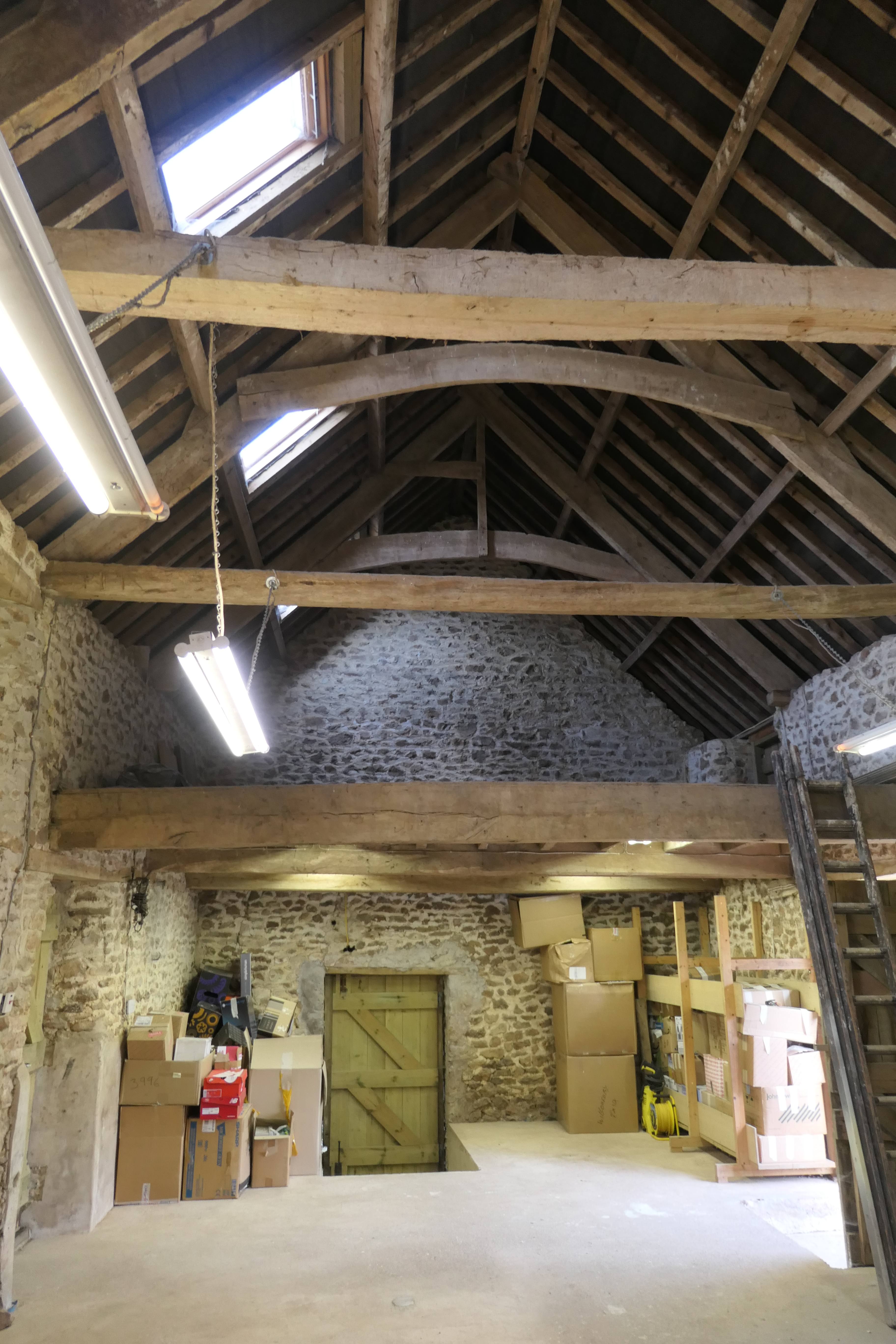
Out of all our outbuildings, the former threshing barn is in the best condition – we think mainly because it was used as a workshop by the previous owner (a highly-skilled carpenter). It dates back 200 years, and is built from the stone originally used in the 400-year-old farmhouse until it was mostly knocked down (just leaving the old hall, now our listed cottage).
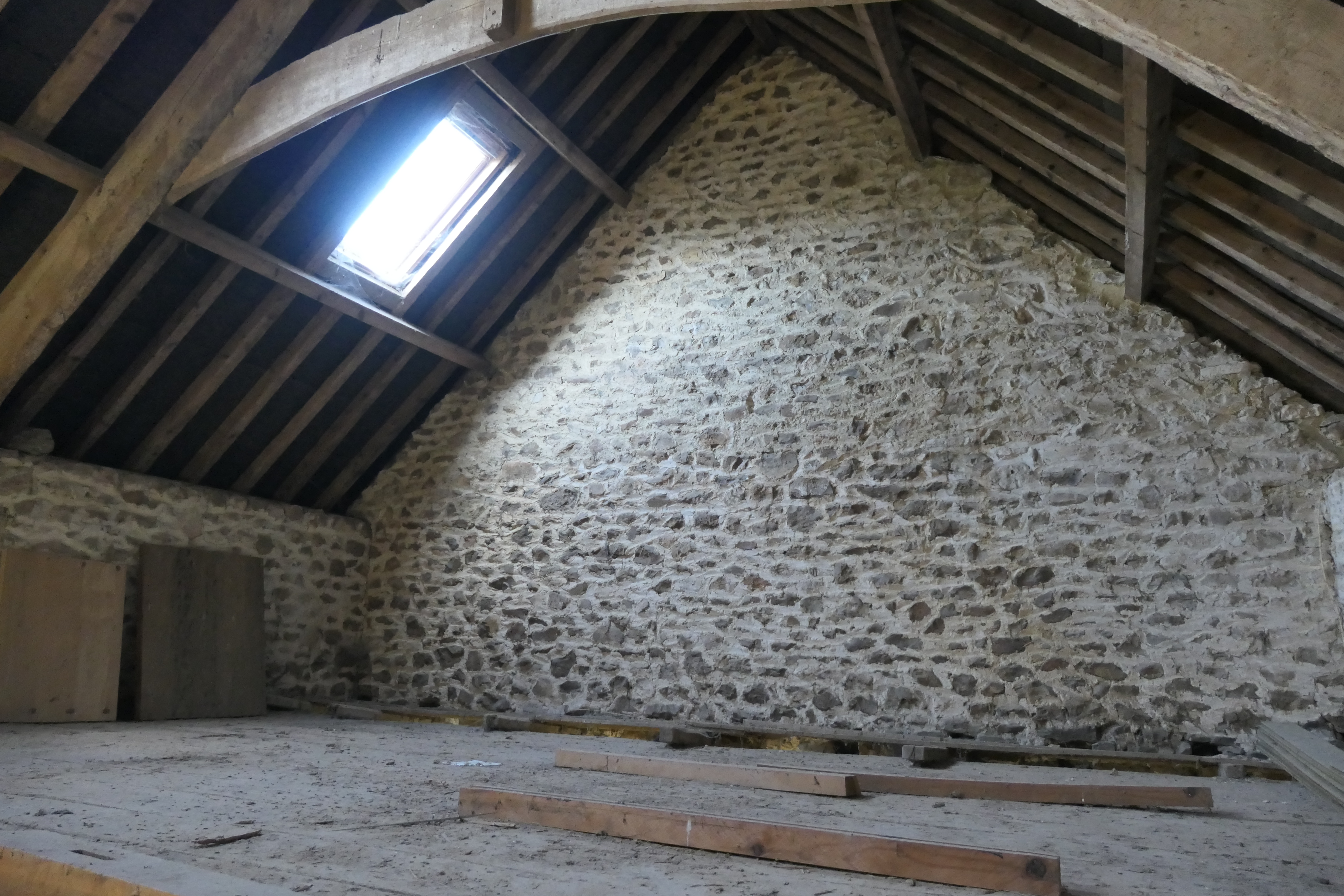
The threshing barn has a fantastic hay loft and a typical external hay loft door, still with remnants of the bales that were previously stored there. And directly below, there’s a door into the shippon, which we think means the barn would have been used at some point to store feed for the cows, with easy access to take it into the shippon (cow shed) regardless of the weather.
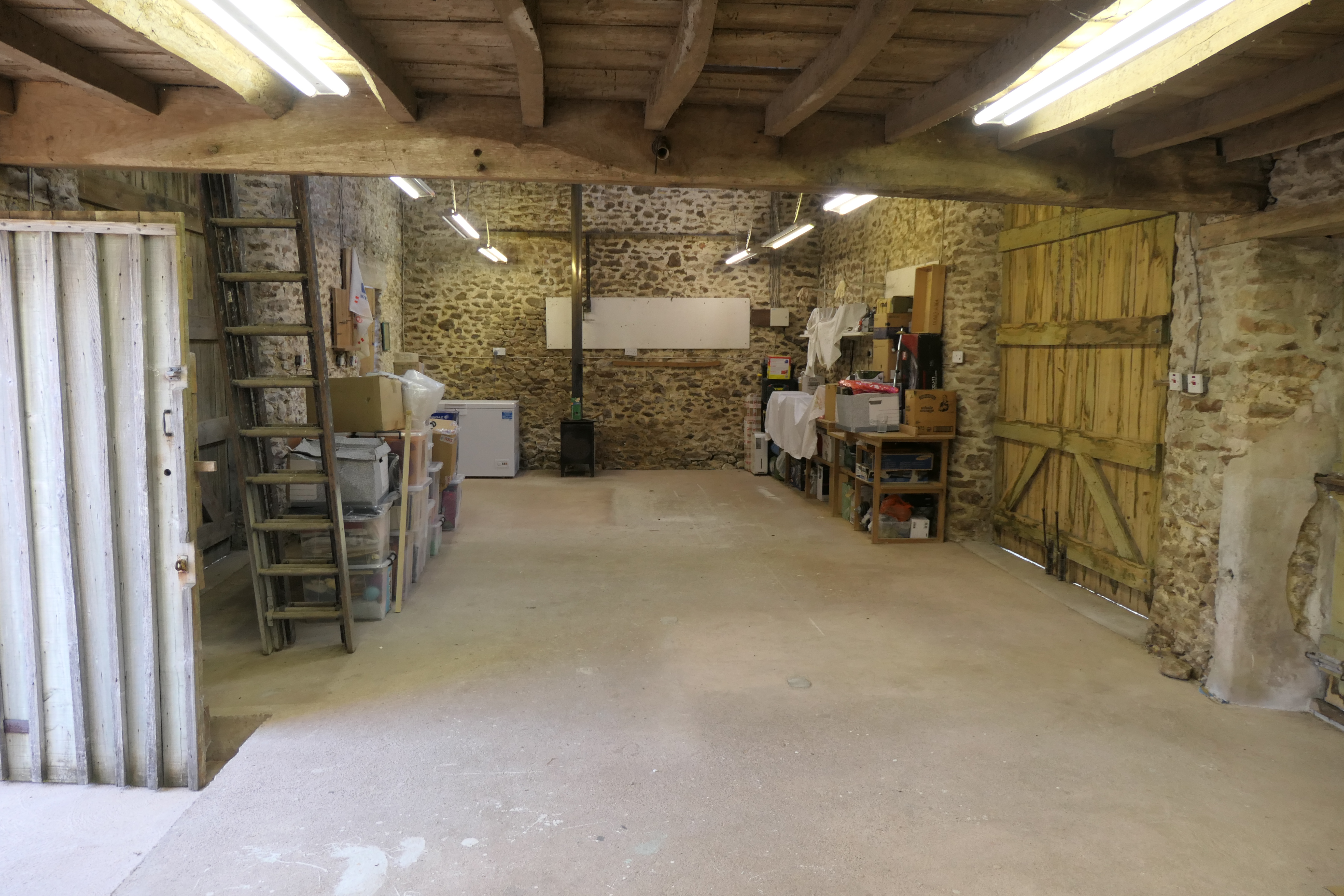
Our favourite features are the two huge doors directly opposite each other – running the full height of the barn. While we don’t have any records to show what the barn was actually used for – these are typical of threshing barns of that period. The barn would have used to beat the harvested crop on the floor (to separate the grain from the chaff), so by having the two doors open throughout, the dust and chaff would have been blown out by the through-draft.
In later years (and even when the previous owners were here), these large doors would have been used to get machinery in and out, enabling the barn to have a dual purpose as a storage barn.
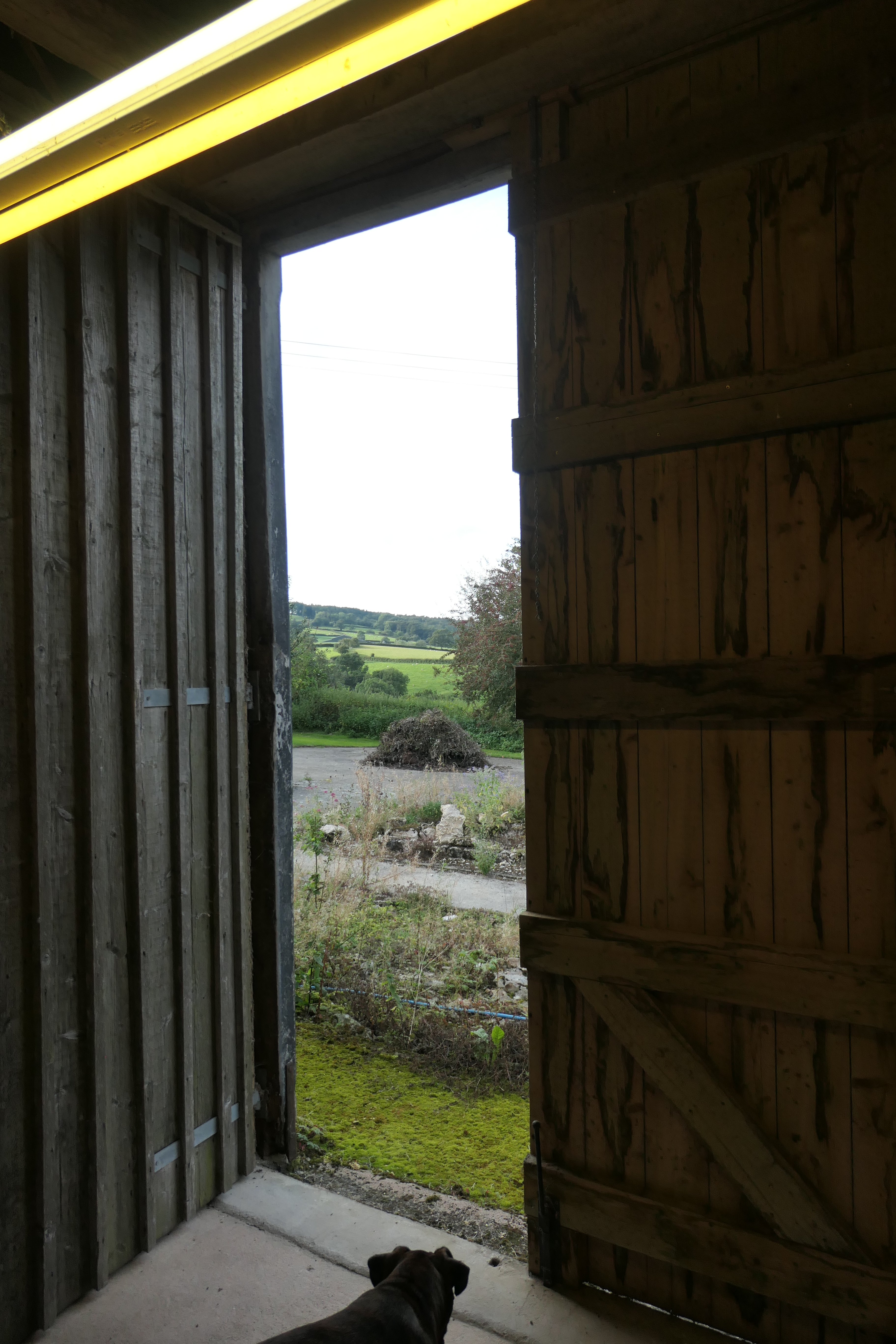
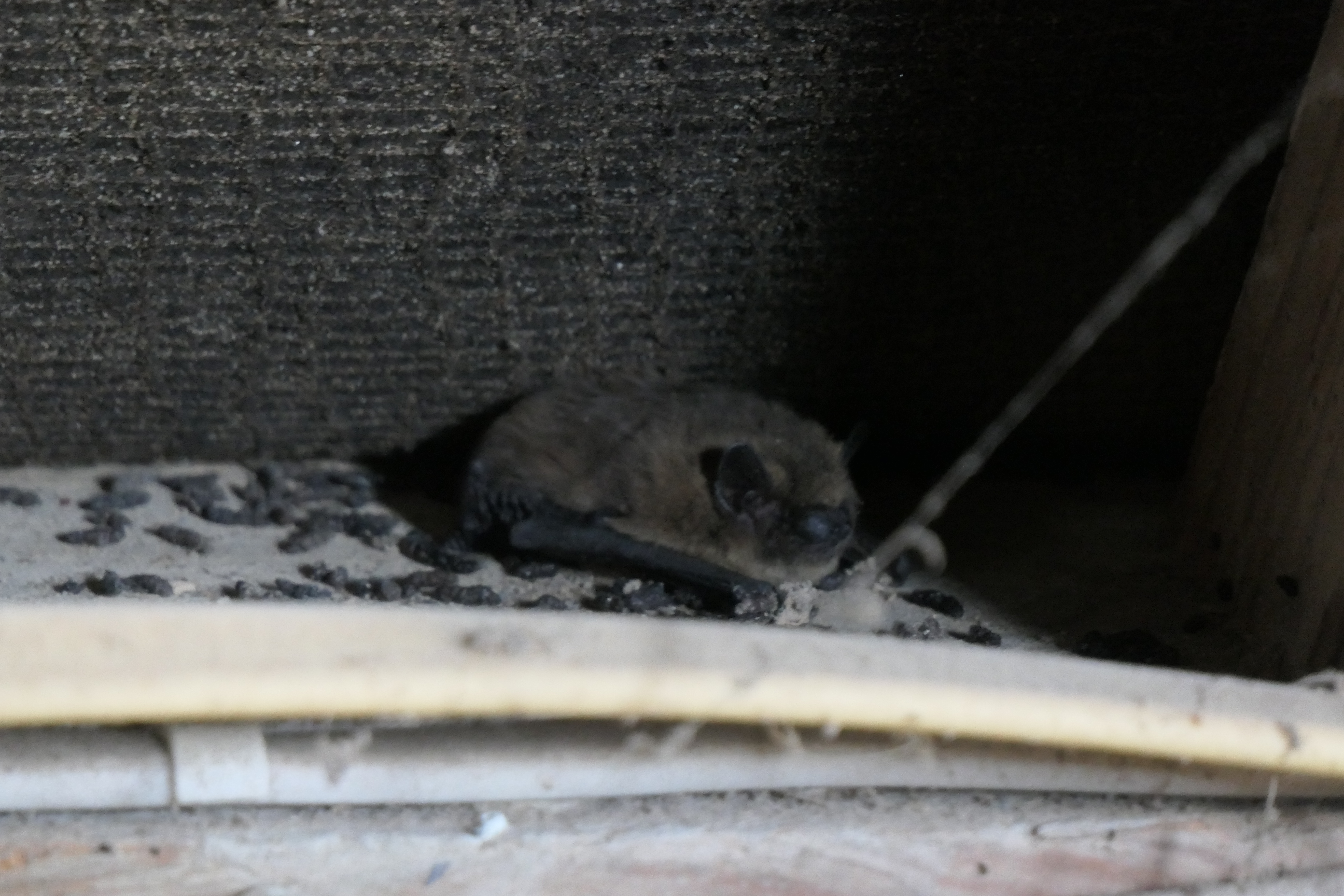
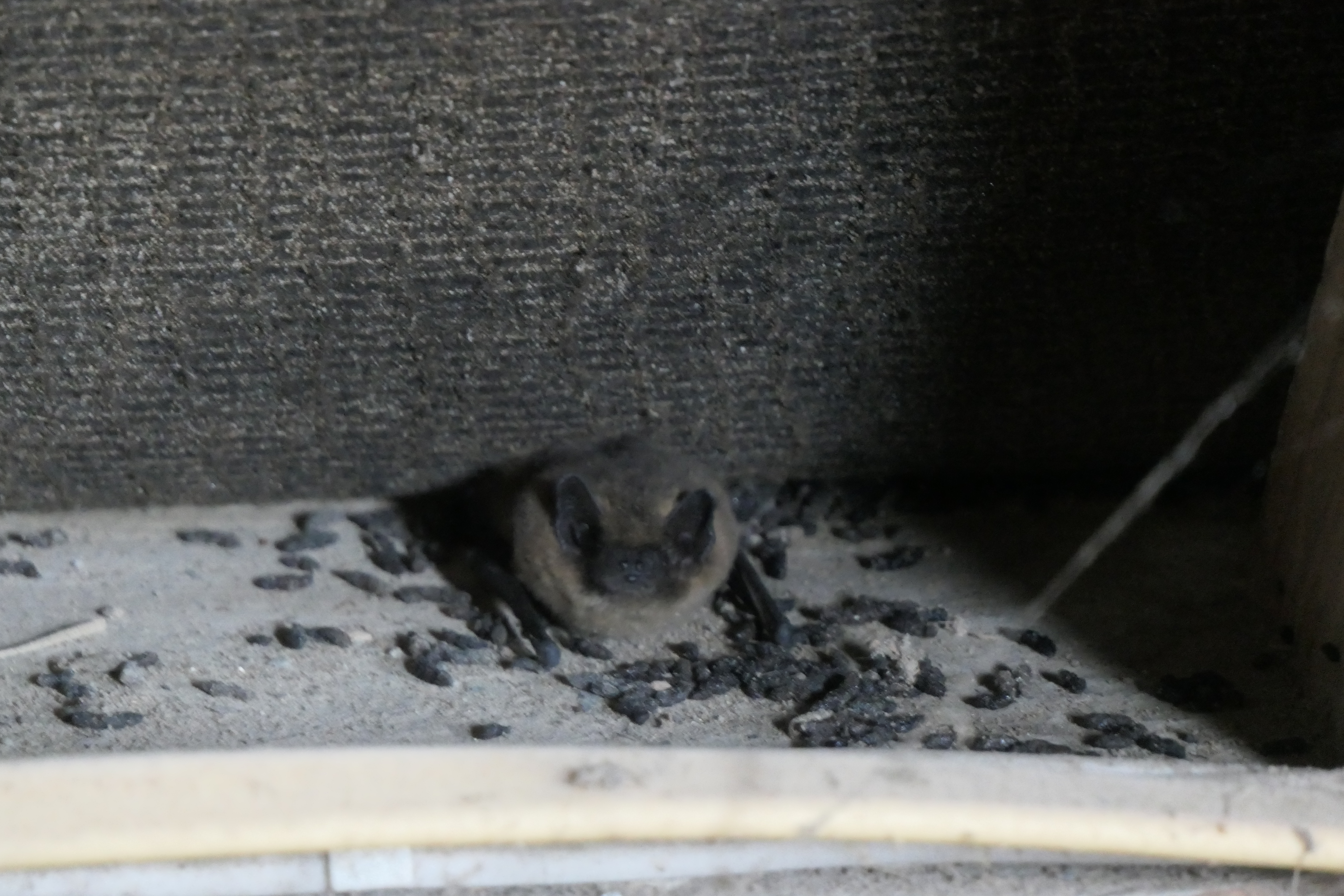
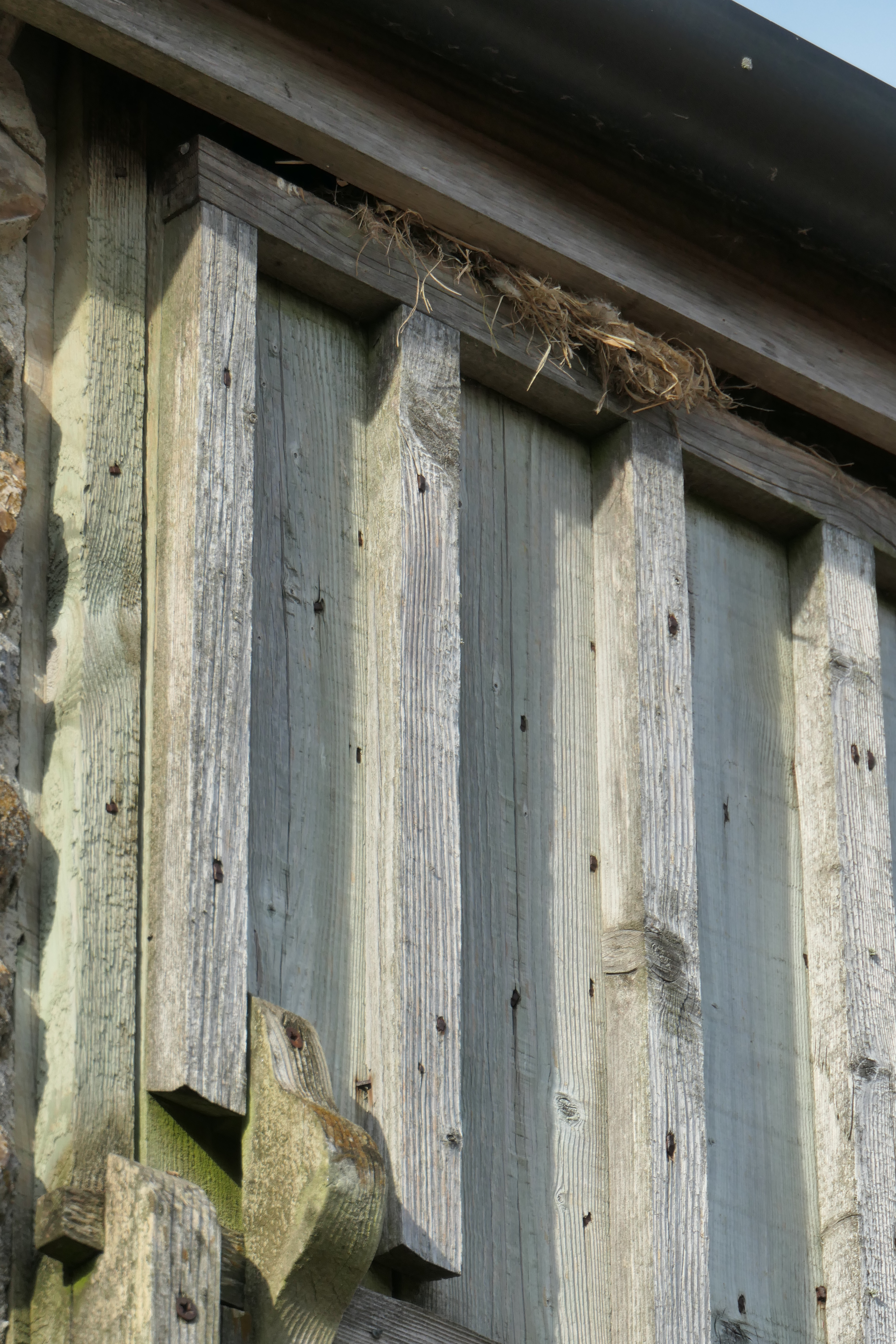
The barn has mostly been well maintained – with a damp-proofed concrete floor and what looks to be a new roof, with skylights and even an old wood burner at one end. It has an electricity supply, and an external water supply outside the back – although we’ve never found how to make this work. One problem though is that it’s not wildlife-proof – countless birds nested both in the walls and in the barn itself this year, and it’s currently home to various bats (one of which we found while taking the photos of the barn) who leave droppings and moth/butterfly wing remnants throughout the building.
At the moment we’re storing firewood, kindling and empty cardboard boxes in there, but our aspiration is to convert the barn to a three-bed holiday cottage, with two bathroom/shower rooms and an open-plan living space. We’ll turn the hay loft into a master bedroom and shower room; with the other two bedrooms & bathroom at the opposite end of the barn. We’re hoping to turn the two large doors into floor-to-ceiling glass panels (cost-dependent), so there’s plenty of natural light into the building.
We’re yet to decide what to with the expanse of concrete/stone outside the back of the barn (the footprint of a long-disappeared barn), but will likely turn it into a private patio/garden space for the barn occupants, for anyone who rents it on its own without the farmhouse and shippon.
 Ley Farm Cottages
It will be a beautiful three bedroom holiday cottage when transformed – fingers crossed in the not too distant future 🤞
LikeLiked by 1 person