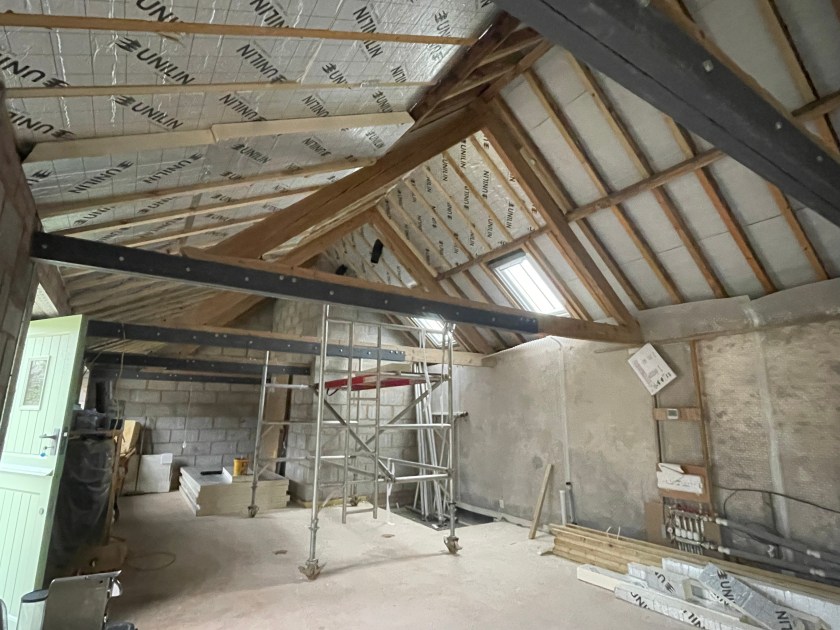
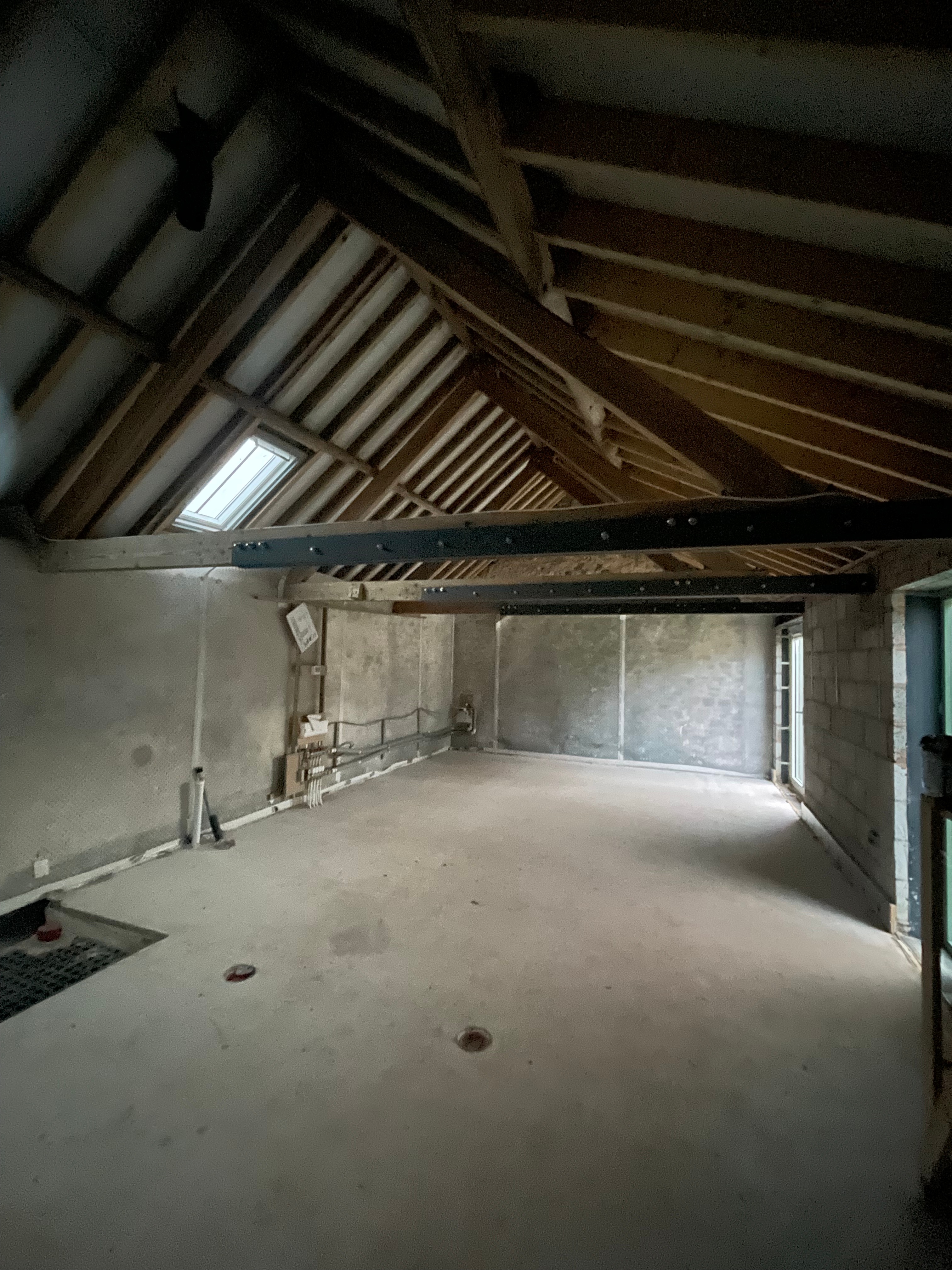
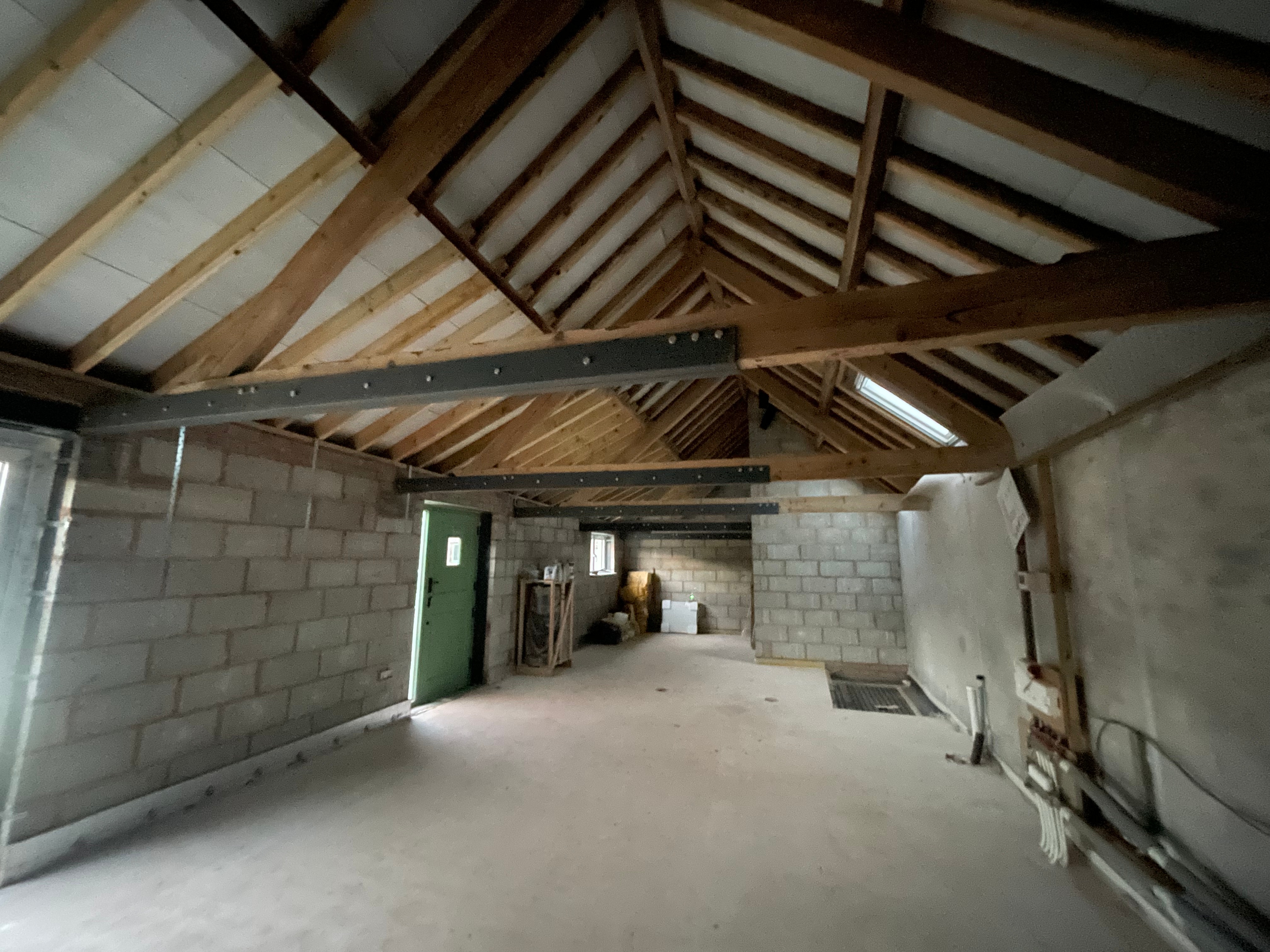
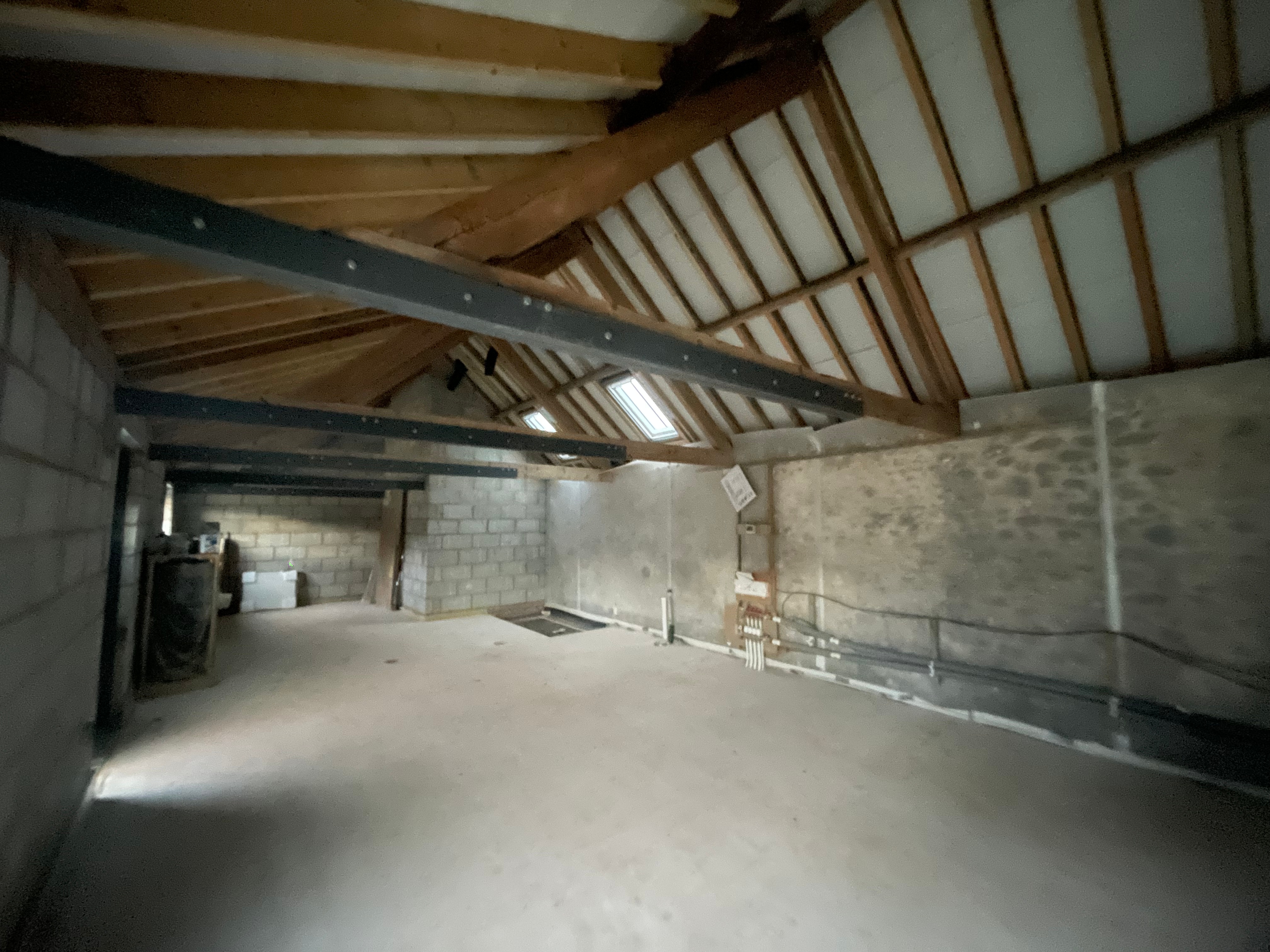
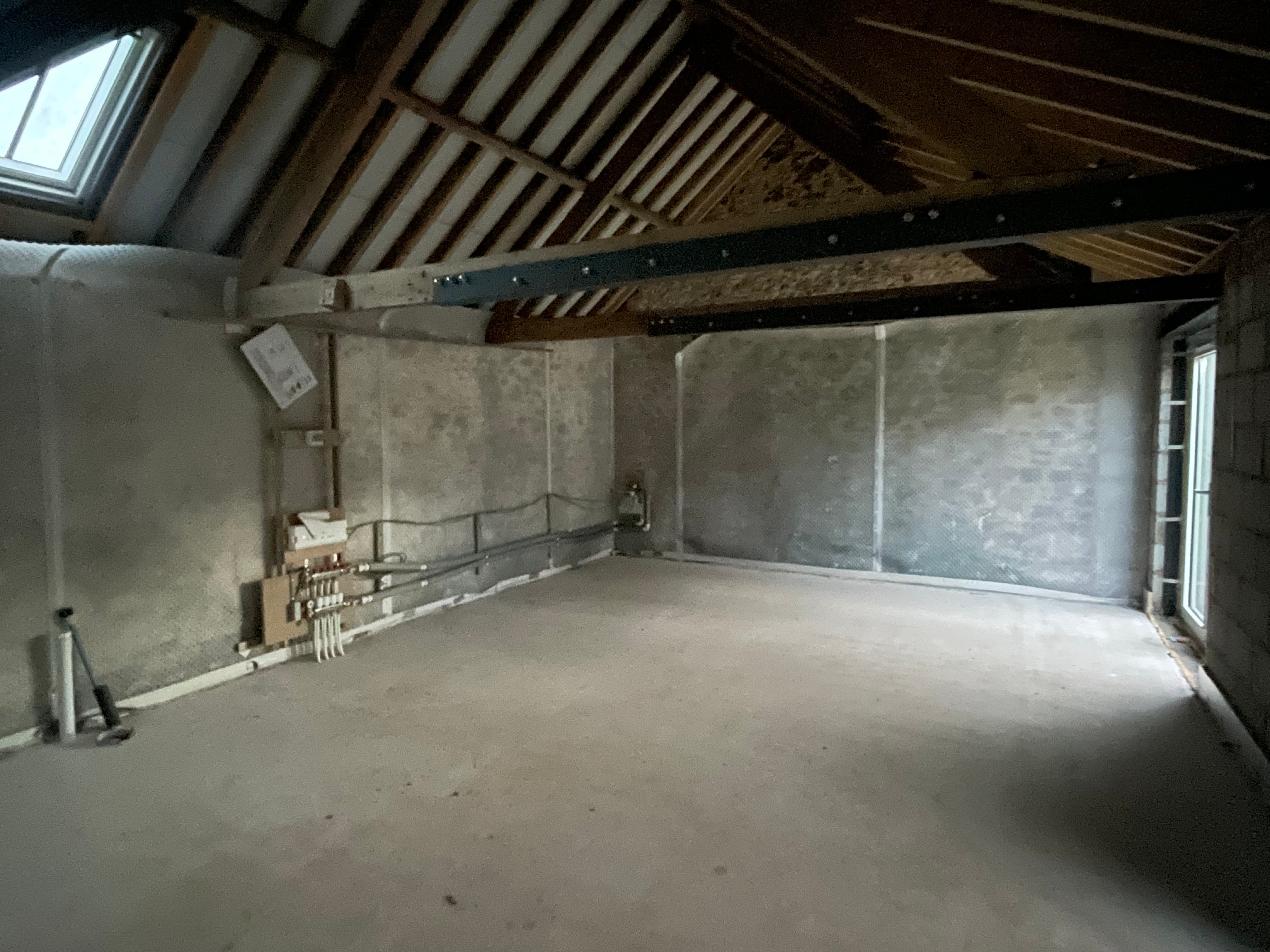
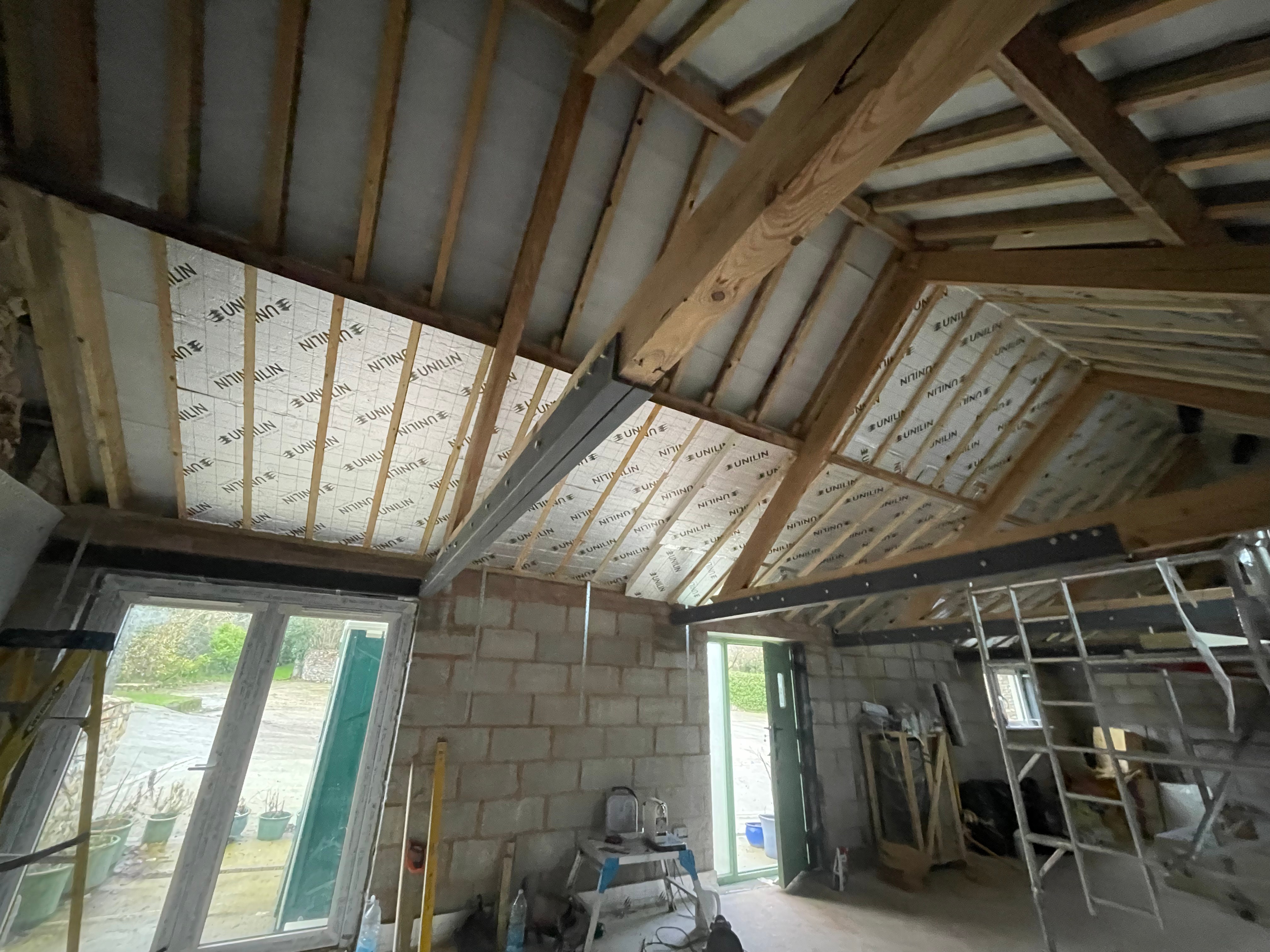
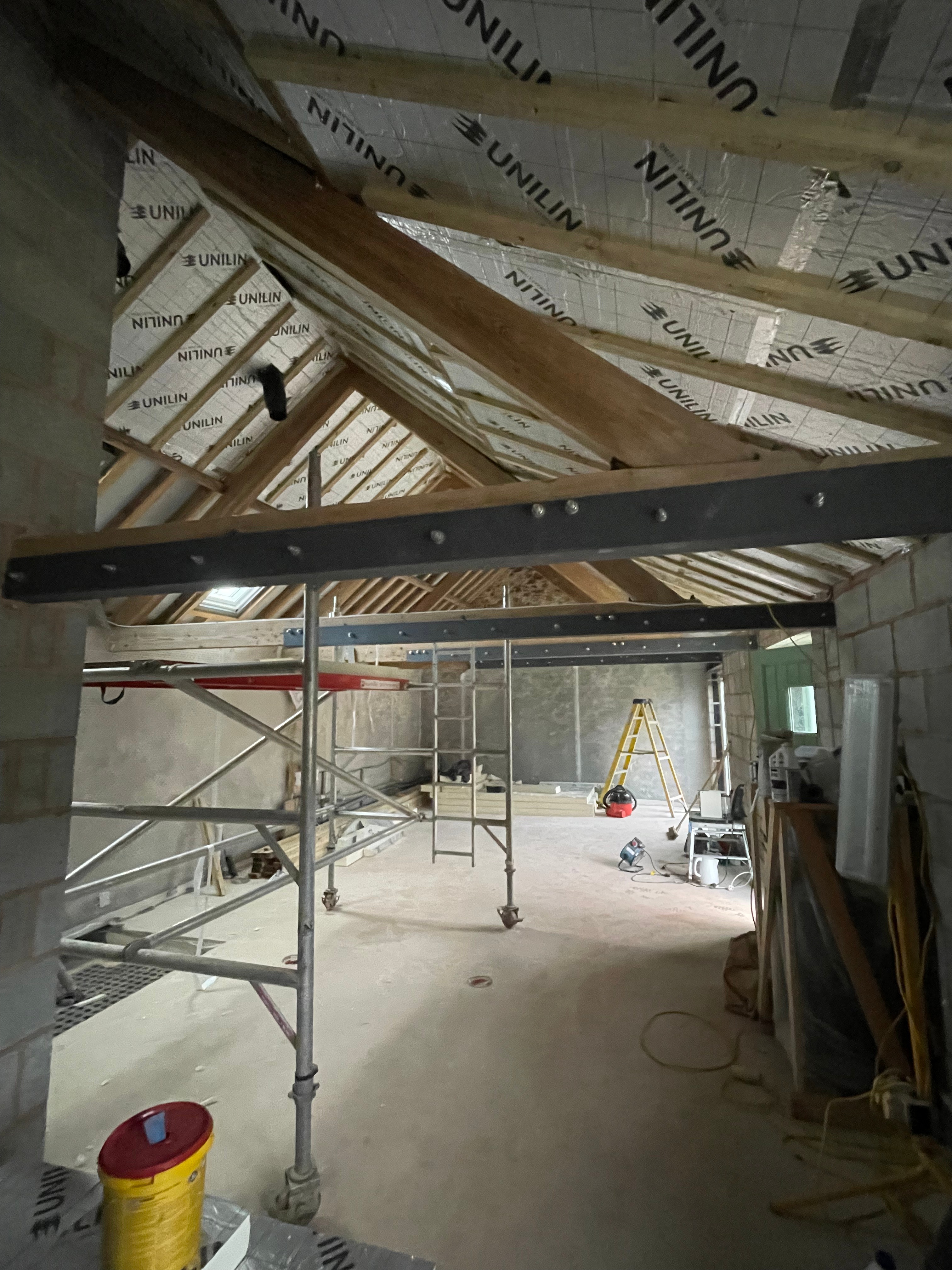
Our builder arrived on site this week to start work on our one-bed cottage. We split the old dairy (the ‘shippon’) and cow shed into two – we extended one half and turned that into our house – and we’re turning the other half into a one-bed with a bedroom and ensuite and an open plan kitchen, dining and living area. We’ve already done the exterior work to avoid any disruption to guests staying at the Farmhouse so now all the work required is internal – something Dean our builder is quite grateful for given the cold and wet winter! He’s made a start with the insulation on the roof, cutting each bit into shape and then pushing it up between the rafters. It’s been almost 18 months since having builders here and we’ve missed it a bit!
We’ve also had a structural engineer visit this week to assess the lean-to at the back of our old Elizabethan cottage. The Cottage itself is a Grade II–listed remnant of the original 16th-century farmhouse with multiple original features including the large inglenook fireplace, an internal cob wall with bits of plaster frieze still left on, and original wooden window frames. About 20 years ago, the previous owners carried out some major stabilisation work, using metal tie bars and rebuilding one of the main walls after a partial collapse. But the lean-to – which has been added later and been built up against the original farmhouse rather than being integrated into the walls – didn’t get the same level of care. It was propped temporarily and then largely forgotten—with a warning sign left inside.
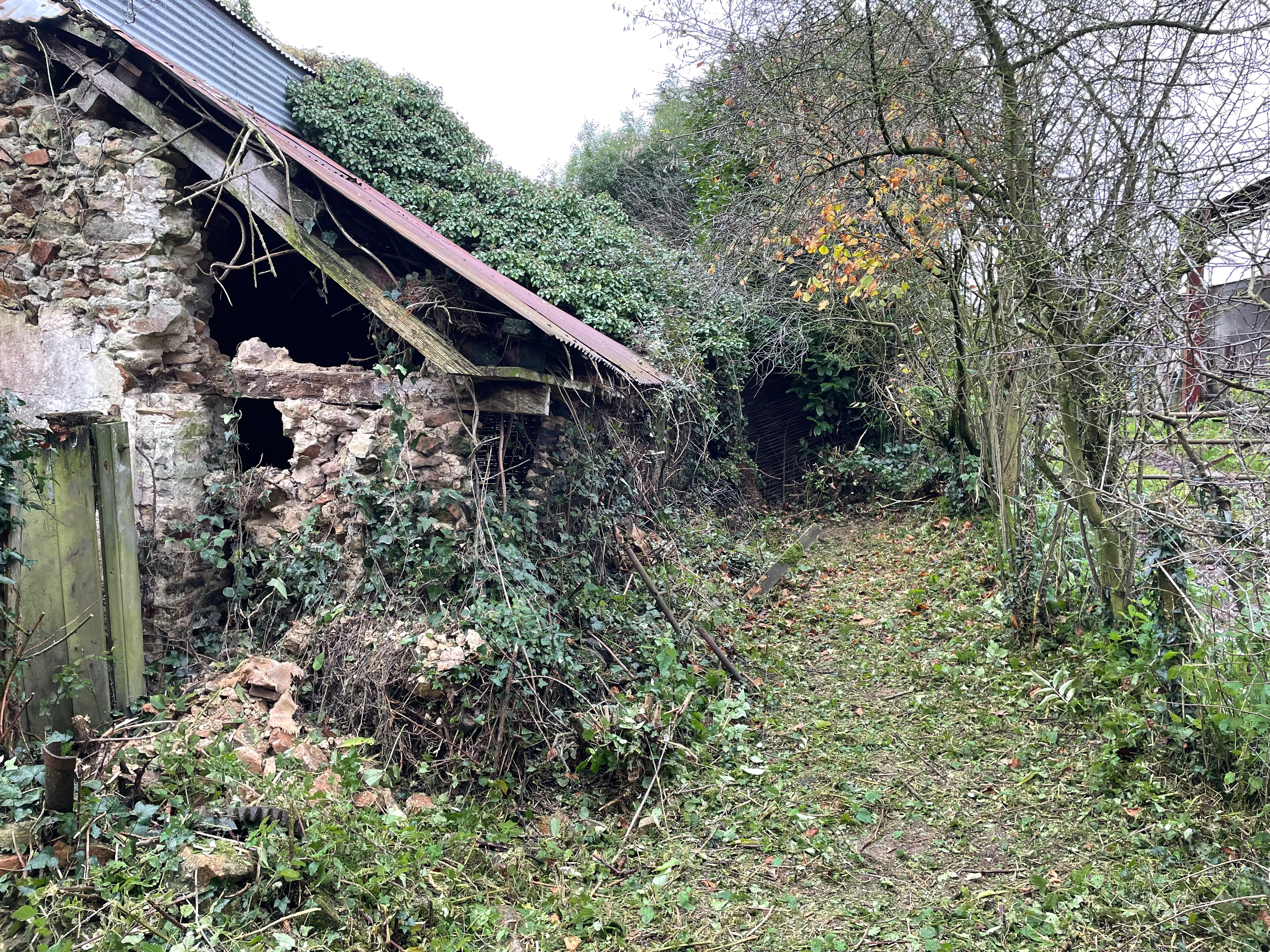
Over the years, its condition has worsened. The stone walls are unsupported and starting to fall apart in places. If the lean-to walls were to collapse, the cob wall would be exposed to the elements and be damaged as it doesn’t have any protection. We can start to see where the roof is beginning to pull away from the main building, pulling down more stone from the walls each time it shifts.
After inspecting the walls and roof in detail, we’re expecting the engineer to recommend immediate propping to stop any further movement. Then, once we have warmer, drier weather—essential for lime-mortar work—and have discussed our plans with the council’s conservation officer, our intention is to carefully take down and rebuild the collapsed and unstable sections of the stone walls and give the roof some proper support. Since it’ll be a long time before we convert this building, we’re aiming to do enough to protect the structure and its history now, but not sink too much money into it until we can do the conversion properly.
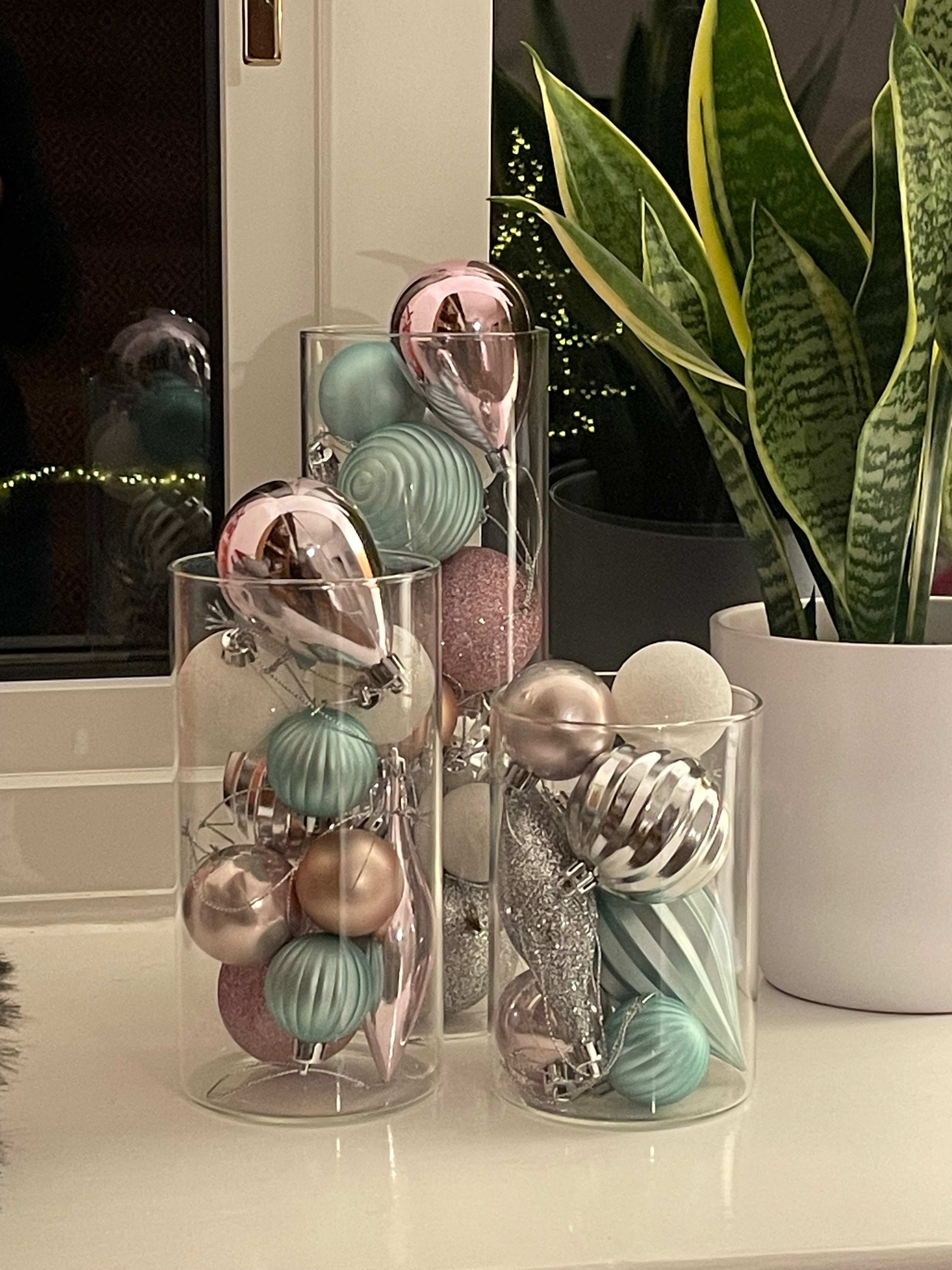
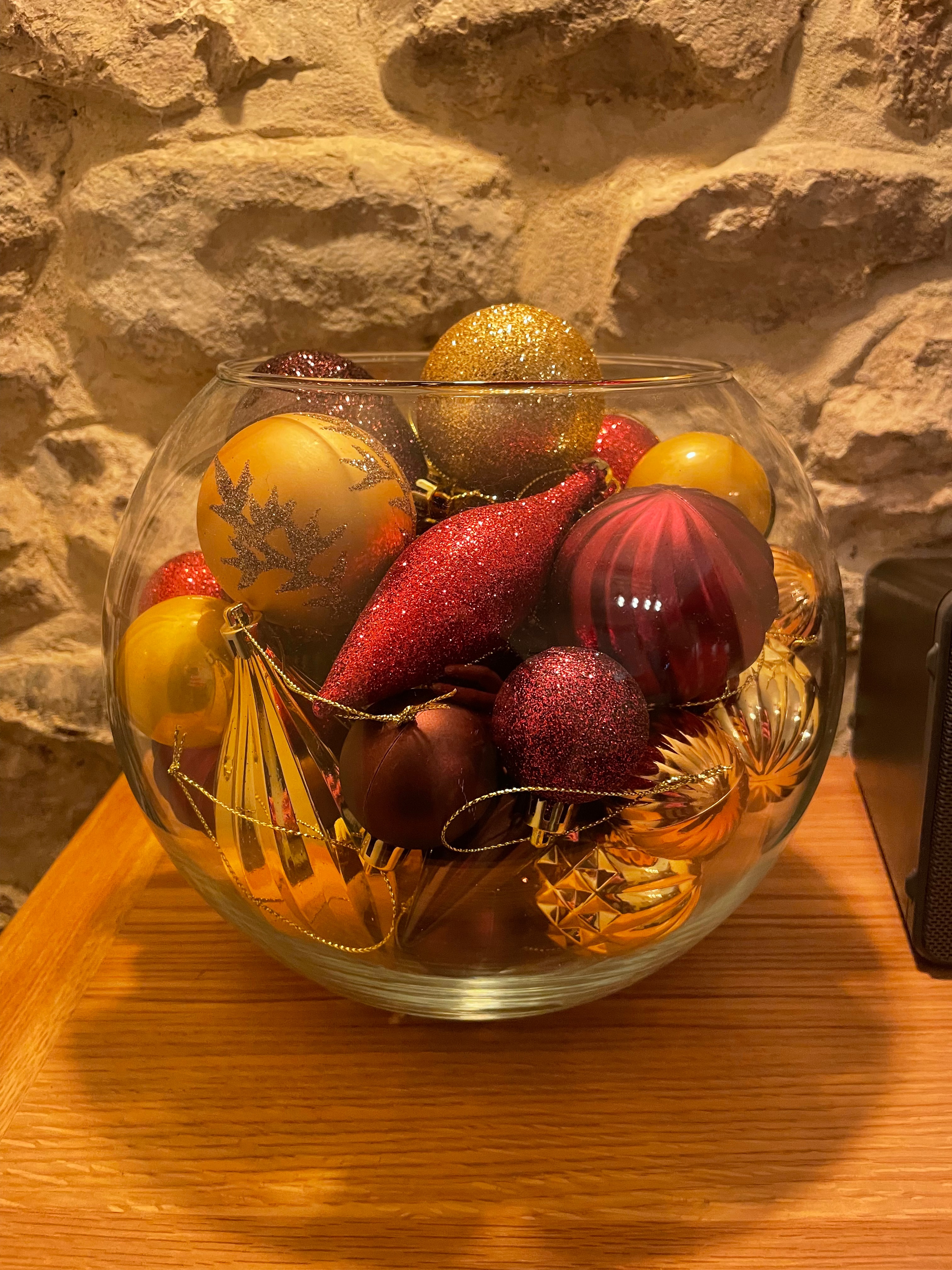
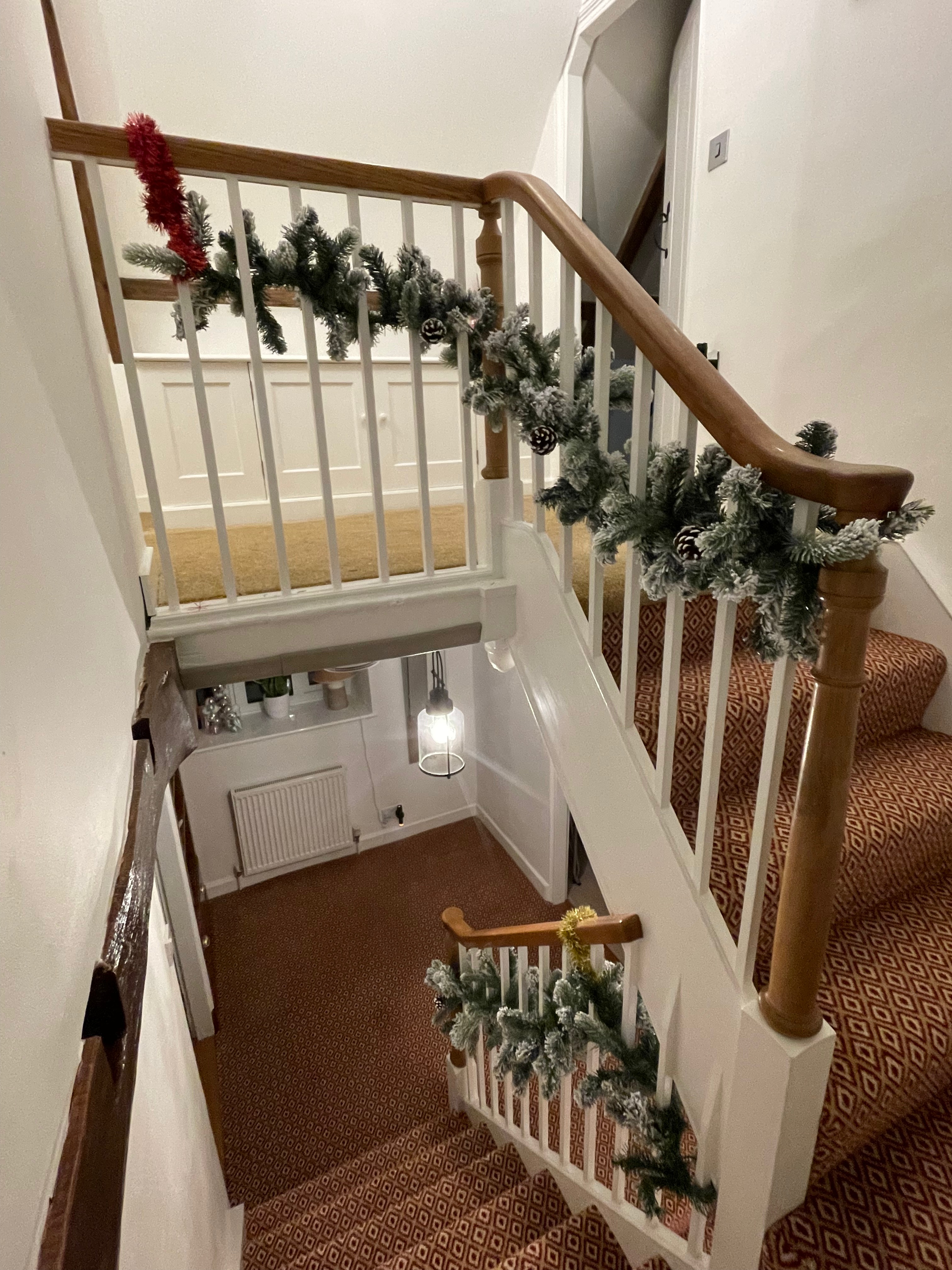
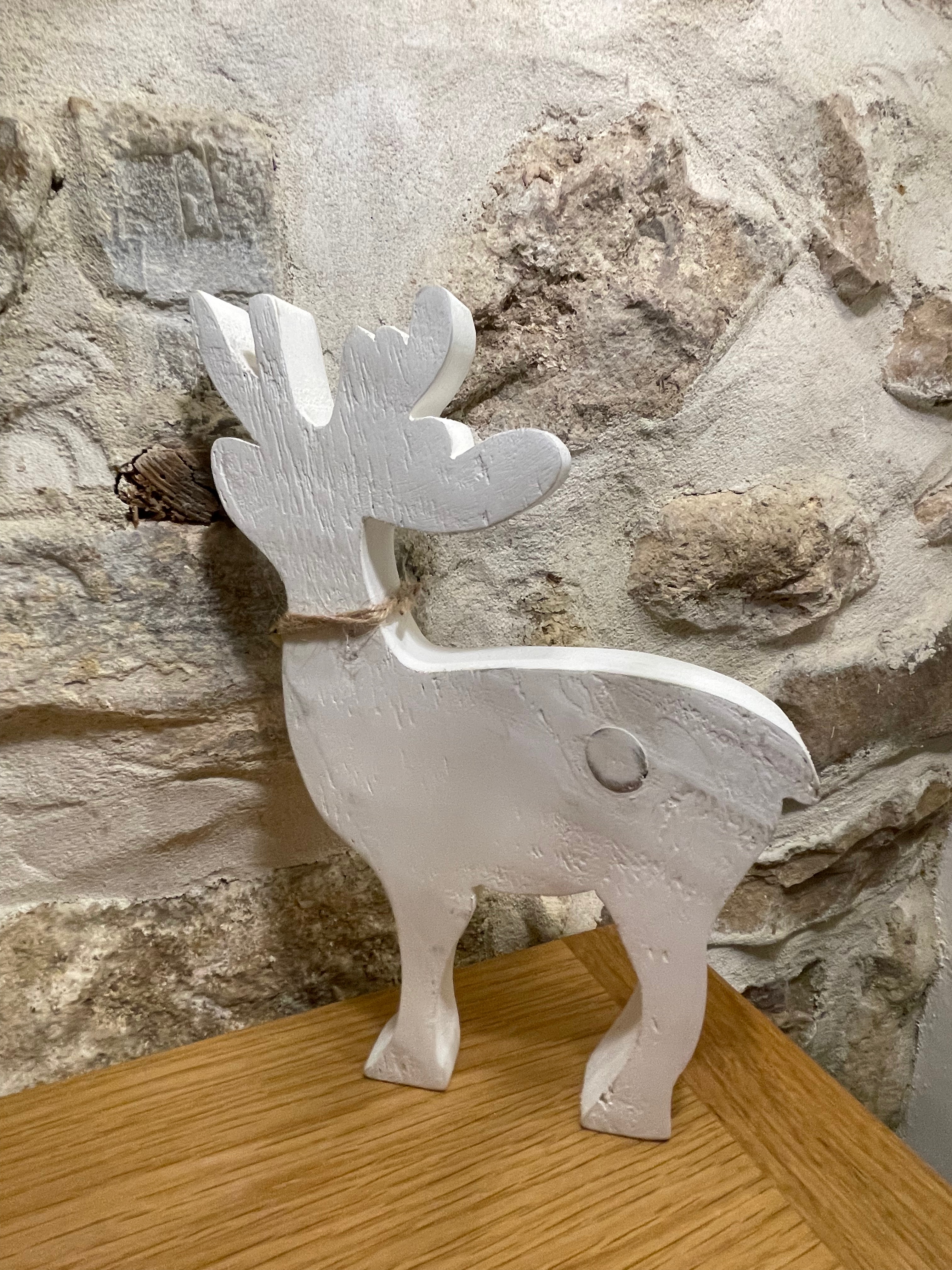
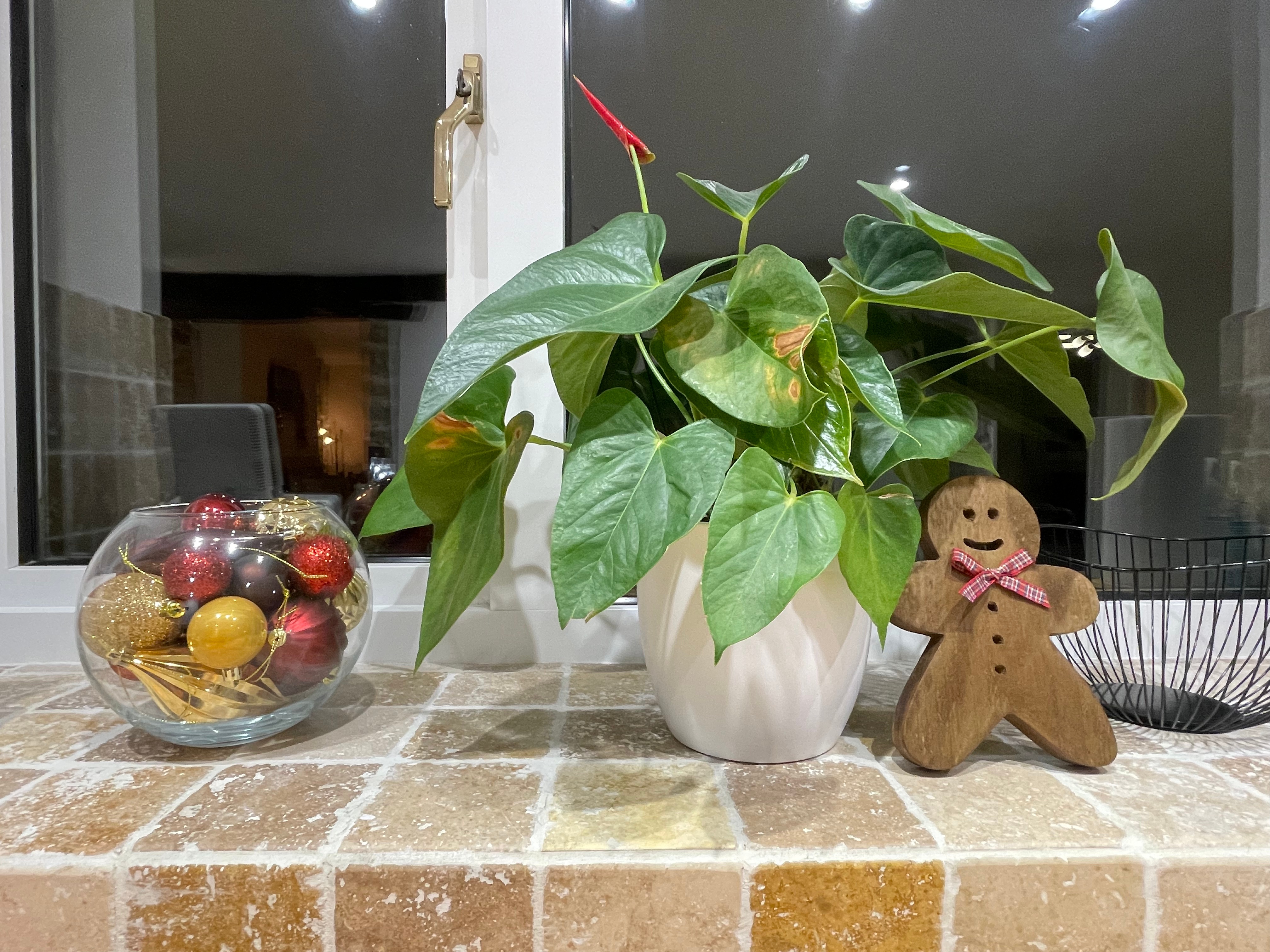
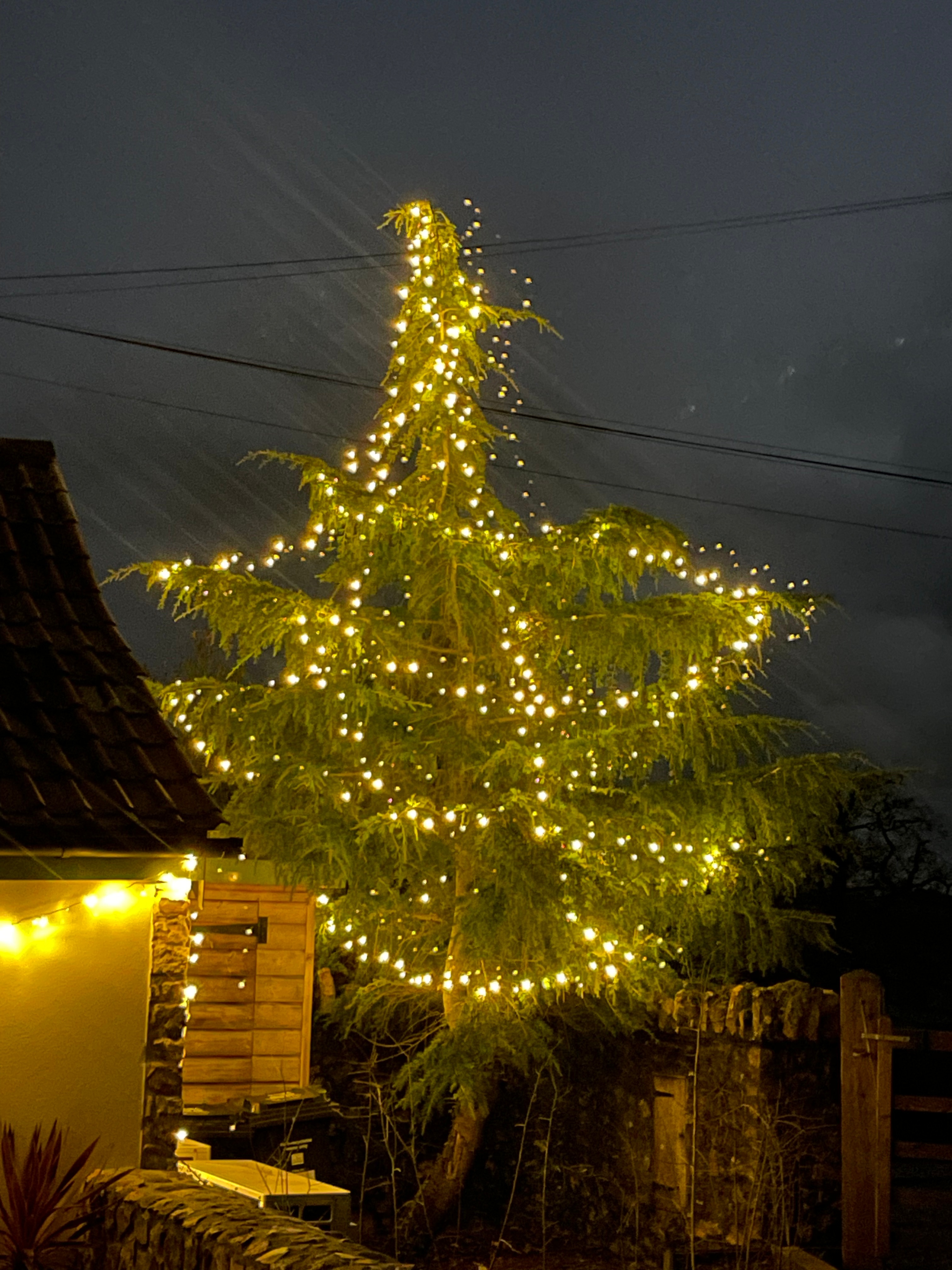
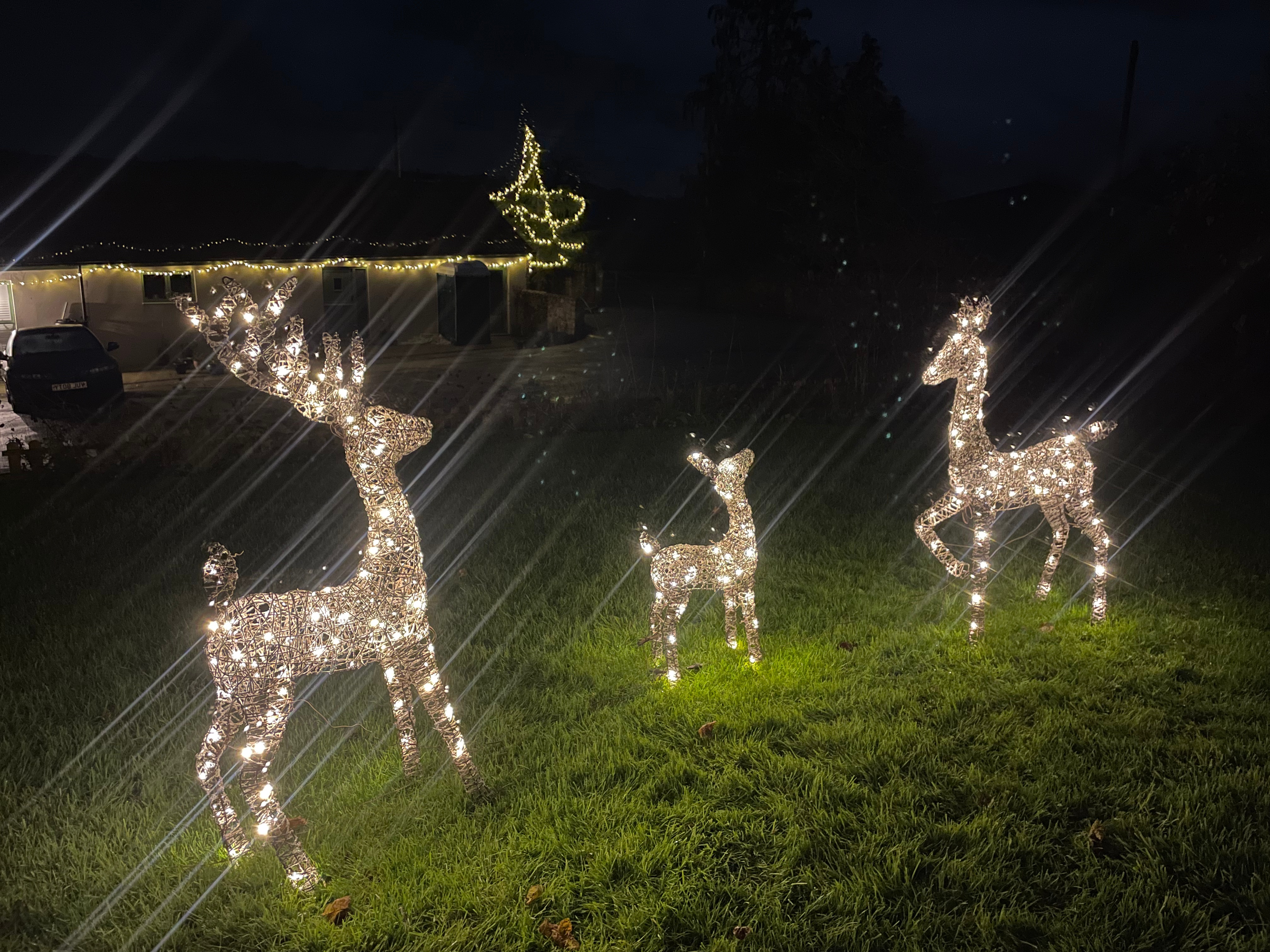
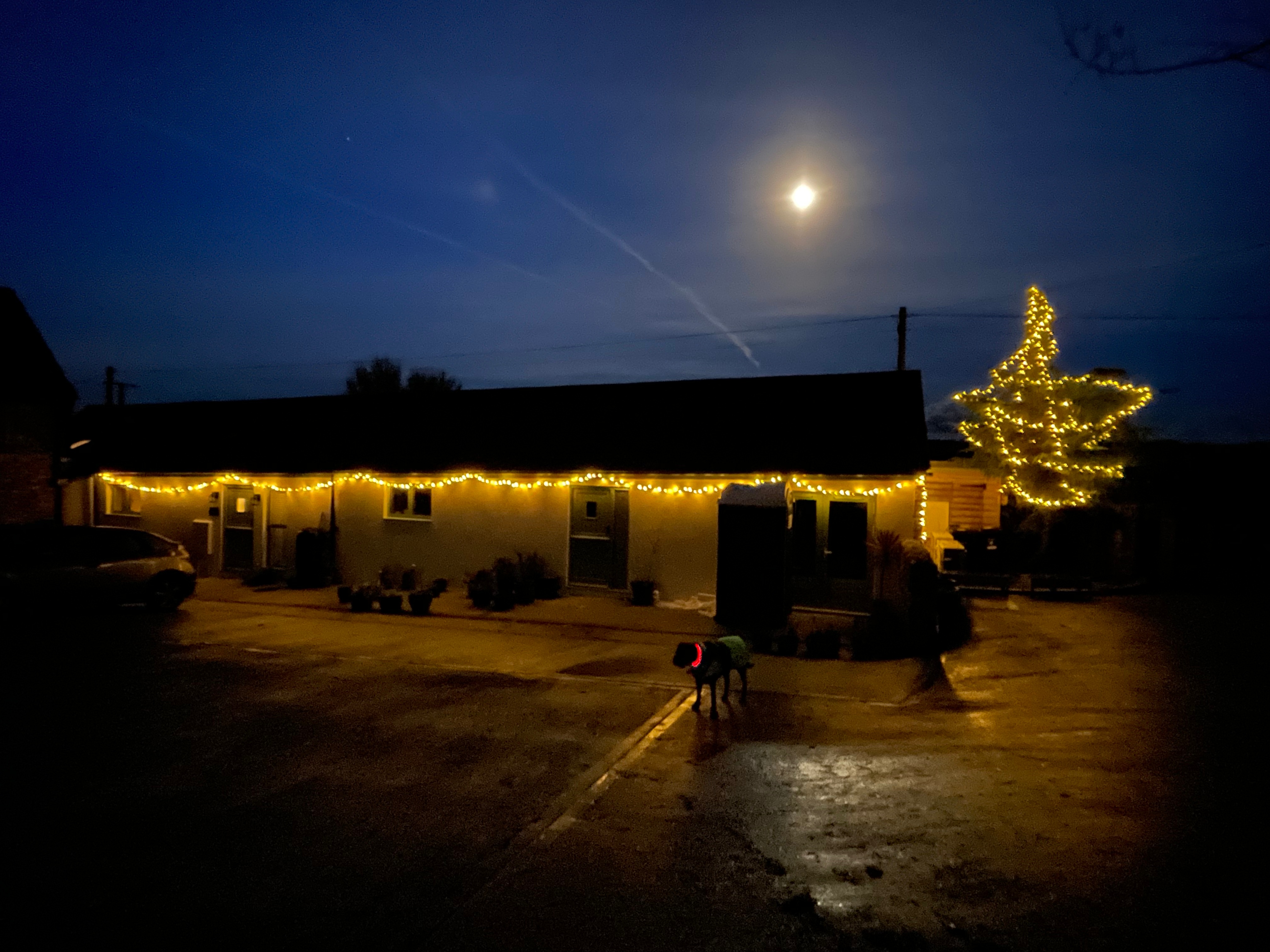
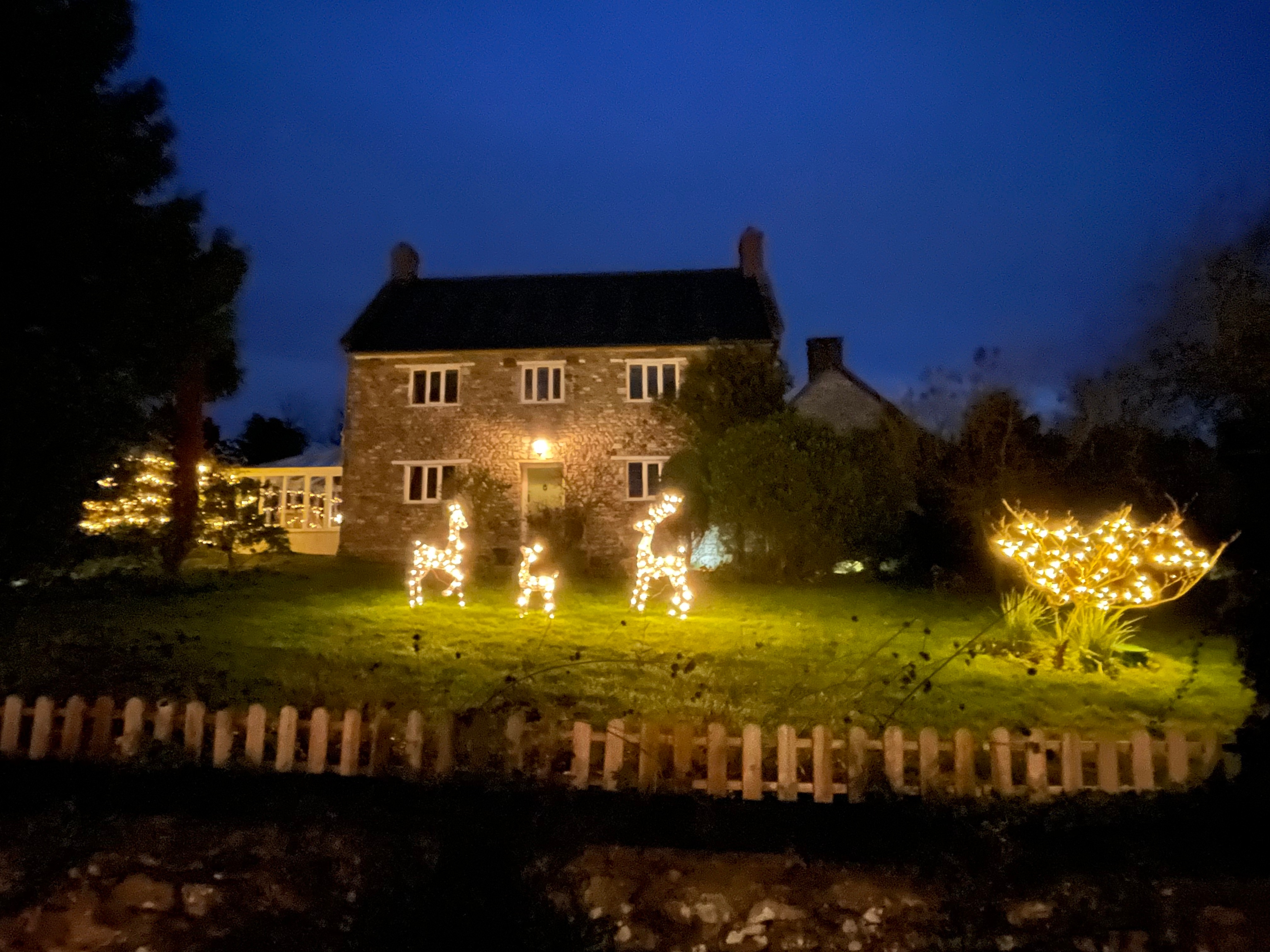
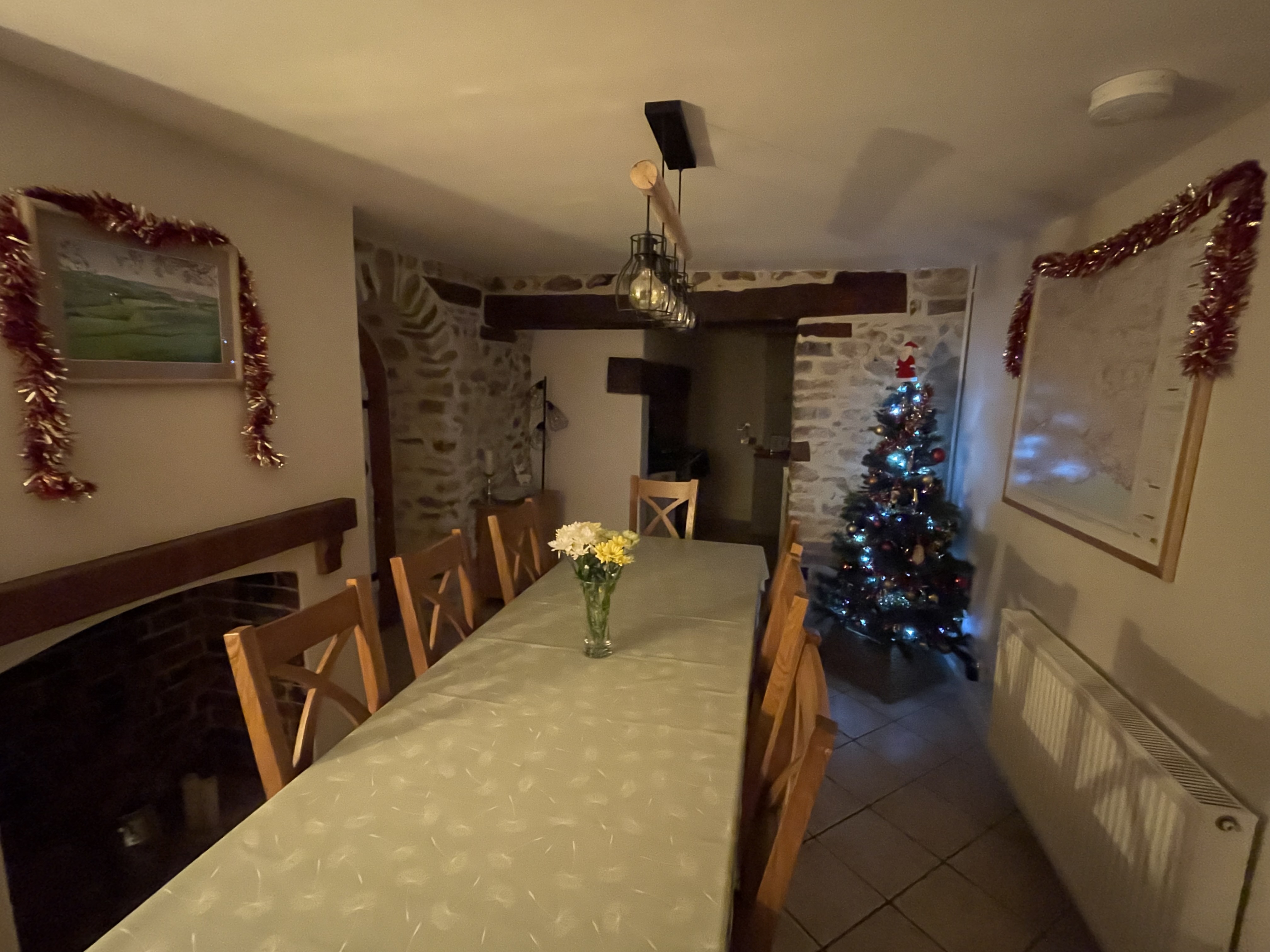
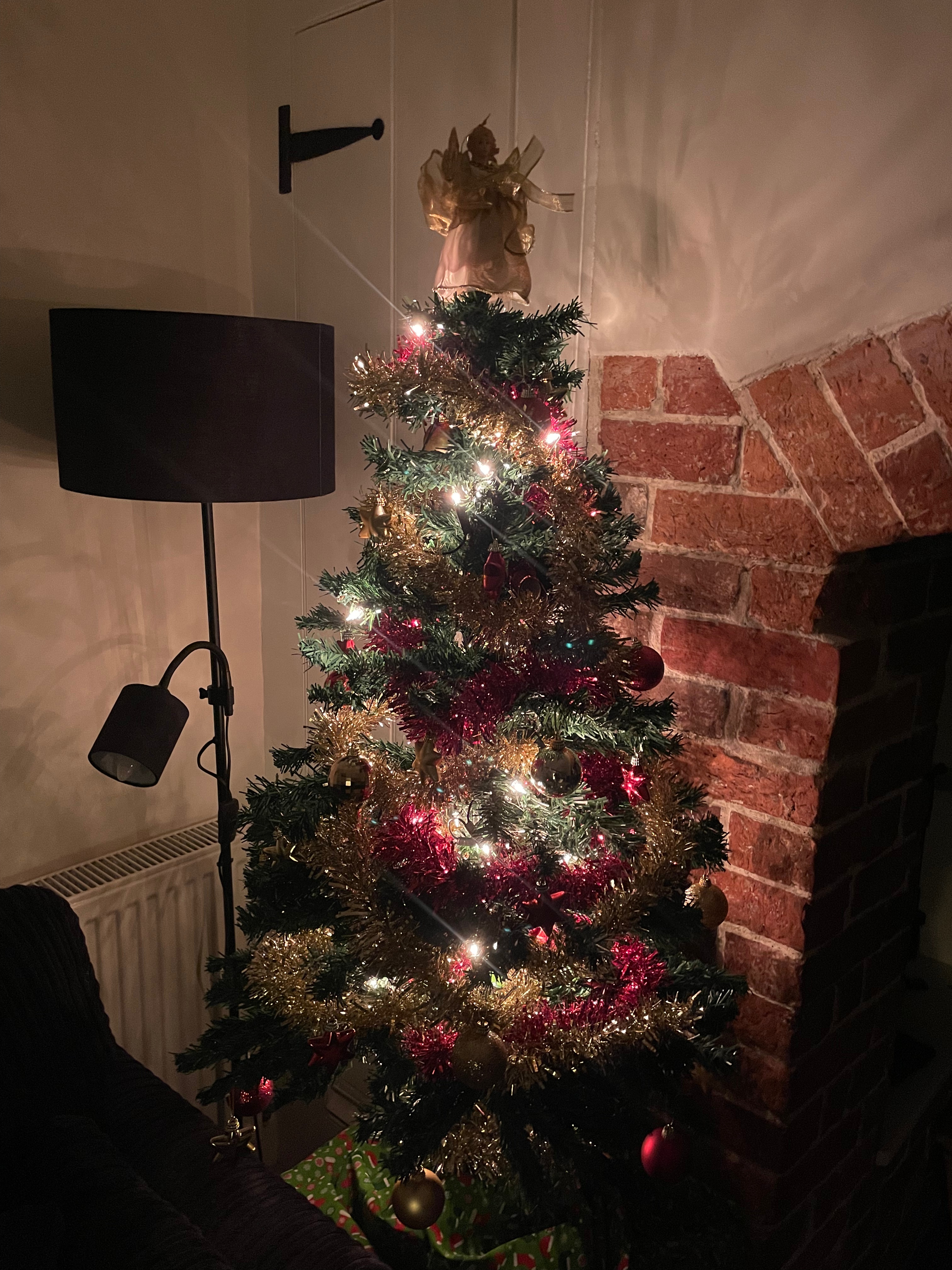
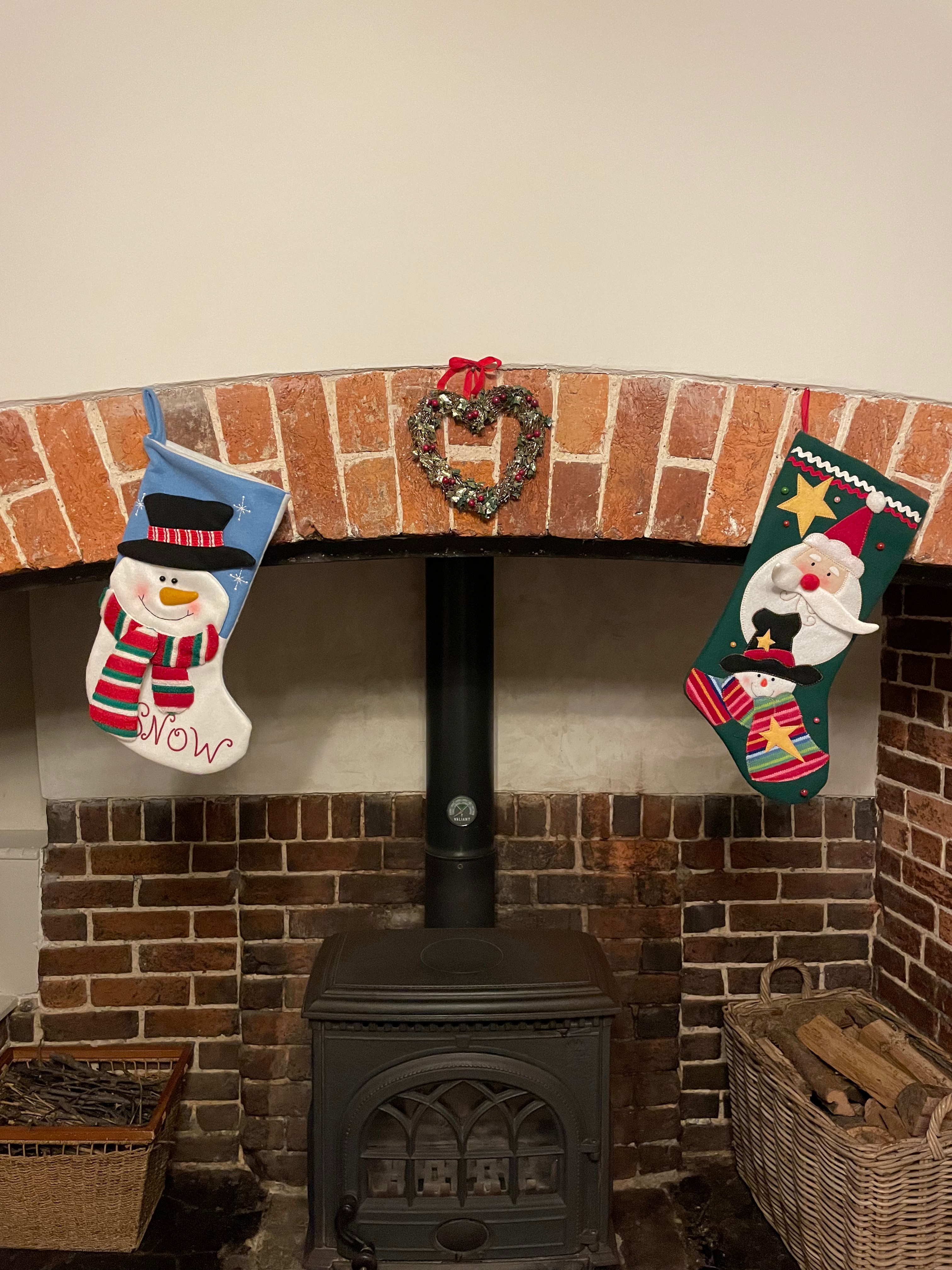
Christmas has arrived at Ley Farm Cottages!! Our guests this weekend are celebrating an early Christmas so we wanted to make sure all the decorations were up. John spent the daytime putting up the outside lights along both sides of the shippon and around the pine tree by the gate, and once the changeover was done we spent the evenings putting up the inside decorations. When the house is full of people and dogs there’s not much space in the living room for a big tree so we put the larger tree in the dining room and a smaller tabletop one in the living room. We wove garlands through the bannisters to continue the Christmas spirit up through the house. And this year we’ve added jars of baubles in various places – inspiration from a friend of mine. We love getting new ideas and adding them to the Farmhouse!

 Ley Farm Cottages