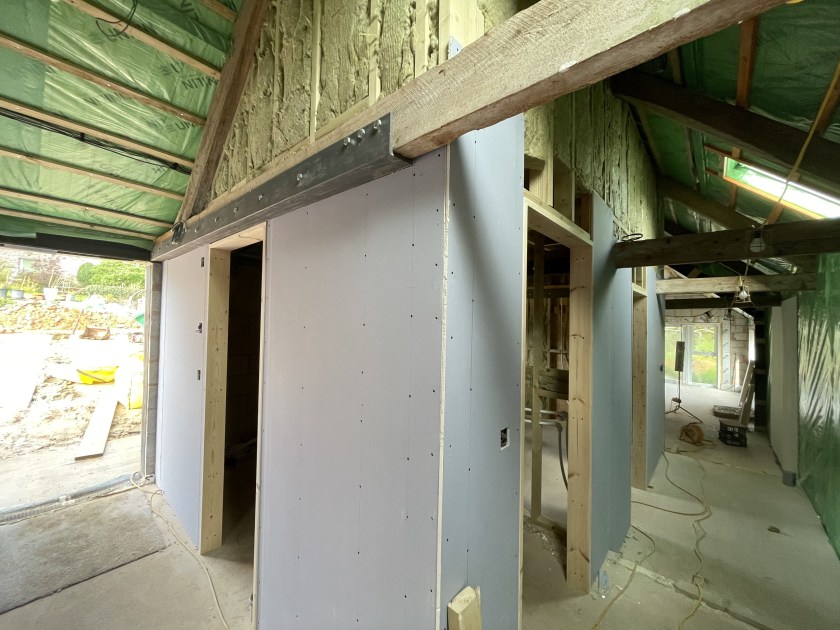
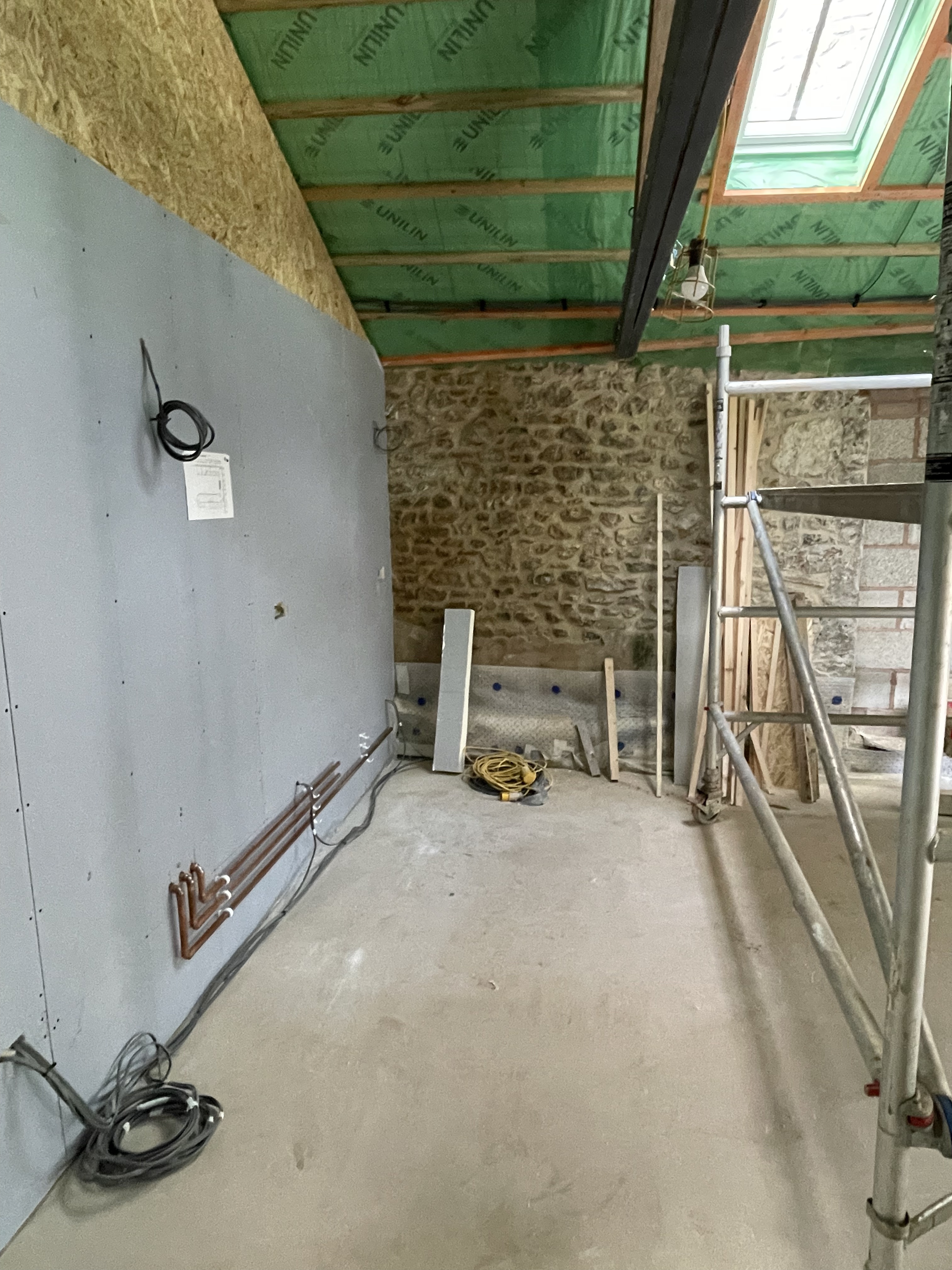
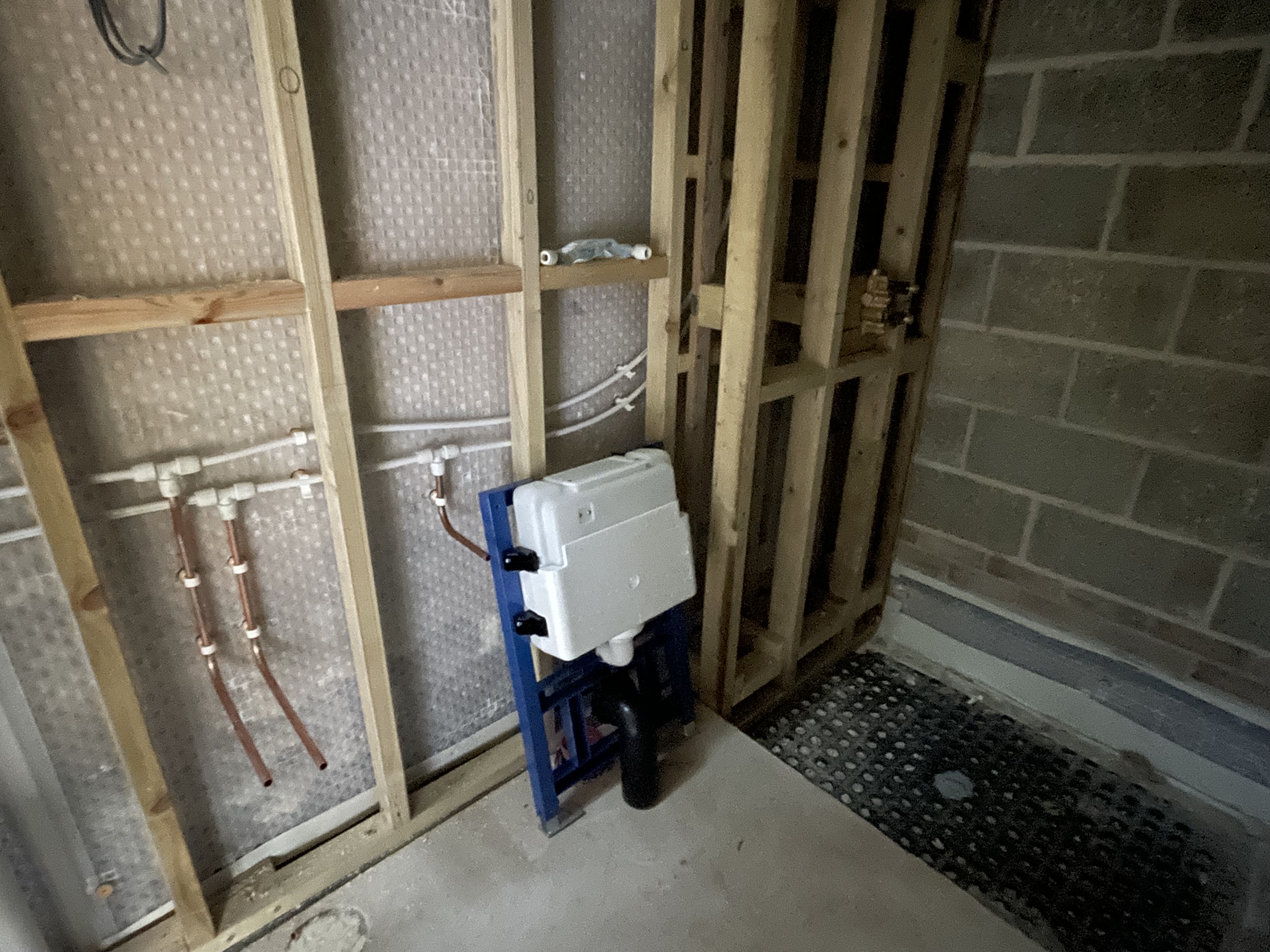
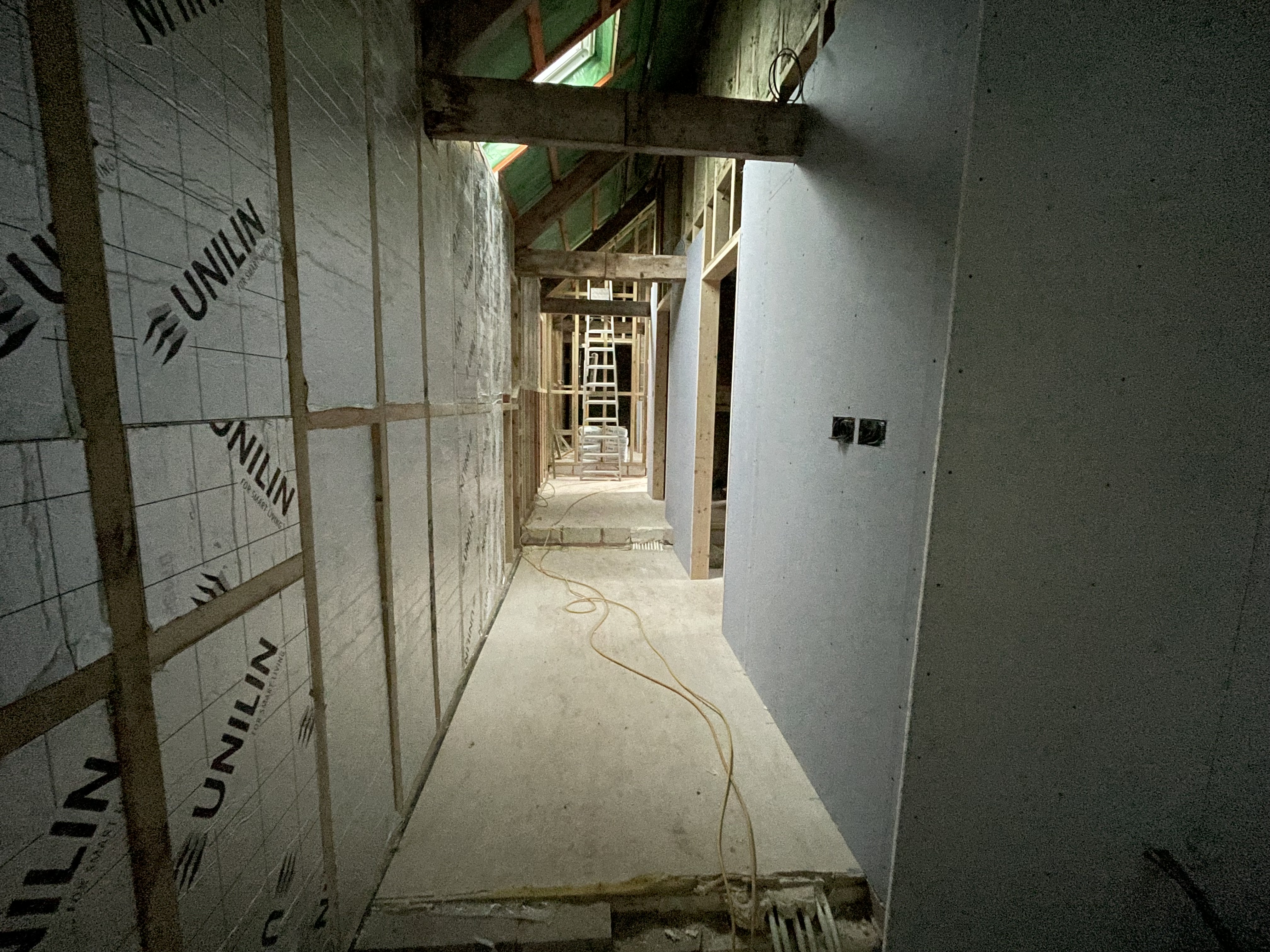
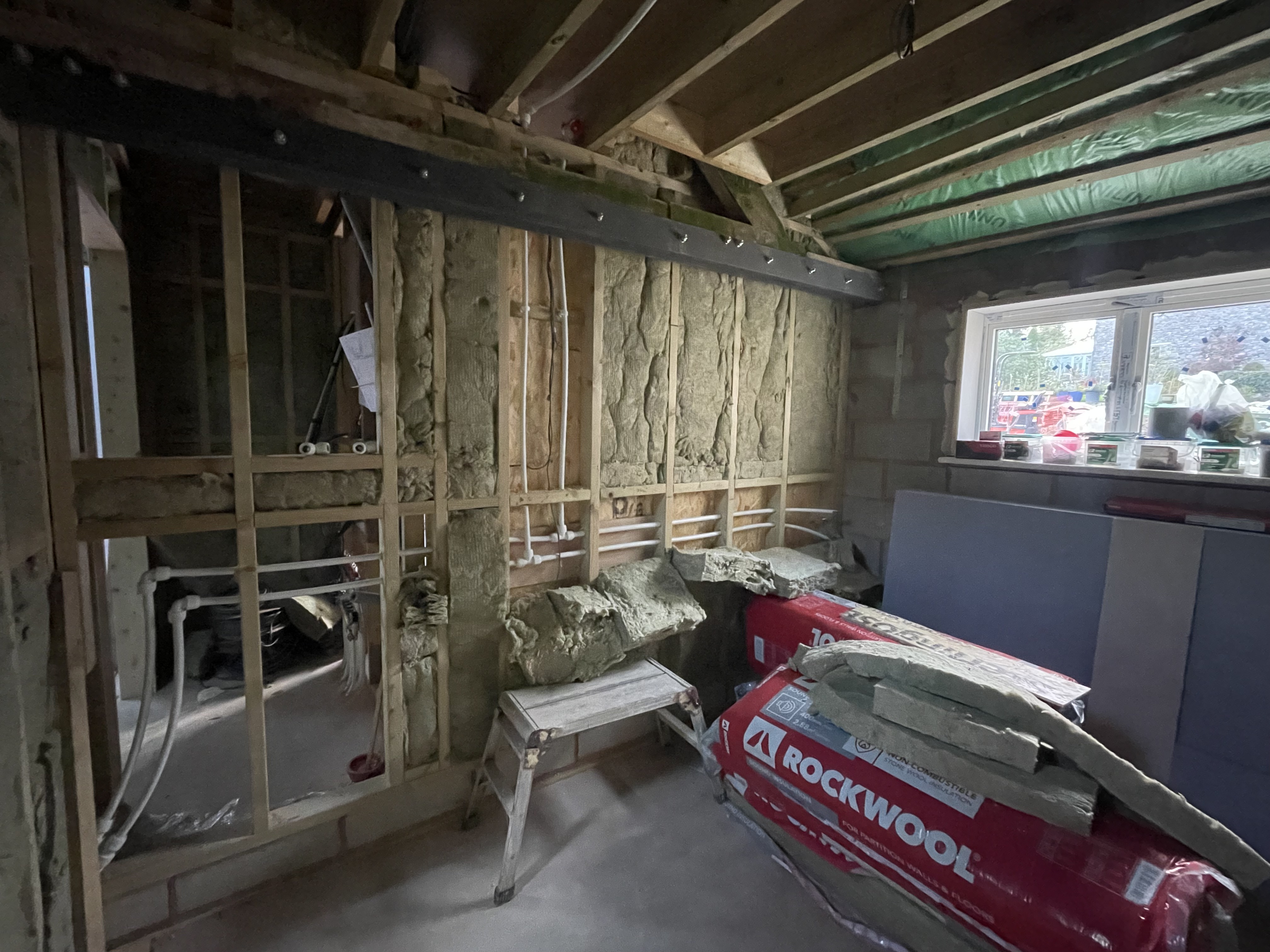
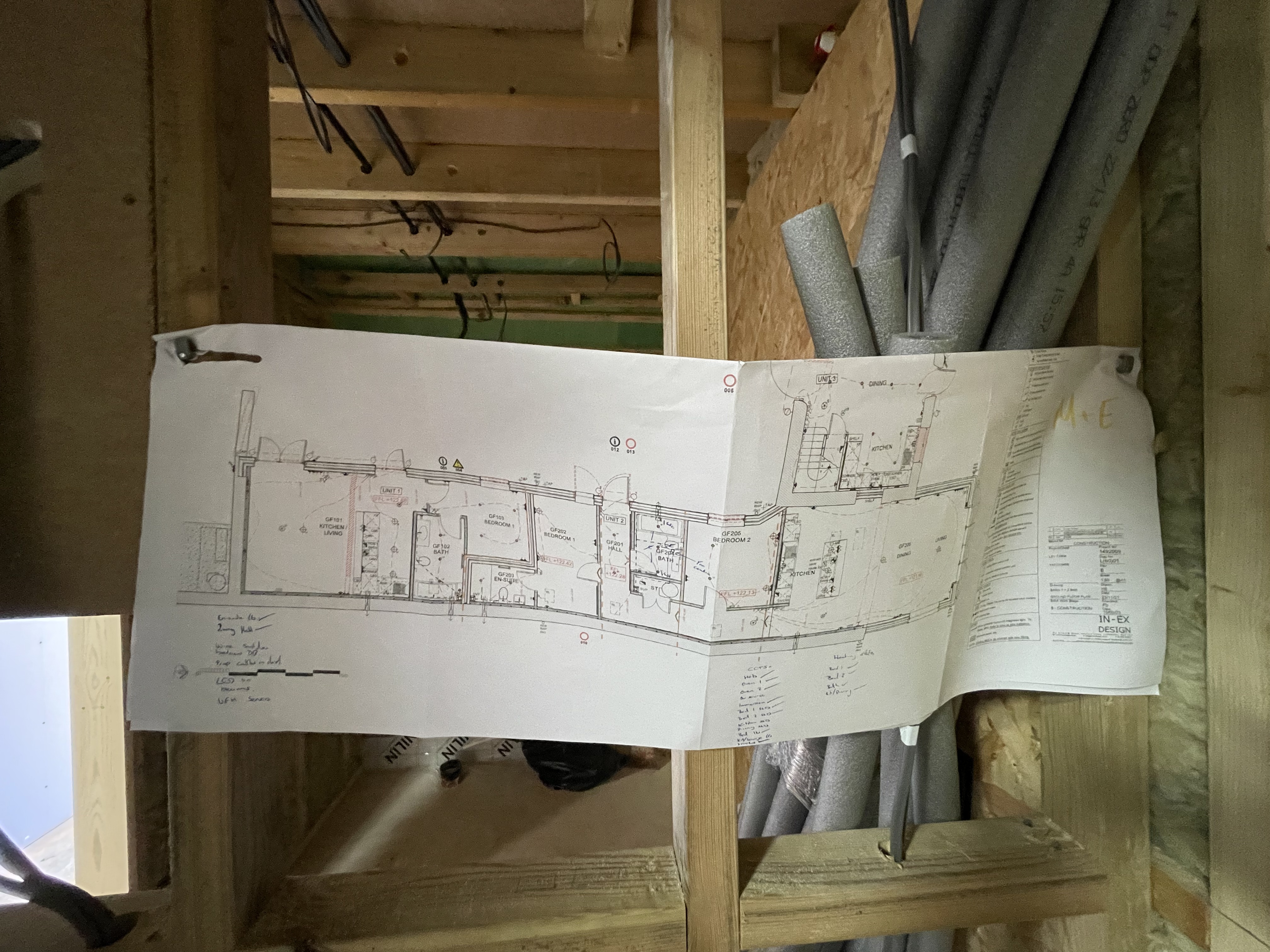
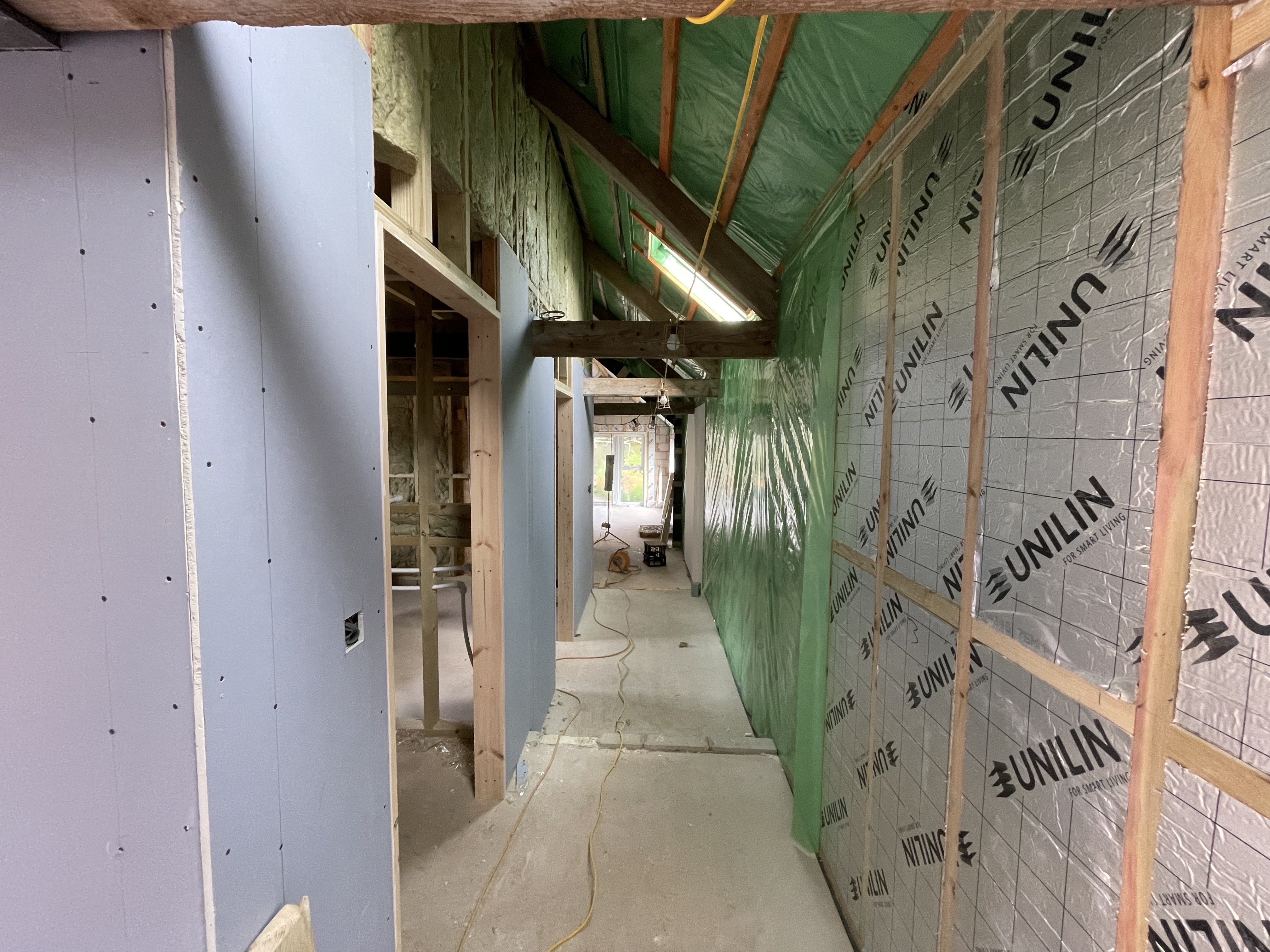
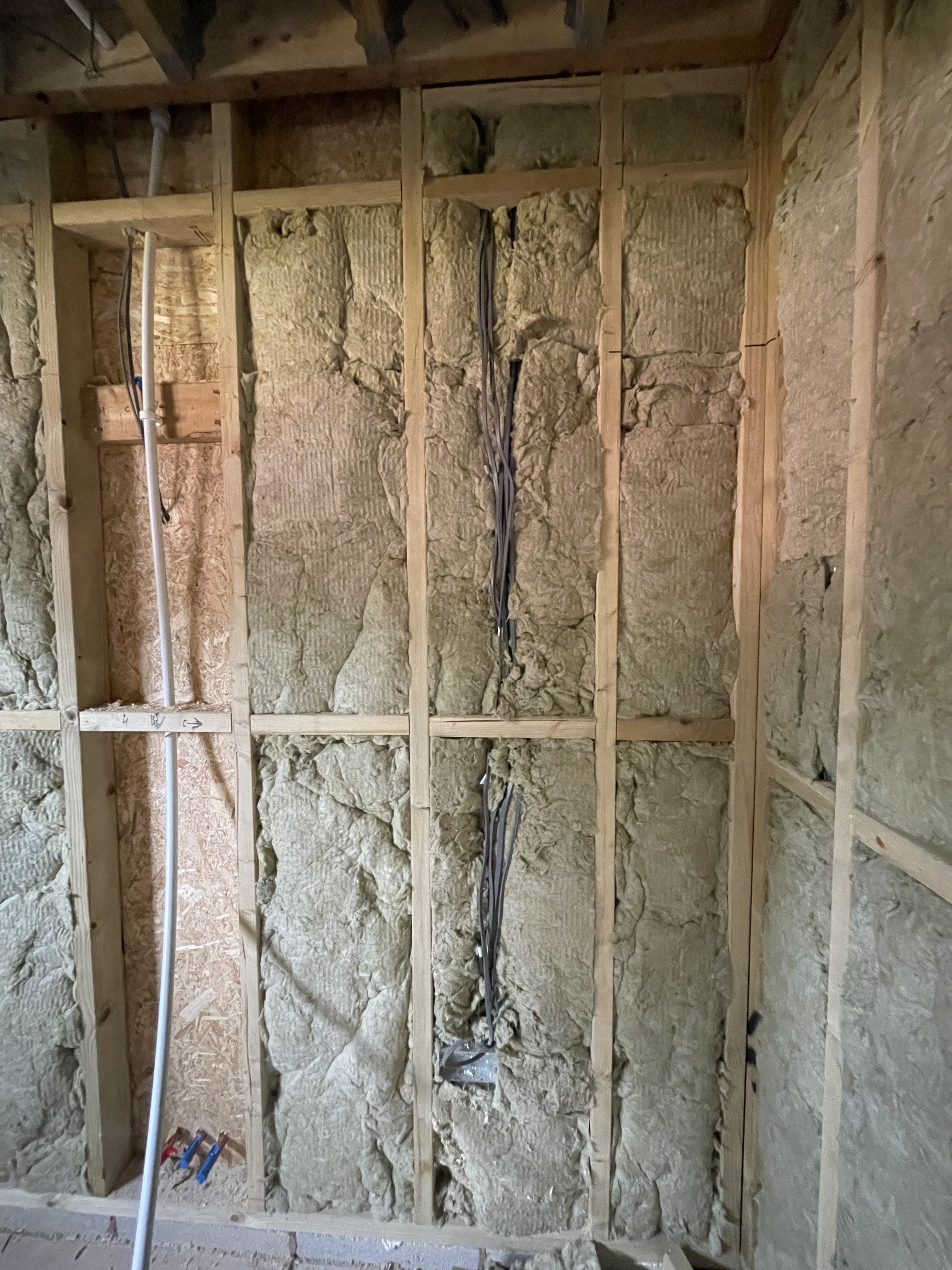
It’s been a particularly busy week on site, with the ‘first fix’ stage starting in in our new house. Almost all the walls have been insulated and the green sheet (the vapour protection layer or VPL if you’re in the trade!) added on the external walls. Our builders have even done a significant amount of plasterboarding – they’re making it look easy at the speed they’re going. We’ve had the electricians and plumbers on site too, putting in the first electrics and plumbing in our ensuite and the kitchen. It’s really starting to come together.
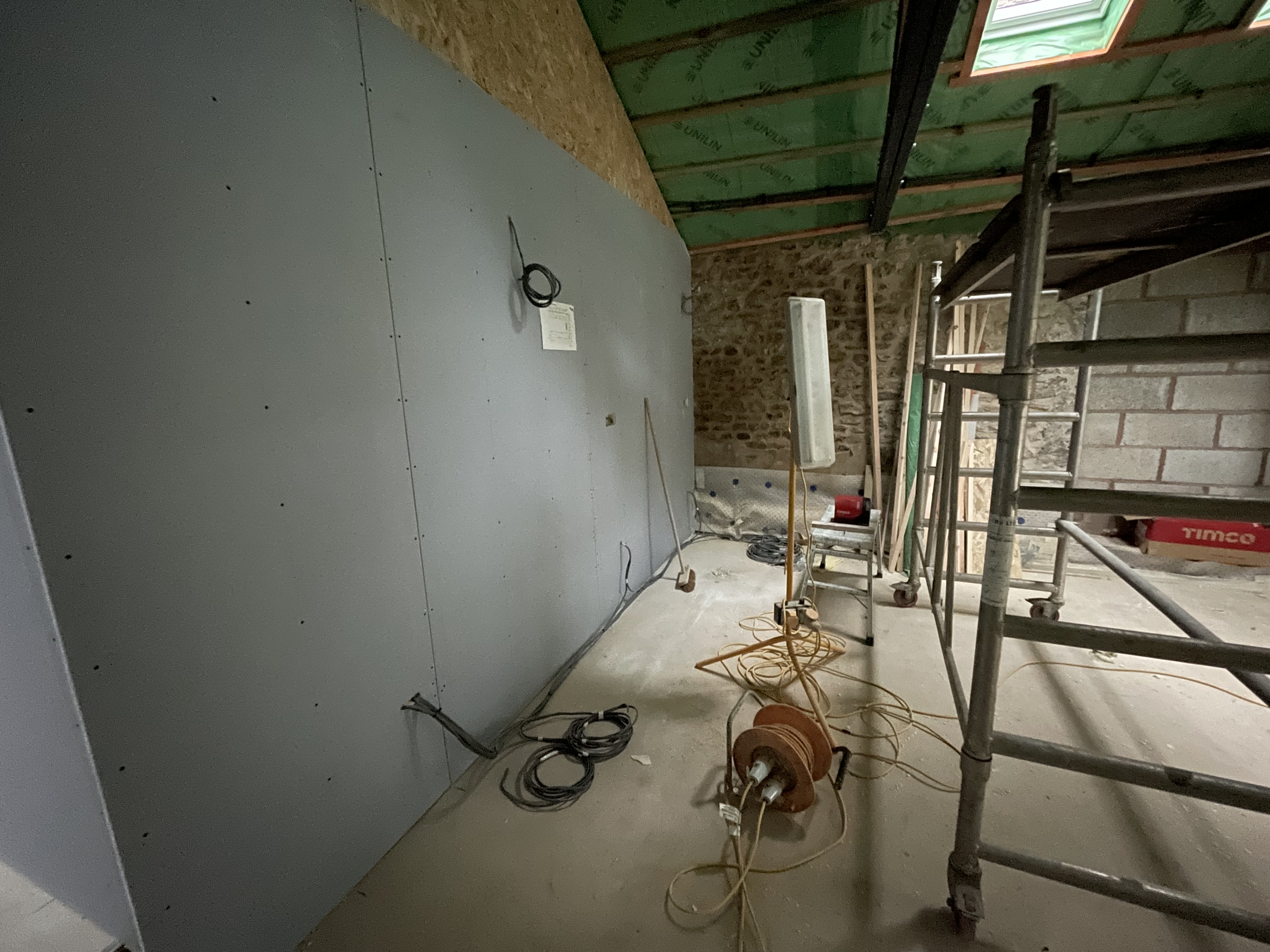
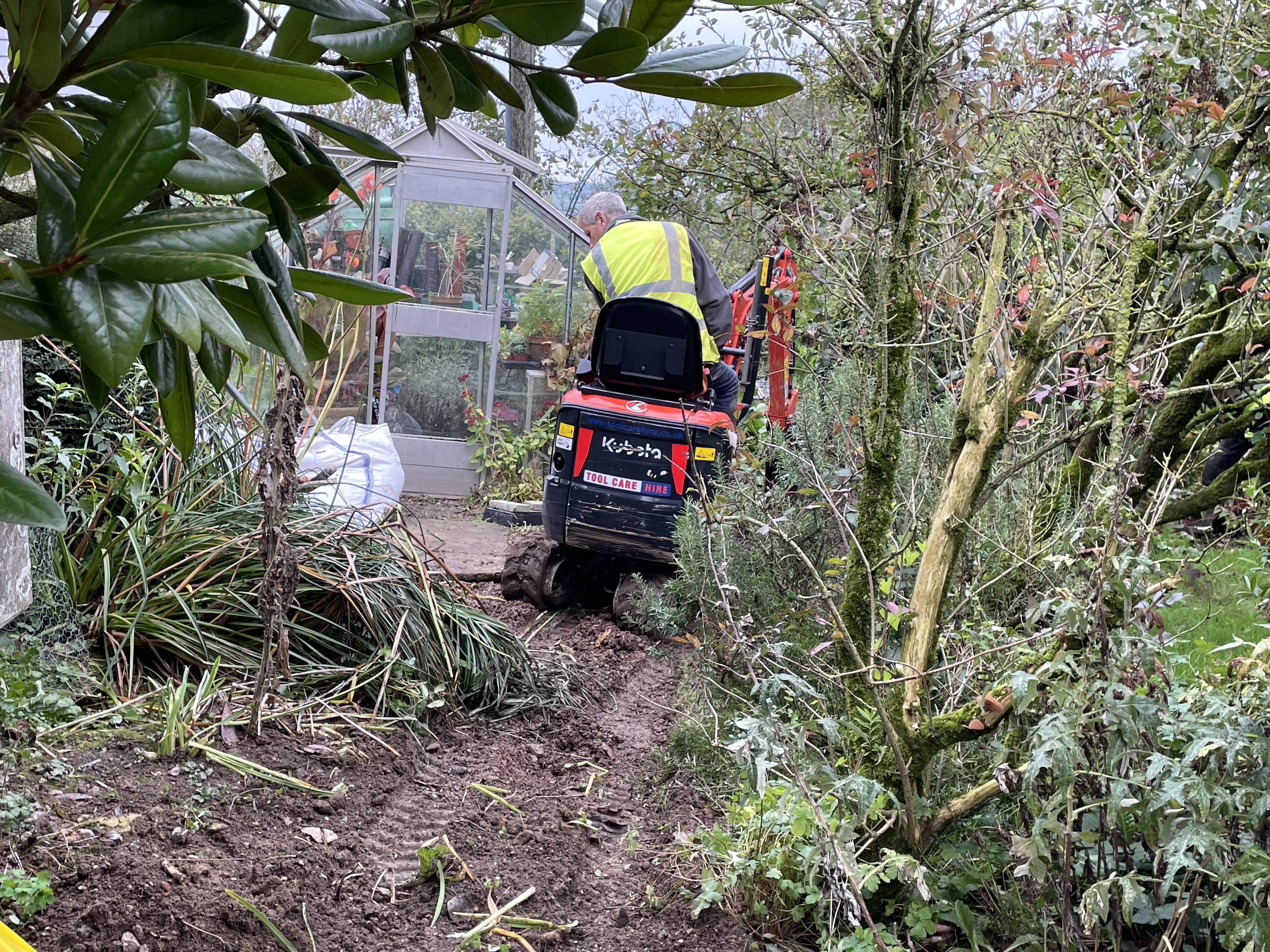
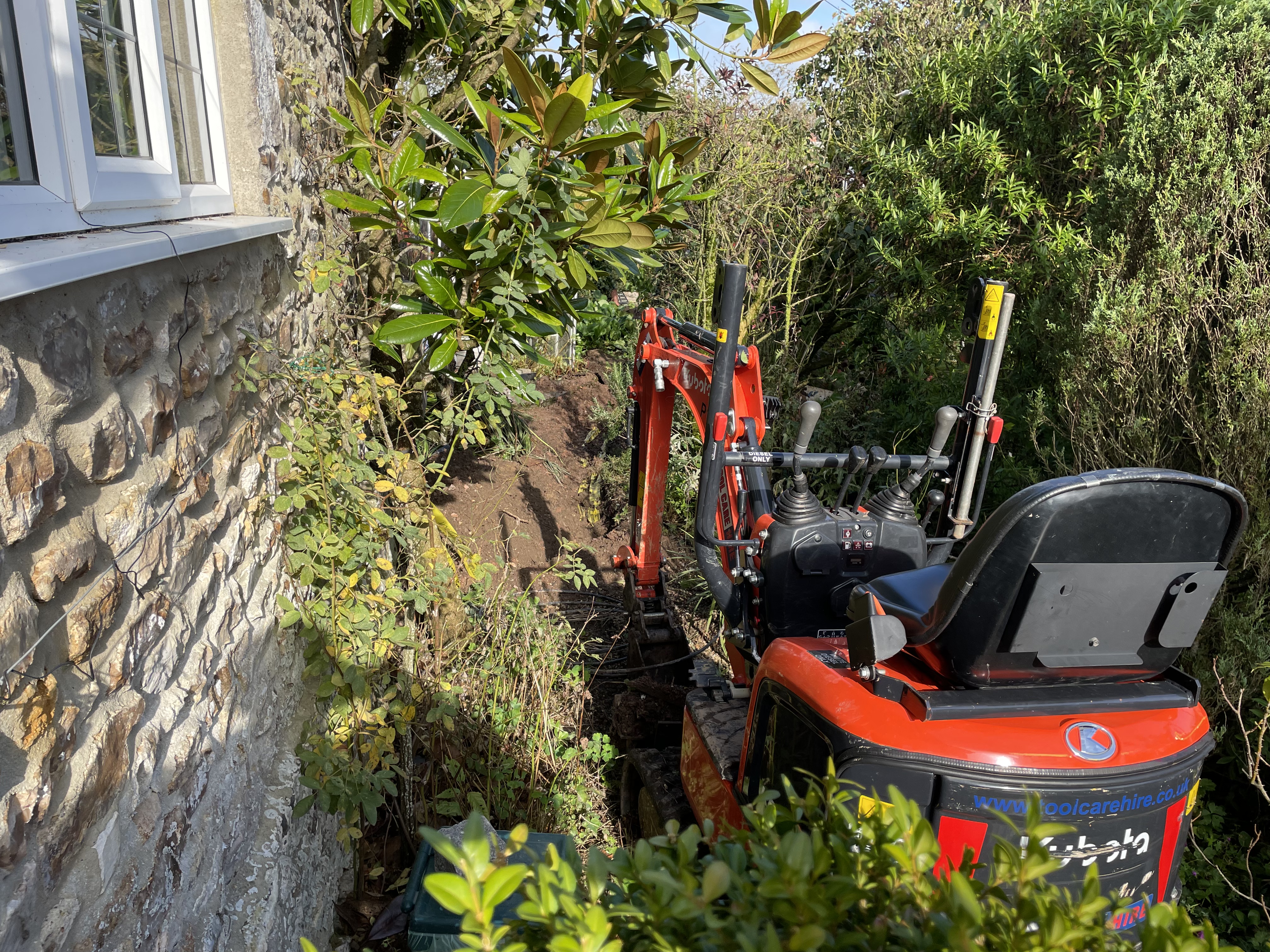
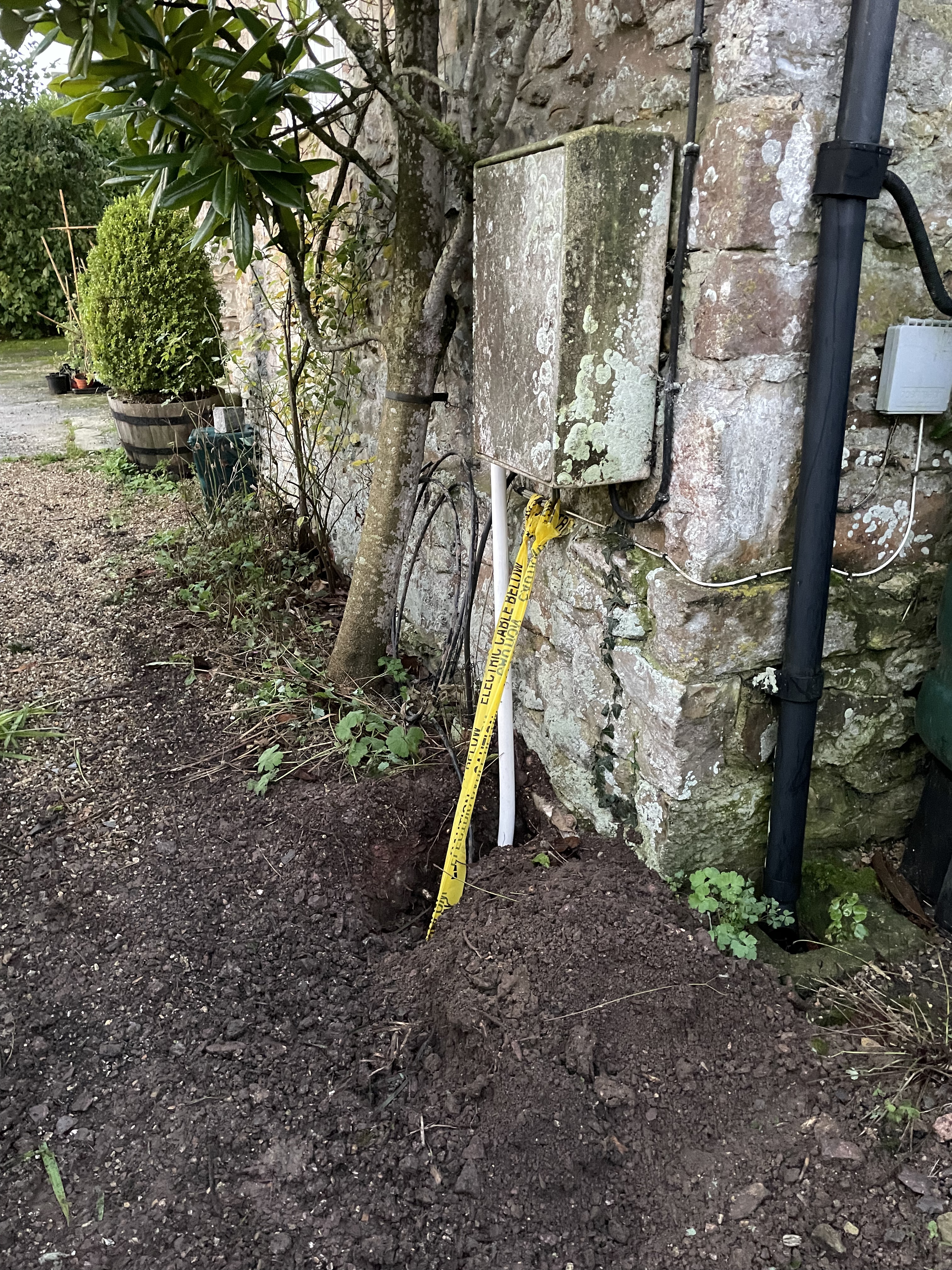
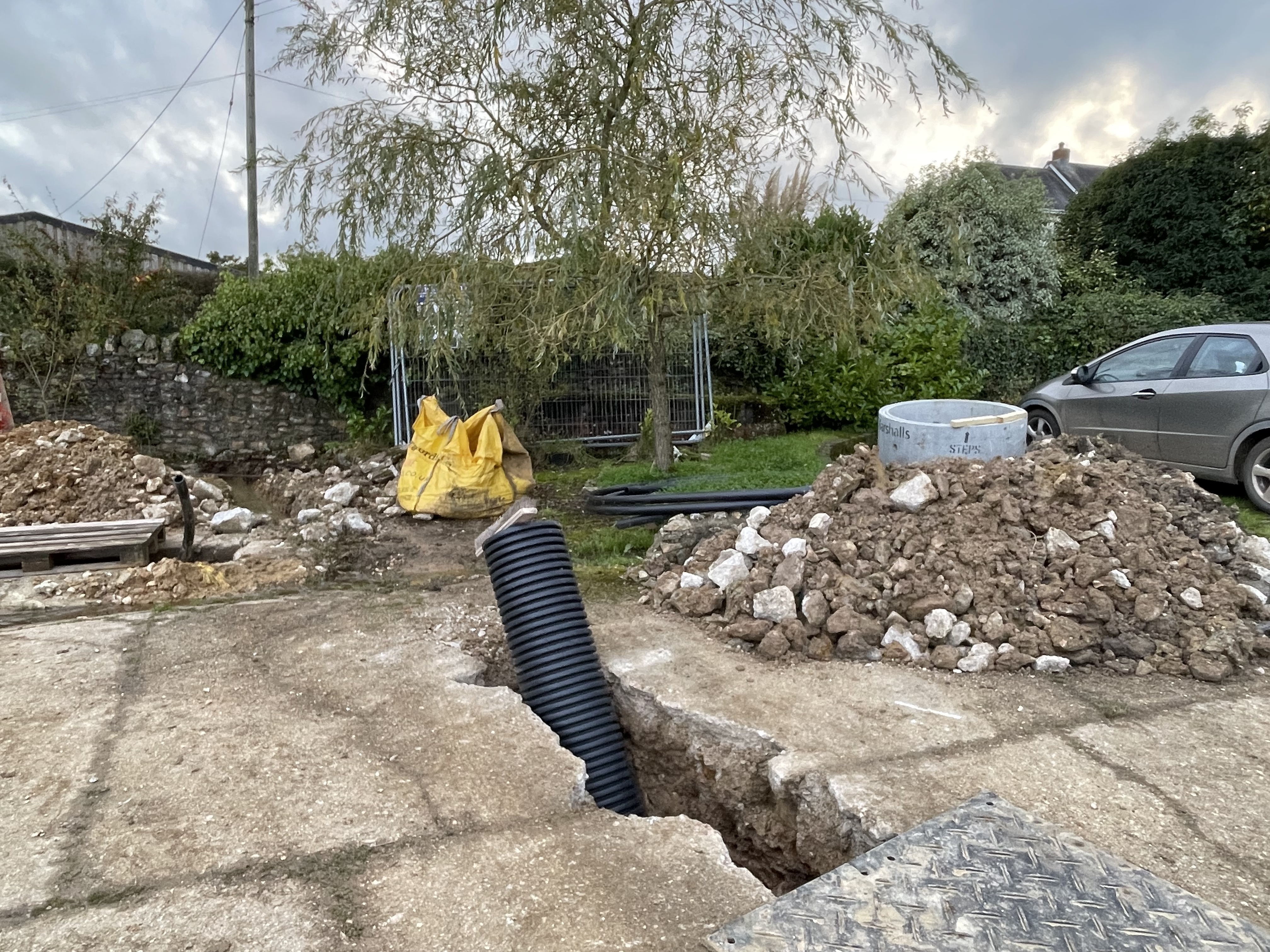
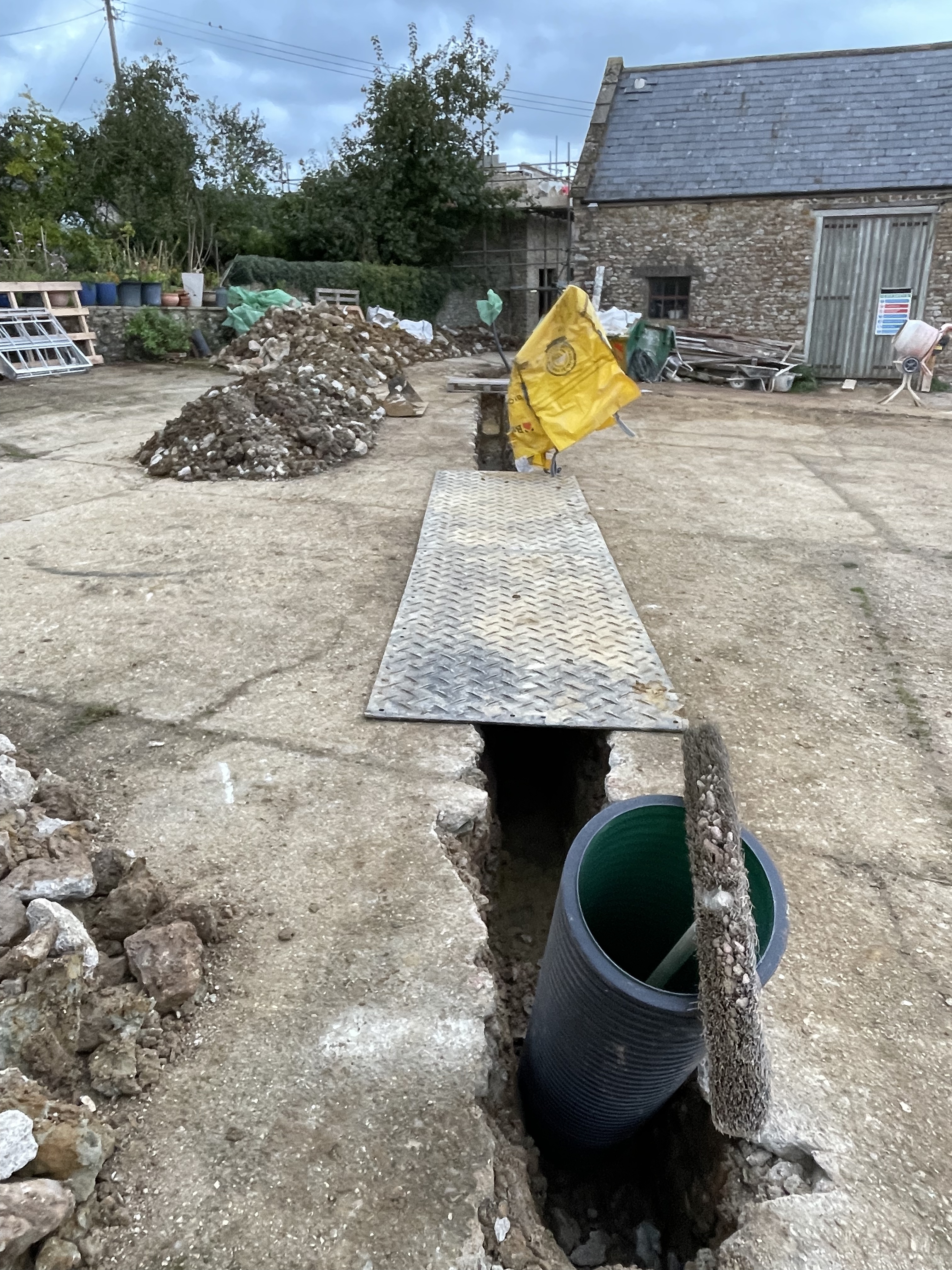
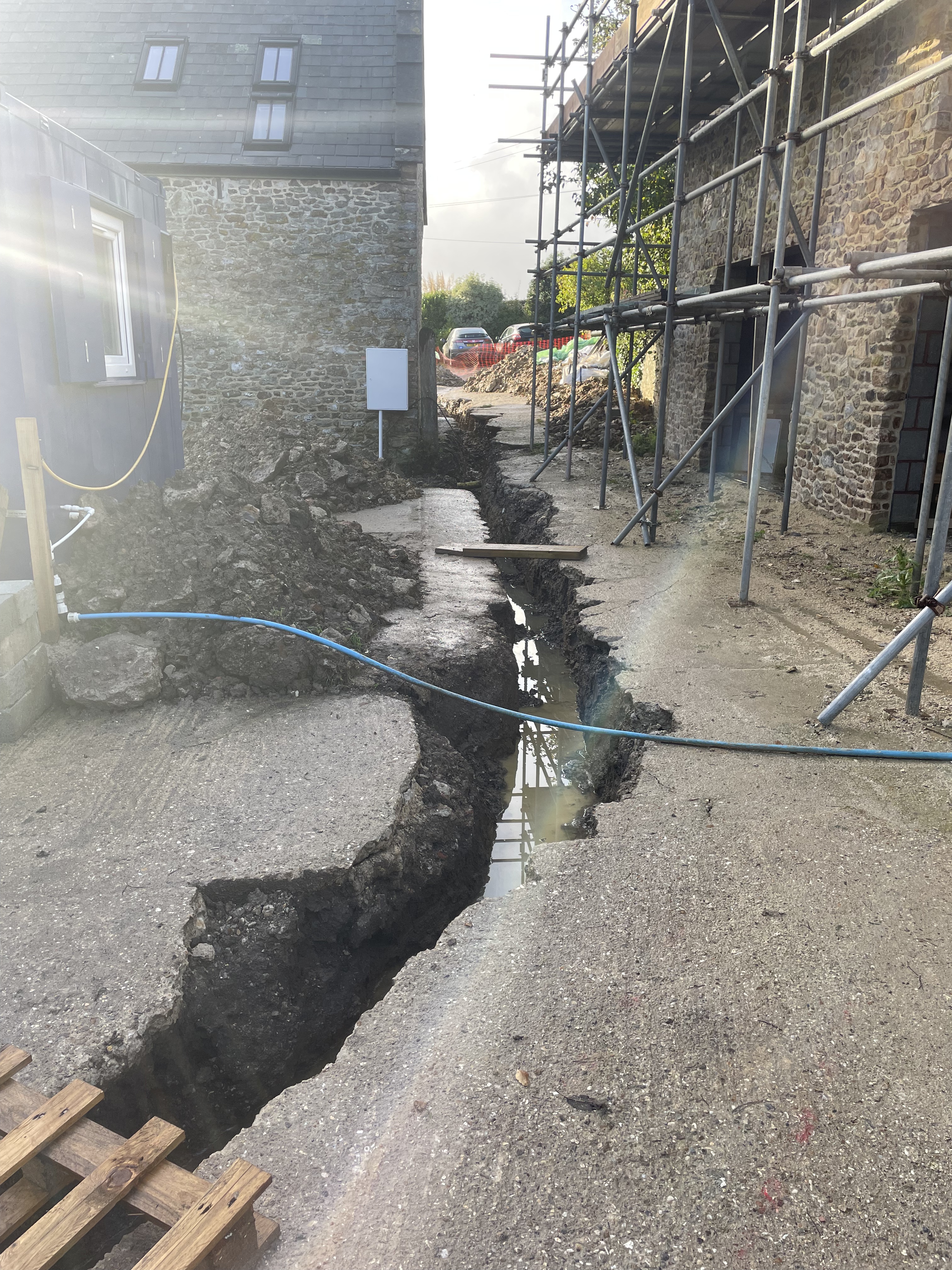
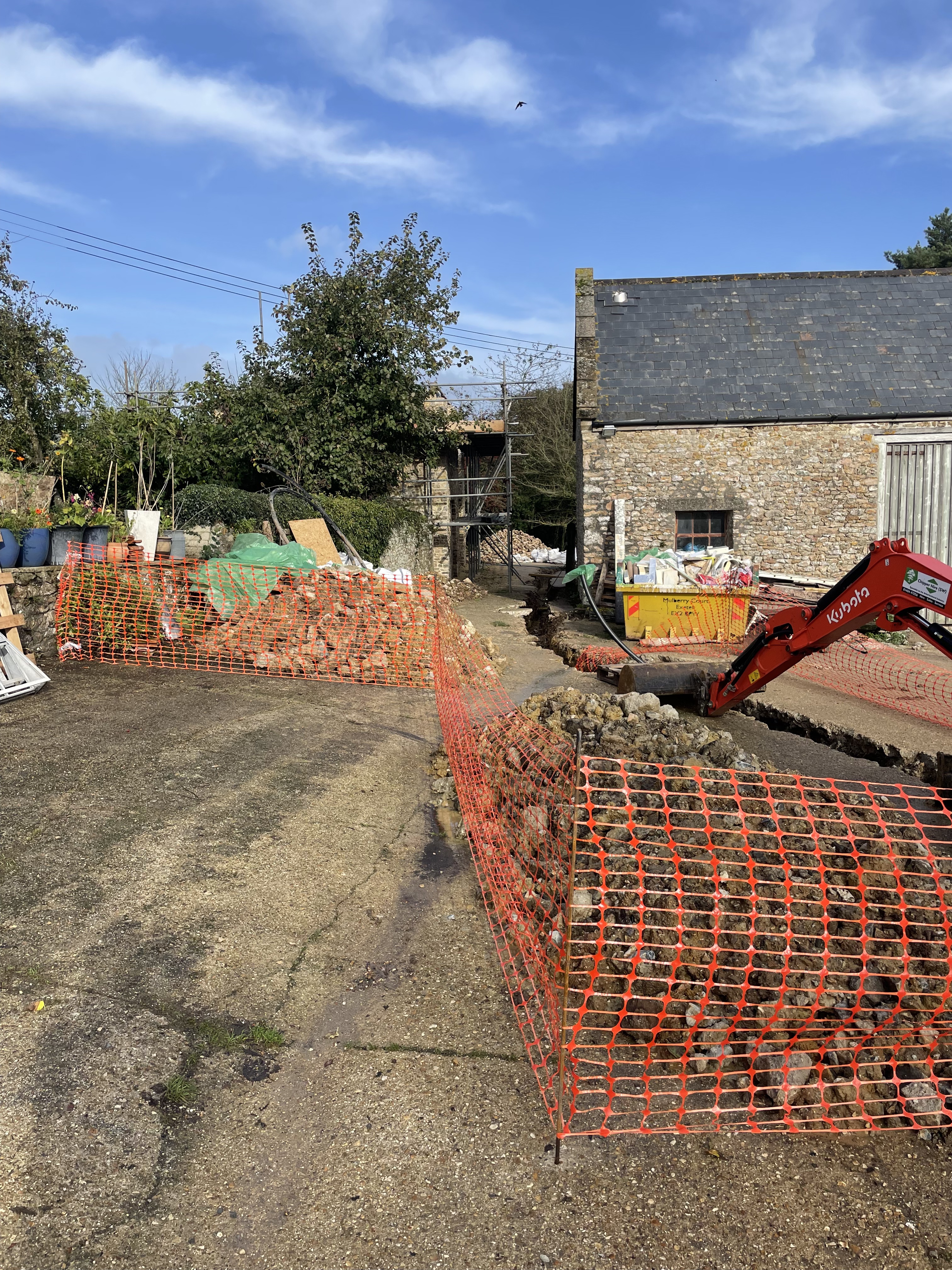
We’ve been lucky that most of the rain has come overnight here, which has given the builders mostly-dry days to dig the remaining trenches outside. It’s amazing how much progress they make in a day – this week they dug up the path down to the orchard so they could lay the electrical cable duct from the farmhouse out to the electricity pole in the orchard, ready to connect them up next week when the pole is removed. They’d managed to dig the trench, lay the cable duct, and put the soil back on top such that all I saw from my laptop was a mini digger going past a couple of times. I hadn’t realised the work had been done until John mentioned the digger had been collected on Saturday morning… The courtyard is looking a real mess though as the main trench has to be left open for National Grid to lay the mains electric cable to our neighbour’s house (the ones our builders are laying the ducts for are the spurs off to the different buildings). The builders will be glad to get this all finished I’m sure, as parking is now a particular challenge!


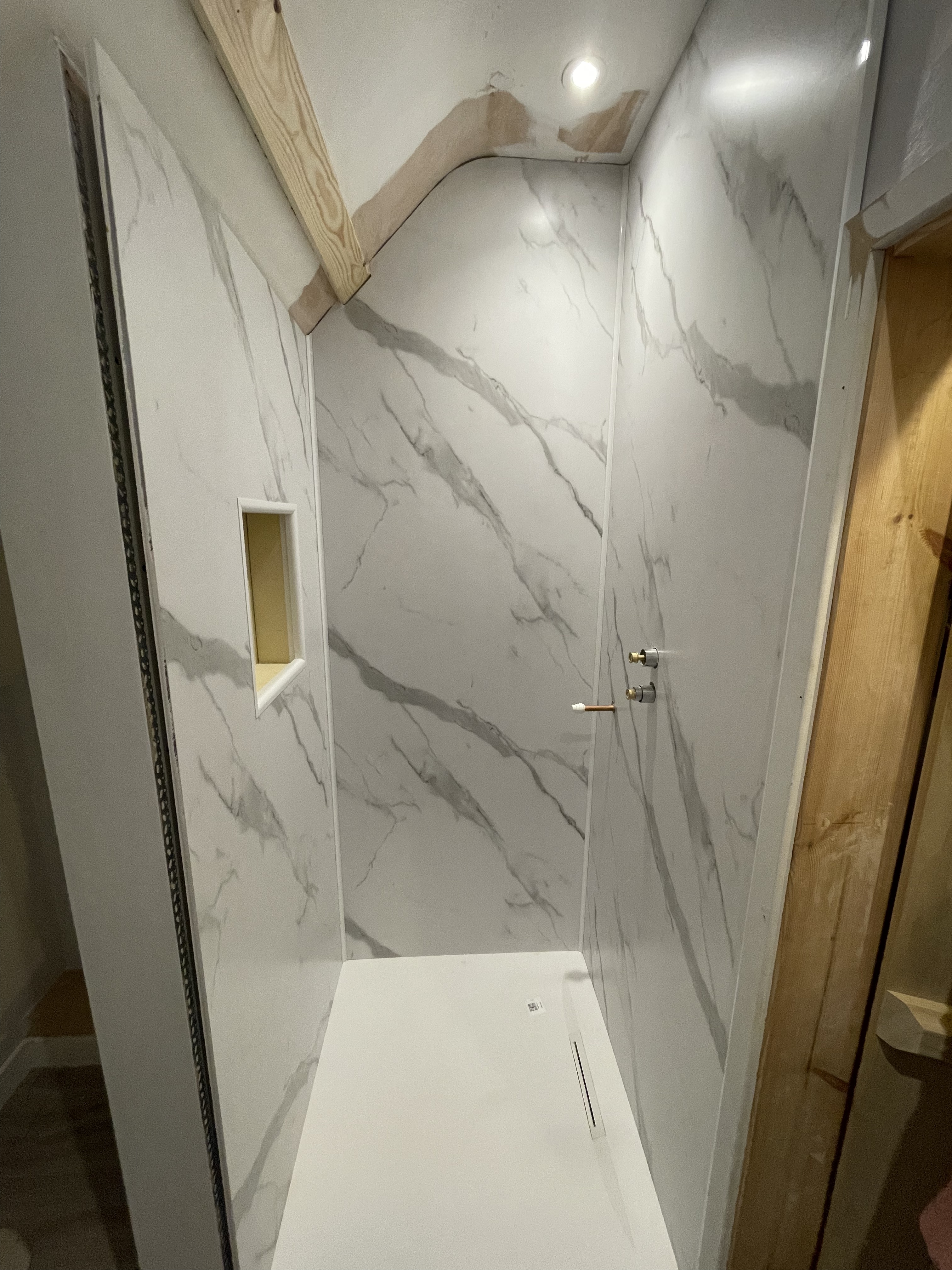
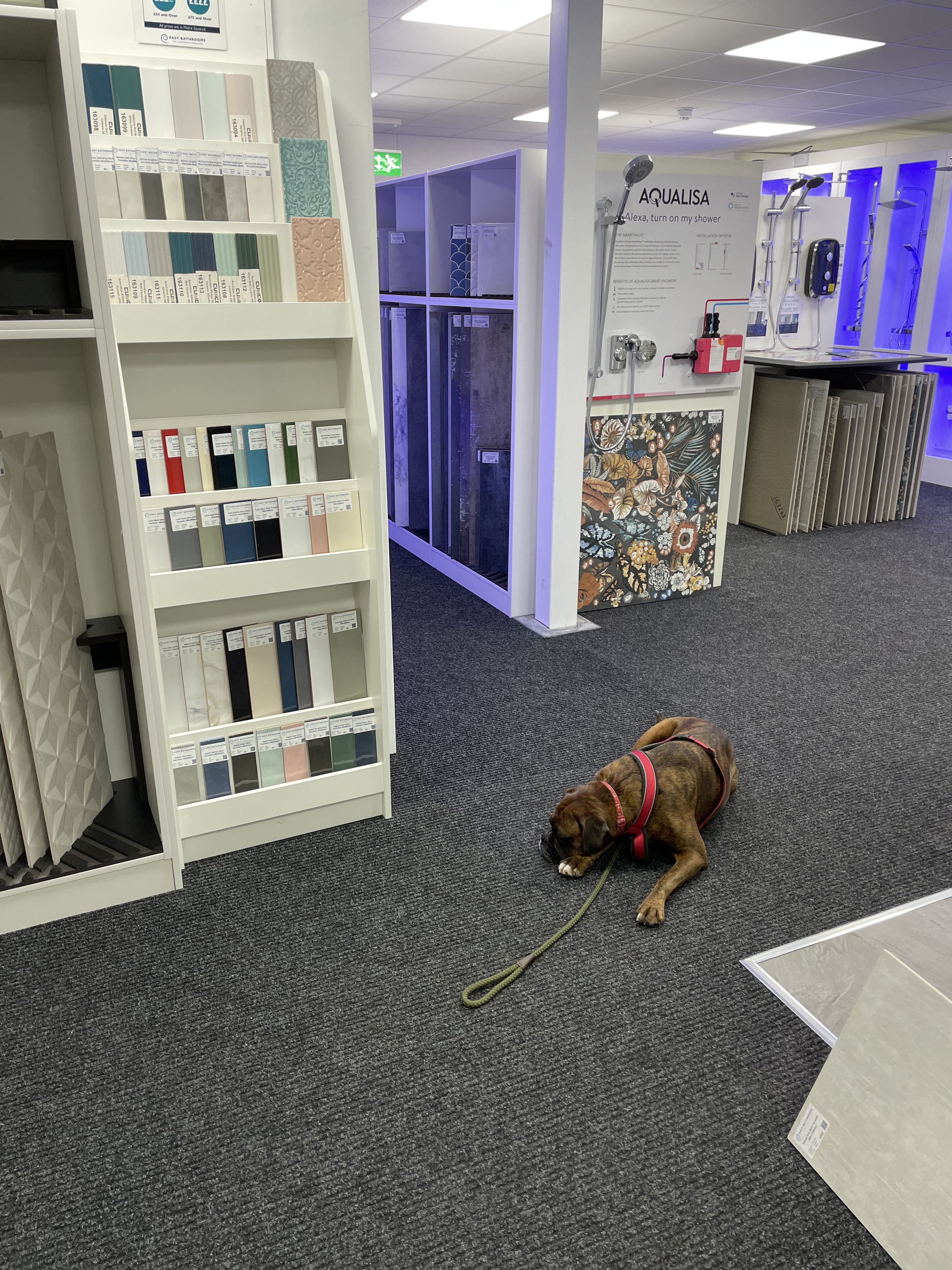
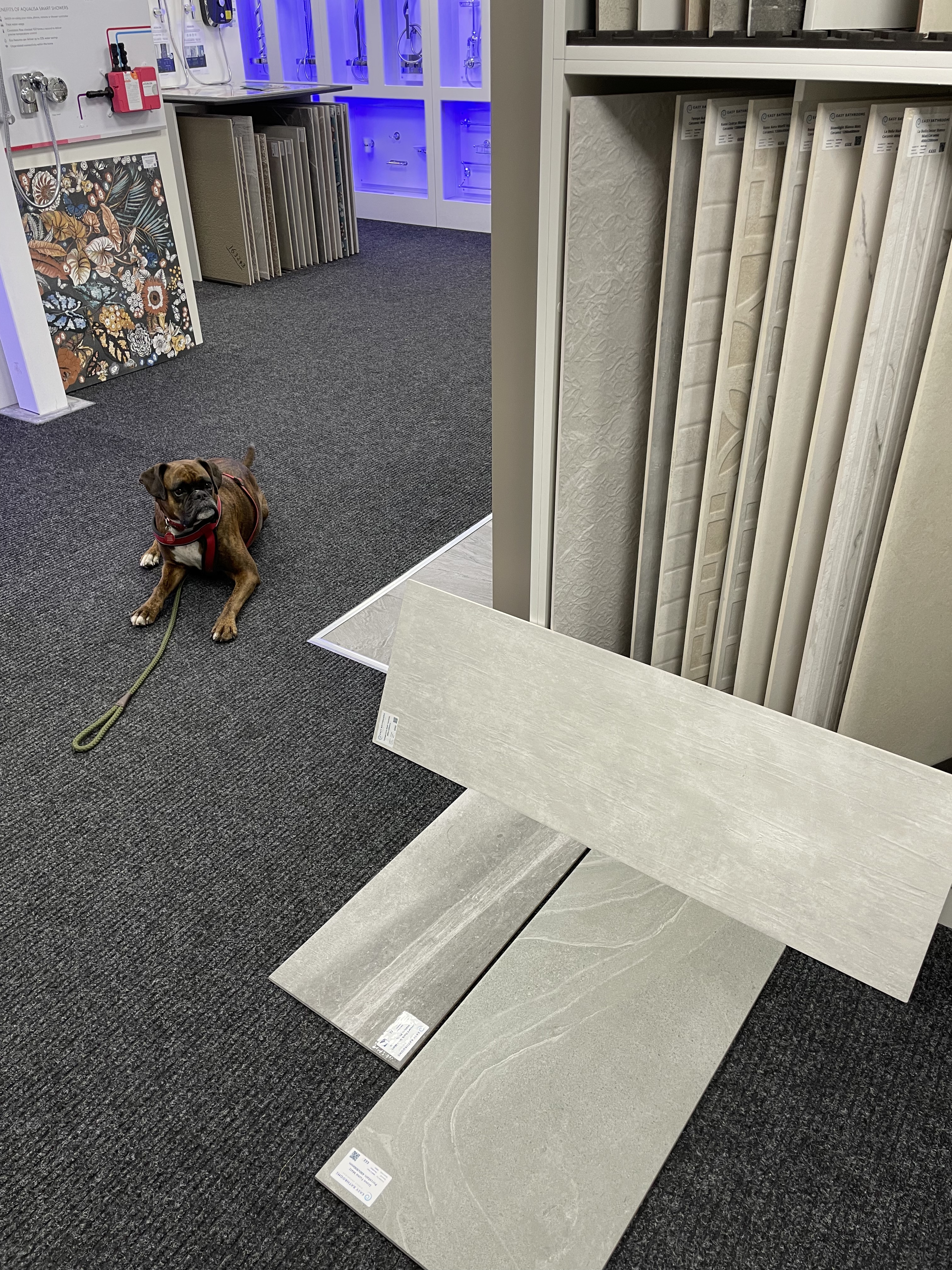
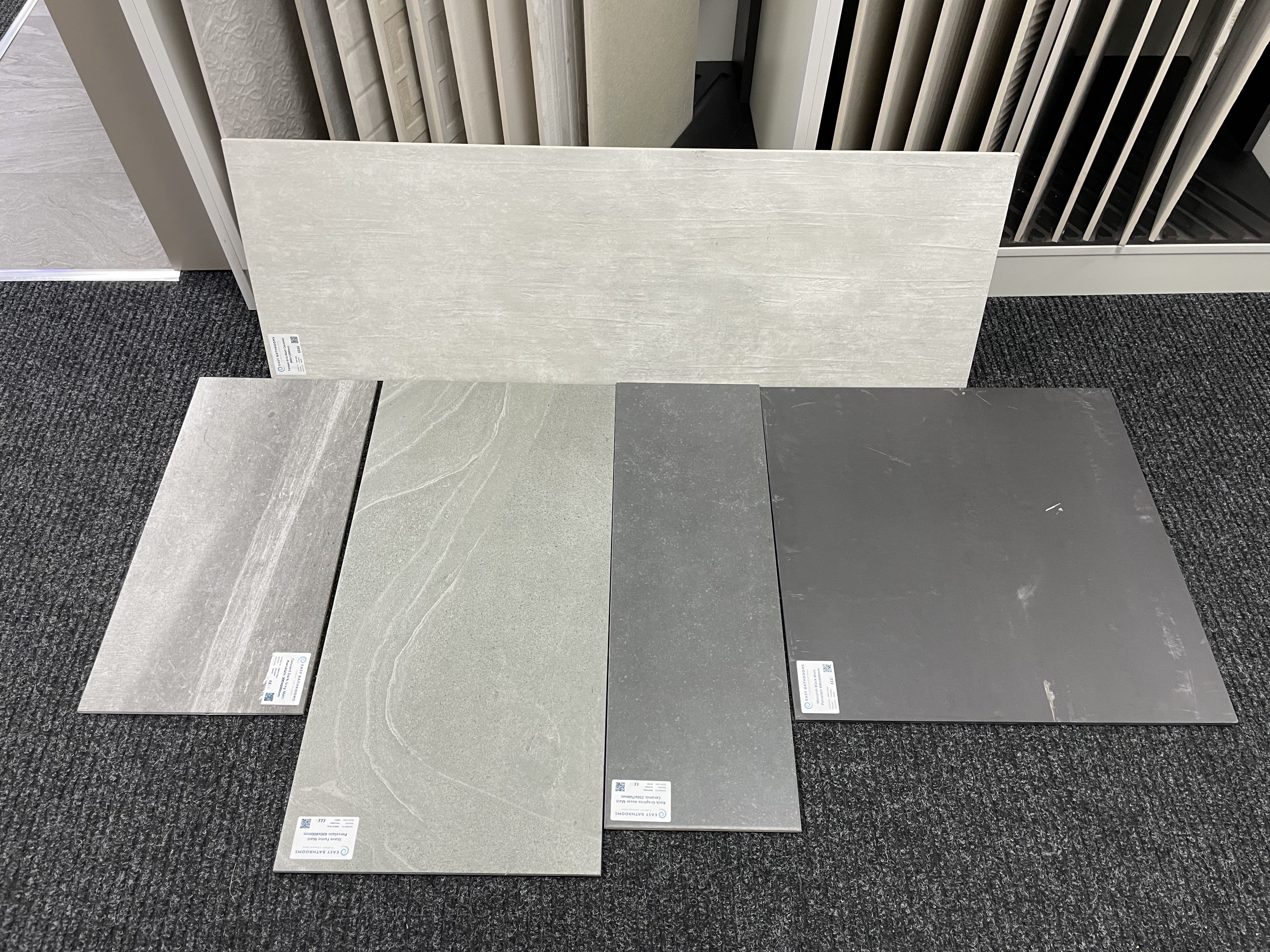
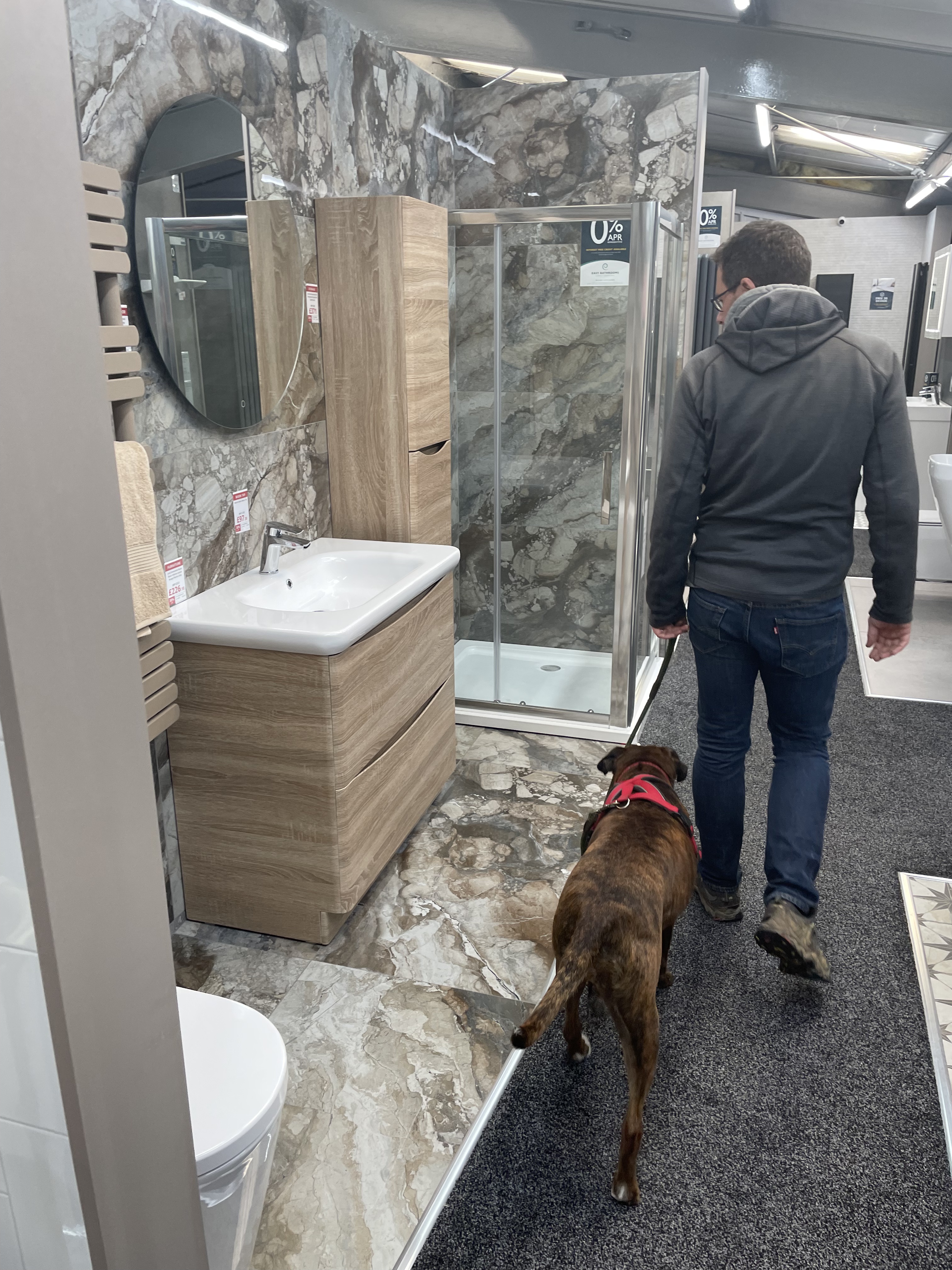
One of the builders had the job of installing the shower panels in our top floor shower room – not quite as easy as it sounds though as he’s had to cut out smaller parts to make a niche in the wall for toiletries, which is looking fabulous. We’ve had to go with shower panels instead of tiles because the floorboards aren’t quite big enough and so the floor ‘bounces’ which creates a risk of the tiles cracking. I can’t believe we were considering the alternative of installing huge new beams to support the floor – which would have added significant cost, time (it needed planning permission) and general disruption. The panels have worked out so well! We did end up going to Easy Bathrooms at the weekend to choose floor tiles for our new house – it’s just over a year since we chose the wall tiles but we forgot to choose floor tiles and so had to go back to find ones that matched. We took the pup as it was the only time she’d get to go out for the day – safe to say she was mostly thoroughly bored!

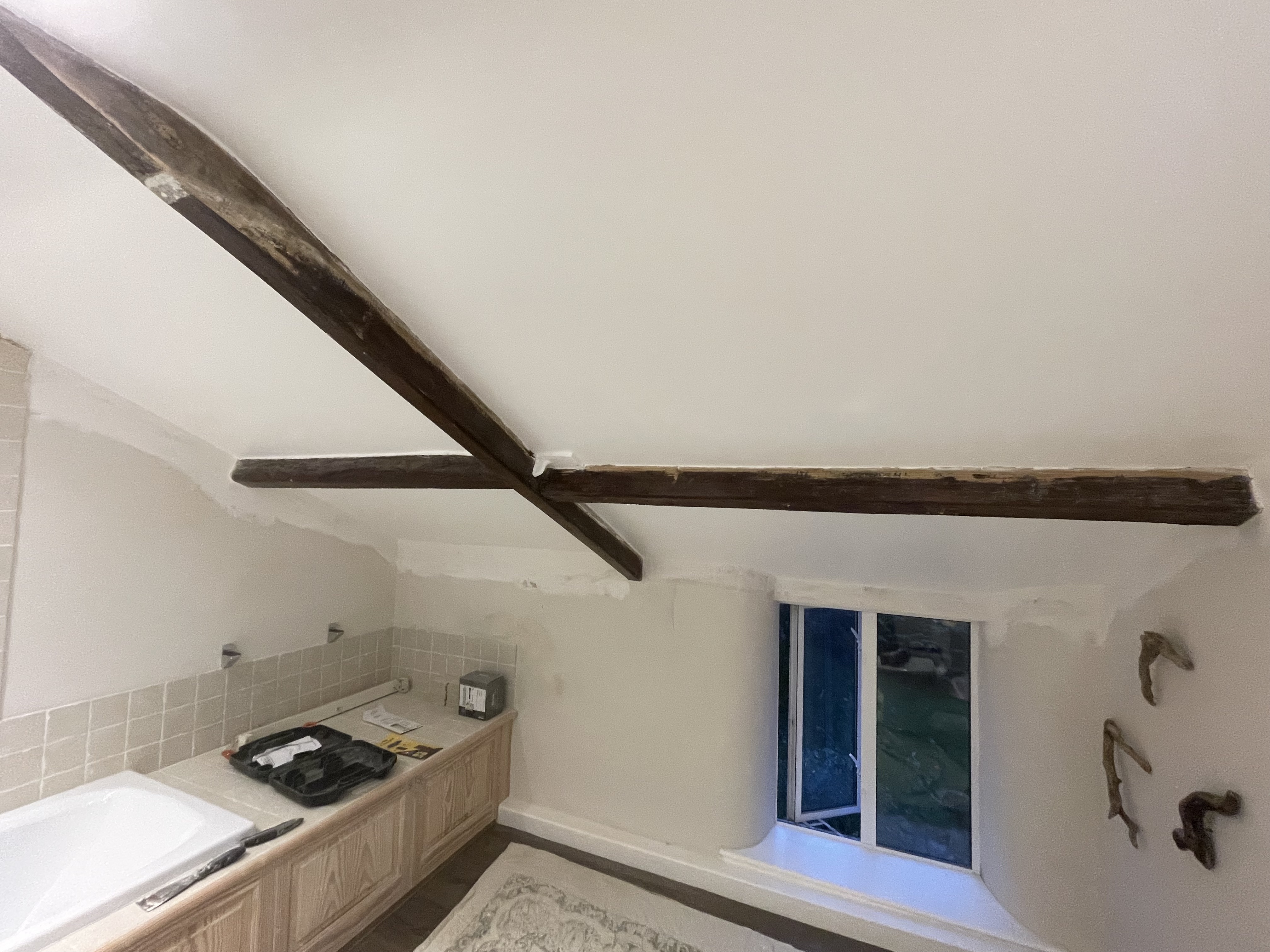
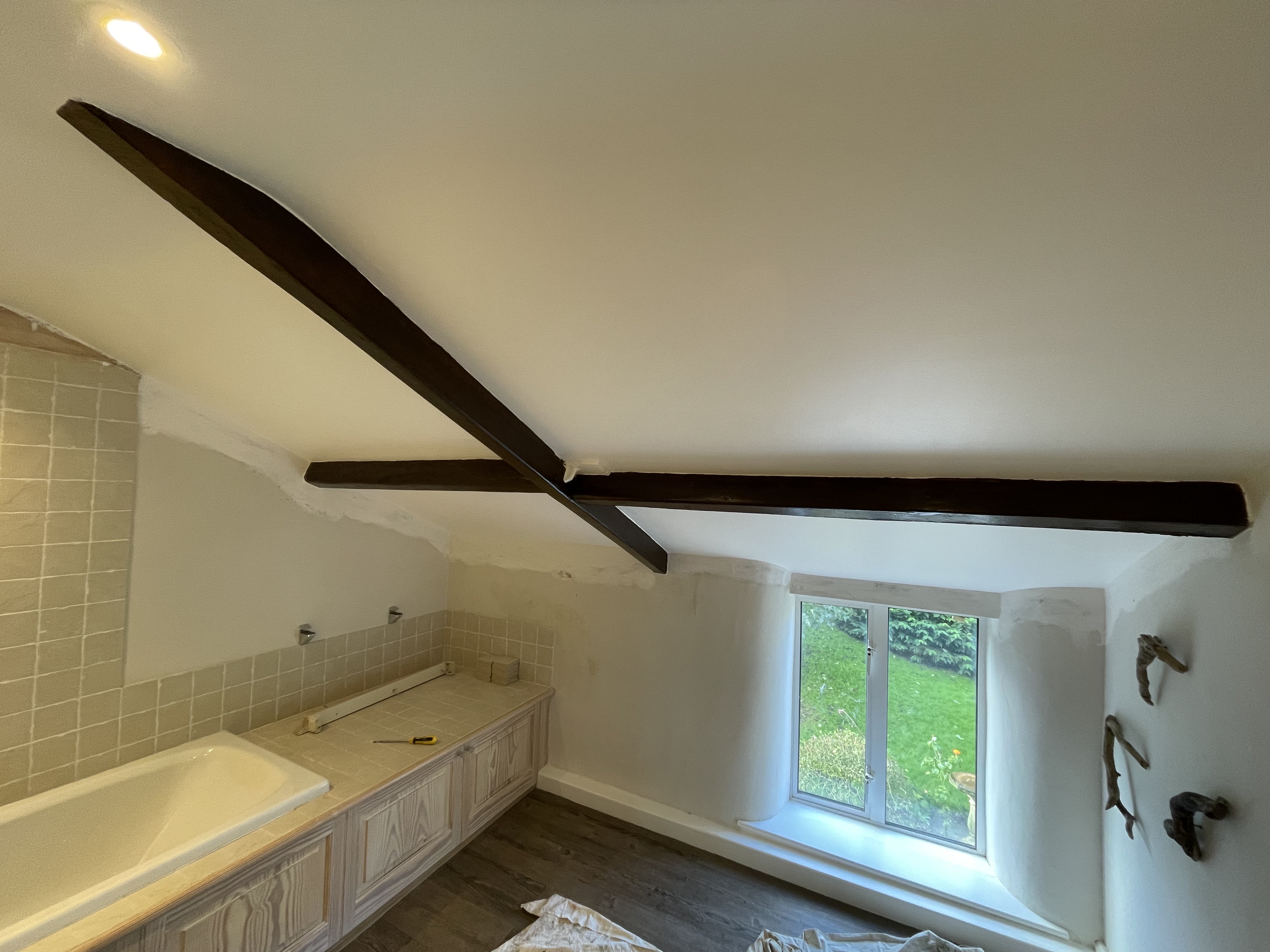
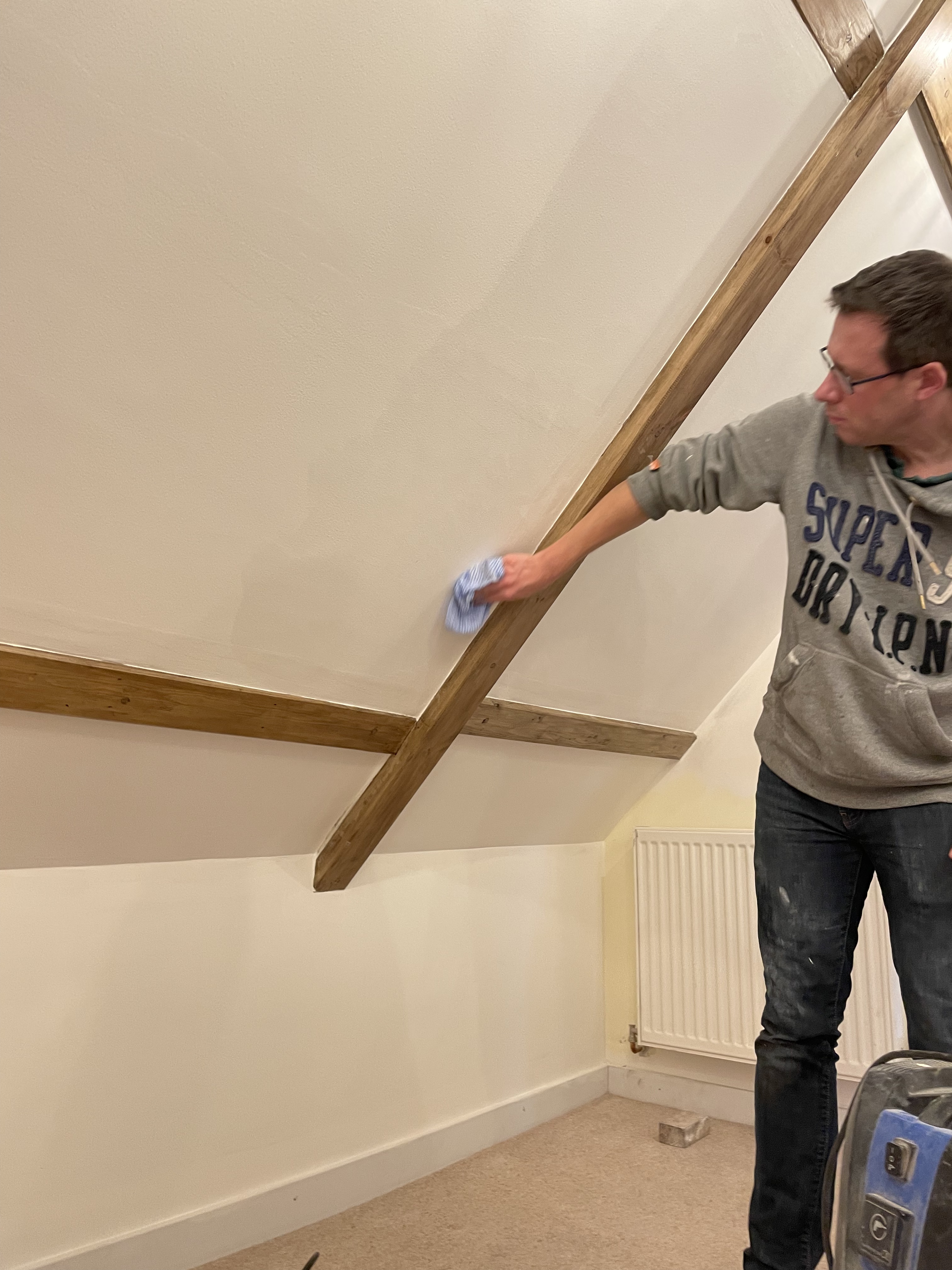
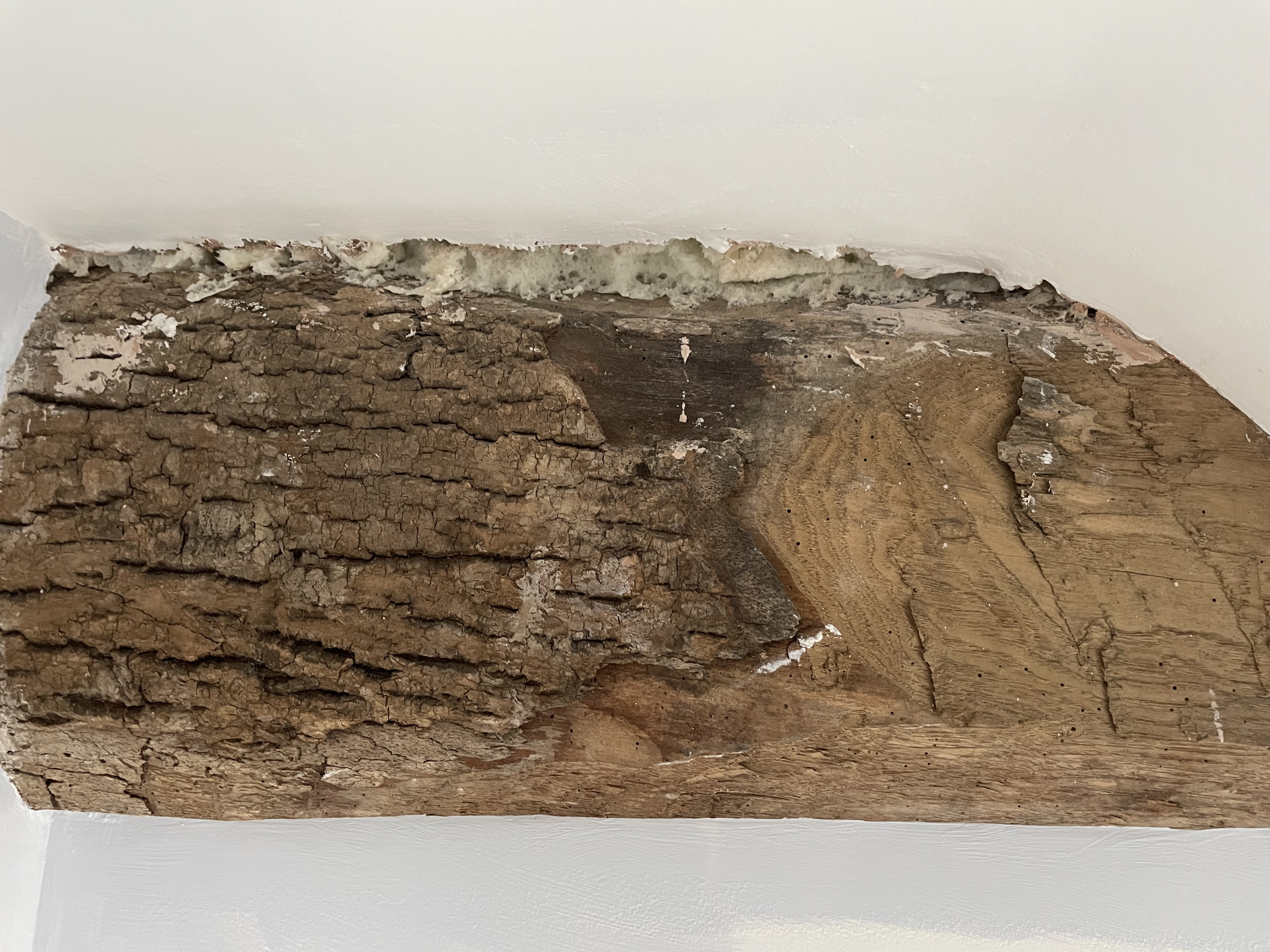
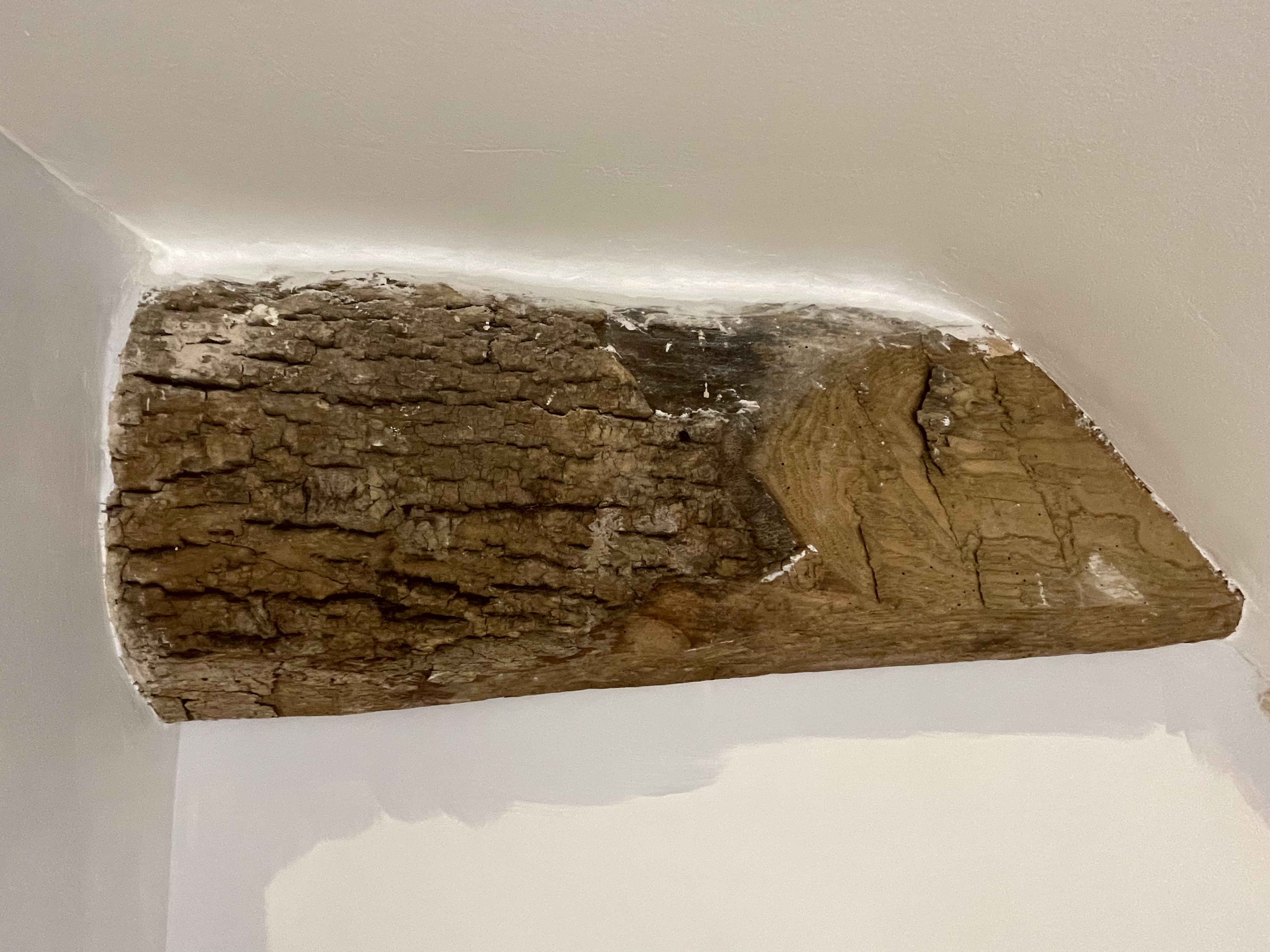
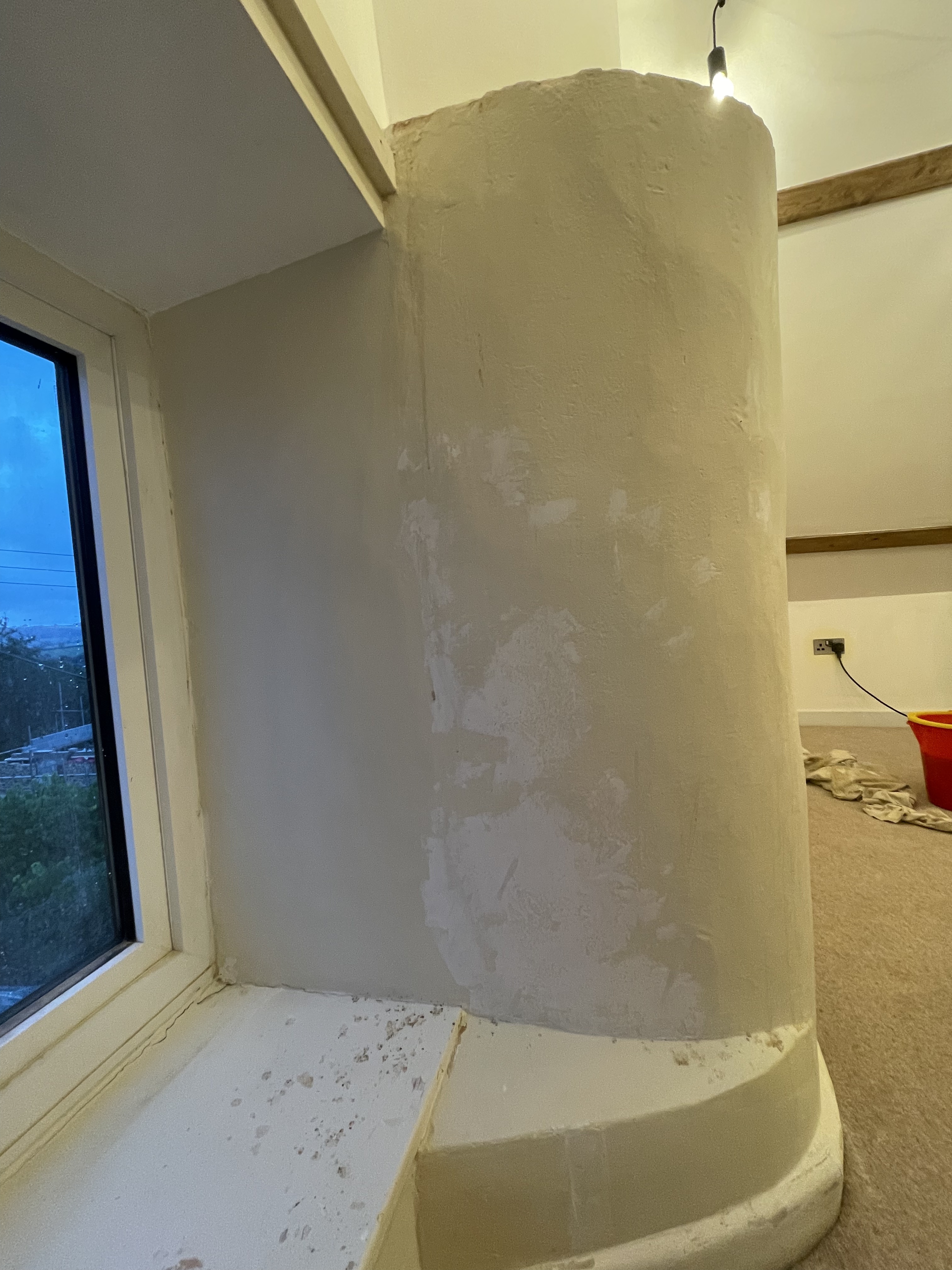
Our evenings and weekend have been totally taken up working on the top floor – we spent almost the entire Saturday caulking, filling holes and sanding it down, which was a real frustration given how much painting we have to do. At least we managed to get bits done in the evenings and on Sunday, so we’re starting to see progress. John has been busy during the week touching up the paint in the bathroom and ensuite, and sanding down and staining the beam where the ceilings have been raised. There are still a fair few snagging things to finish, but it’s definitely more motivating when you can see the difference.
One major frustration is our aga which broke last week, and, after being repaired on Thursday, broke again after a power cut on Friday night. We should be spending evenings making jam or chutney out of all the orchard fruit but our aga is our only way of cooking (except the microwave and you can’t make jam in that!). It’s so frustrating seeing the fruit slowly go off and not being able to do anything – there’s only so much space we can make in the fridge to elongate its life…
Luckily John has found a new distraction which has occupied/excited him this week. So much so he offered to write a guest blog section…. 😊
So, this is where I (John) take over for the remainder of this week’s blog. If you’re interested in geeky energy system stuff, then read on. Otherwise, I’d suggest you give the rest of the blog a miss and we’ll see you next week.
When we had our solar tiles and batteries installed, I’d only really considered the savings benefit of self-generation. However, this week we switched electricity supplier and registered for a ‘smart tariff’, which utilises our smart meter’s functionality by providing our new supplier with a meter reading every 30 minutes, enabling them to charge different prices for each half hour of the day. The tariff we are now on is as close to real-time pricing as you can currently get. Around 4pm each day, the unit rate for each half-hour for the next day (based on day-ahead wholesale prices) is communicated. There is a price ceiling of 100p/kWh in place just in case things get silly, but there is no price floor, which I’ll come back to…
Electricity generation costs tend to be very low overnight, rising in the morning with a slight fall in the afternoon before a significant spike between 4pm and 7pm when they are highest. This cost is reflective of the changing mix of energy sources required to match supply to demand. When demand is high, primarily it’s the gas turbines that are ramped up, so the cheap energy from wind, solar and nuclear is supplemented by an increase to the more expensive, and more carbon intensive forms of generation. On windy and sunny days prices overall are cheaper and the carbon intensity is lower. So far, our prices have ranged from over 50p/kWh all the way down to -1.4p/kWh, yes that’s minus 1.4p/kWh.
By passing on these real-time prices to the end user, our smart tariff provides the appropriate ‘price signals’ to incentivise ‘load shifting’ – changing our behaviour so that we use less electricity from the grid in the expensive and higher carbon periods, and do things like washing in the cheaper and greener periods of the day. And this is made possible by our batteries and some pretty smart software…
Our batteries now automatically charge from around 1am on the lower rates, based on the forecast solar generation for the next day and how much electricity the ‘brain’ thinks it will generate. Then around 2:30pm they automatically top up again before the start of the higher 4-7pm price spike. Hopefully during the sunnier summer months we’ll generate a lot more power and there’ll be a smaller requirement across both charging periods.
In the past couple of days, we’ve had two ‘plunge price events’ where for 30 minutes we’re actually paid to use electricity from the grid. This helps reduce the other more expensive means deployed to balance the grid when demand is very low and the wind is blowing (such as paying generators to switch off wind turbines). Last night this meant us simultaneously charging the batteries, running the washing machine, and me taking a (electric) shower. And then this morning‘s ‘price plunge’ gave us an extra incentive to be up by 7am to charge the batteries and be paid to shower before 7:30am. In future I’ve also found a way to tell our hot water tank’s emersion heating element to pull from the grid when we need to ‘do our bit’.
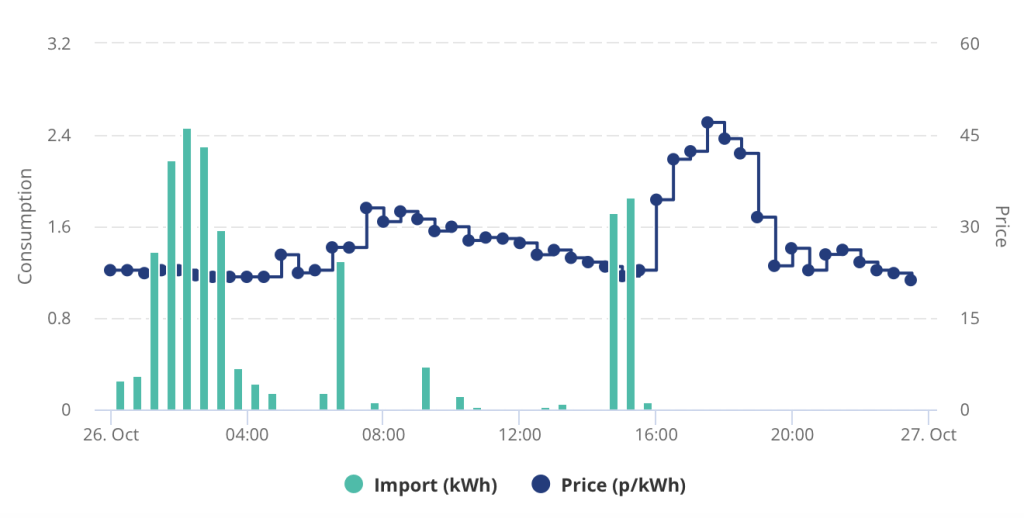
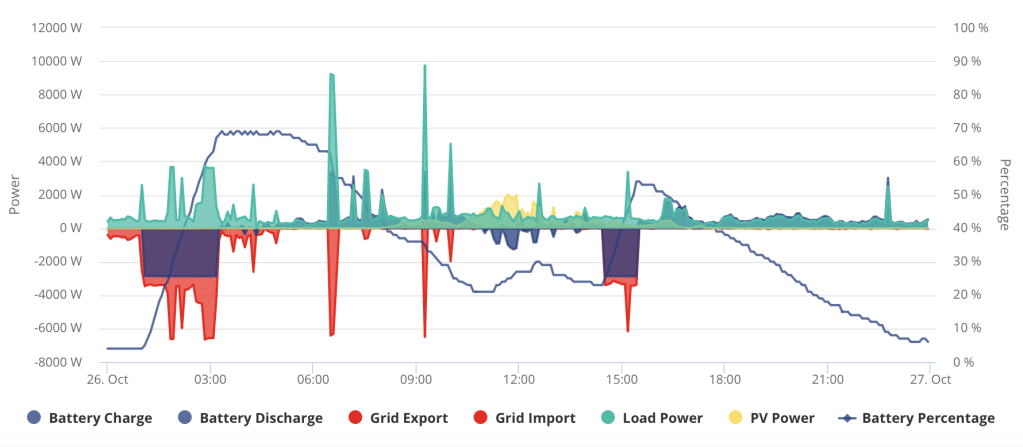
Second image: Hopefully during the summer months the amount we need to import will be lower
The next step is to sign up to the equivalent ‘export’ tariff which will pay out for any surplus electricity we supply back to the grid. This is unlikely to be of any use though the winter, but hopefully in the sunnier months our now smart early 19th century farmhouse can reach the next level and become a power station!
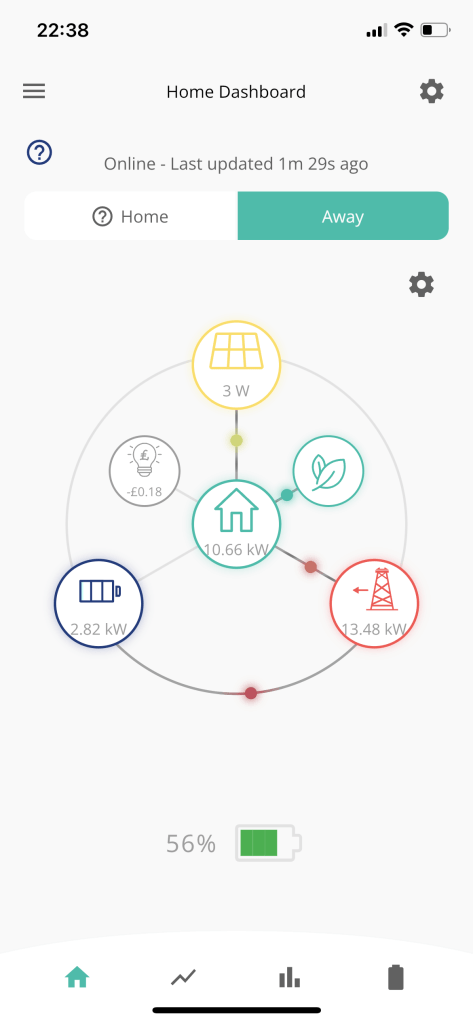
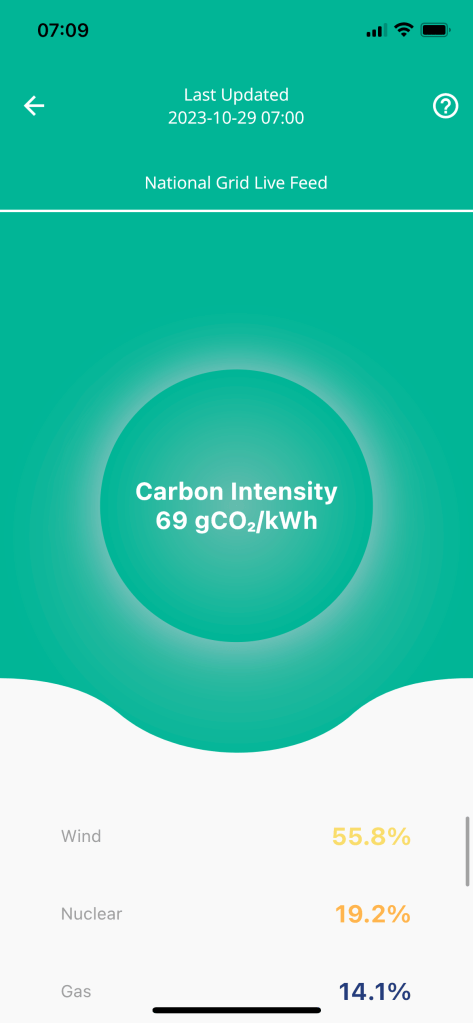
Second image: A windy Sunday morning meant an early start to shower when the price was negative
 Ley Farm Cottages
Great contribution John. I hope we shall hear from you more often. If you are interested in the balance of energy sources I recommend the web site Gridwatch. Also good work with the painting; it’s all starting to come together.
LikeLiked by 1 person