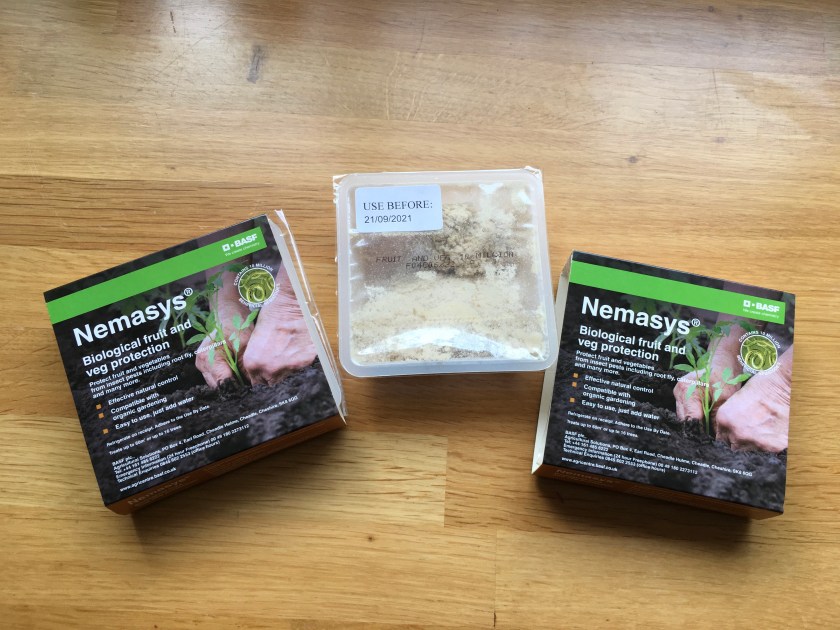
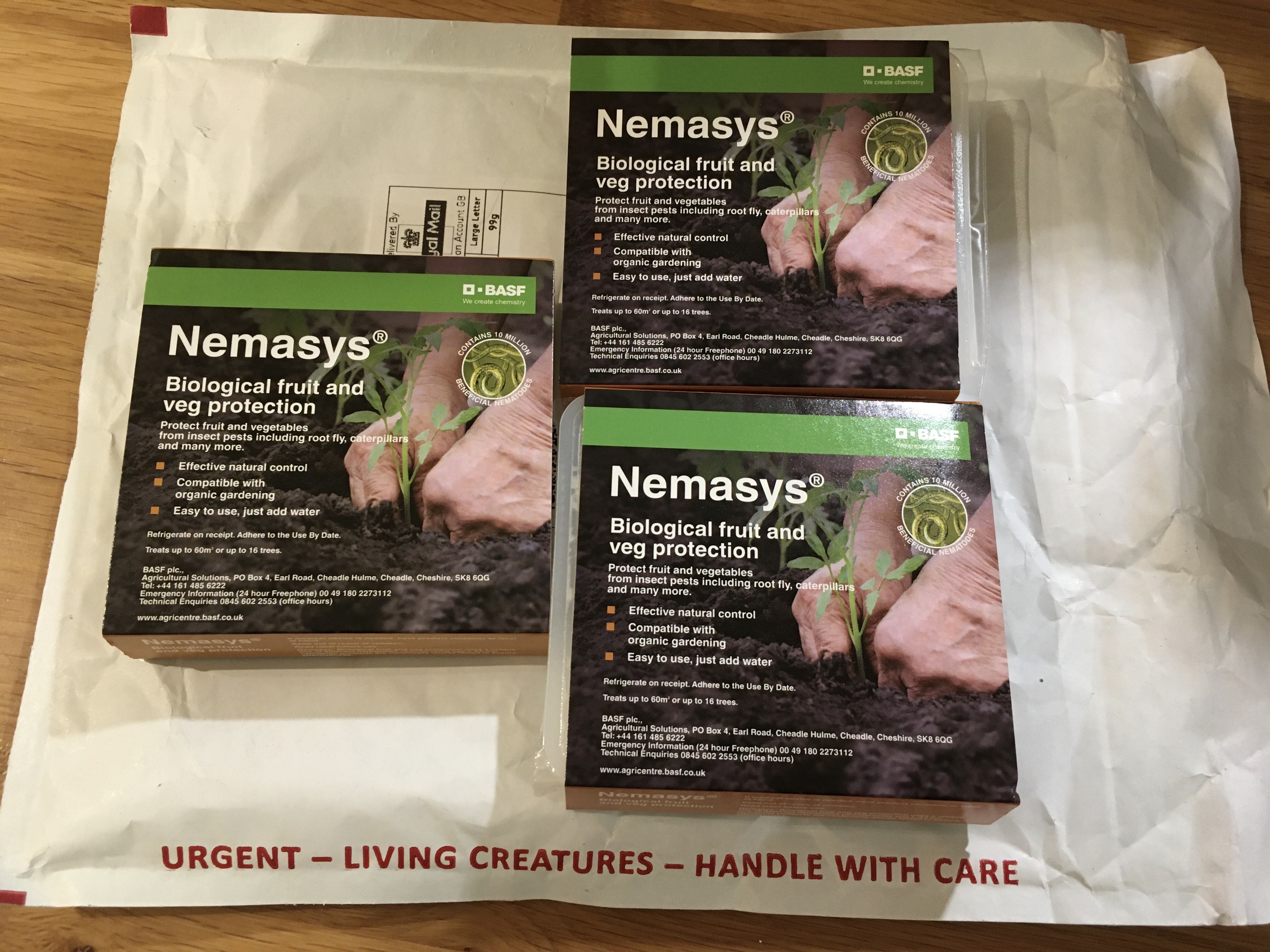
Yesterday saw the start of this year’s nematodes treatment in the orchard – ten million in each packet. We applied our first treatment last year after we found codling moth and plum moth in most of our cooking apples and plums – but it was late in the year by that point (October) and we had a pretty bad attack of moth, so we never thought we’d get rid of them completely. Codling moth and plum moth caterpillars feed off ripening fruit and, around early autumn, start to drop off the fruit and hide under the tree until the spring, when they emerge as moths. Then they lay eggs on the fruit, and the cycle starts again.

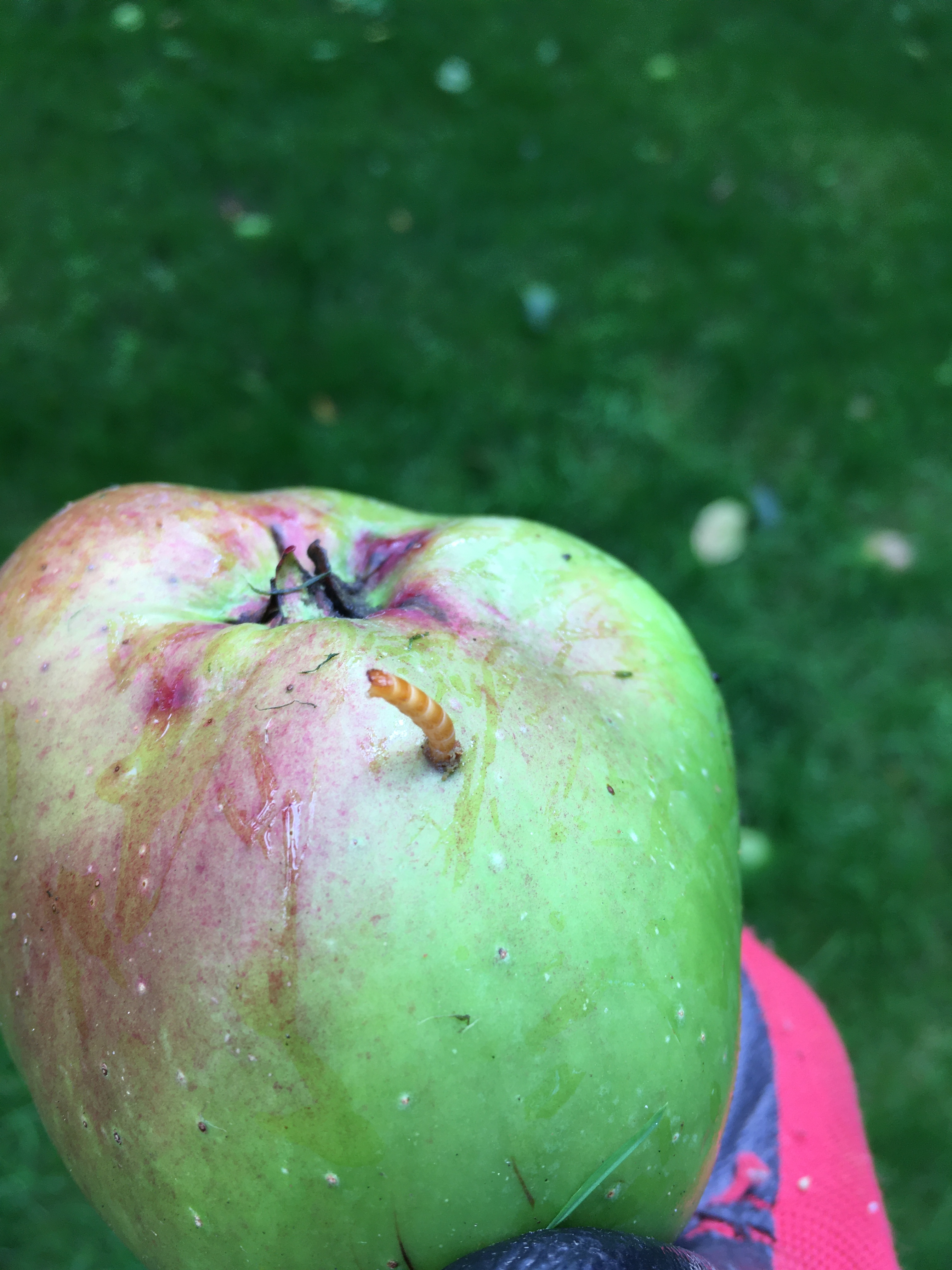
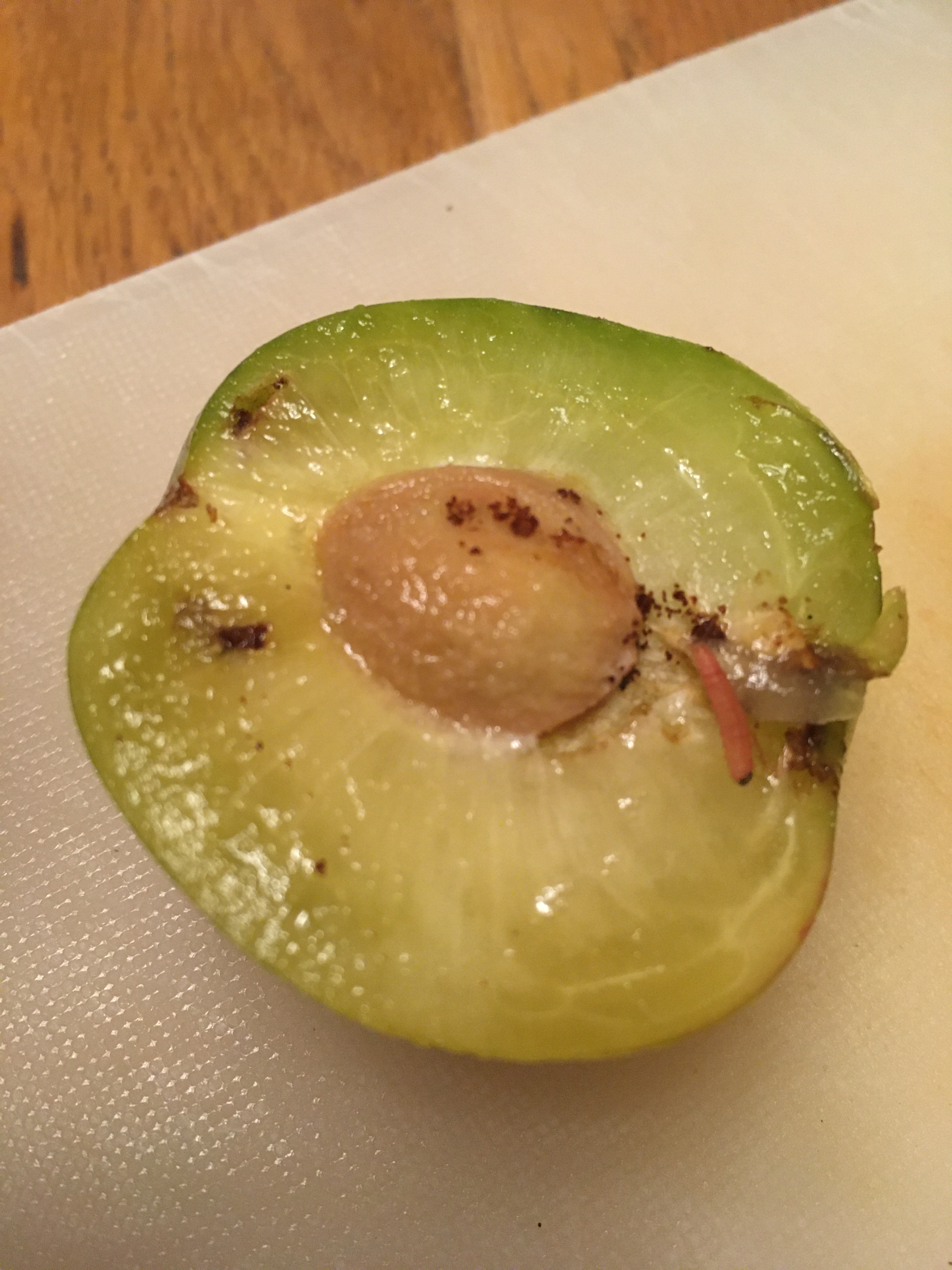
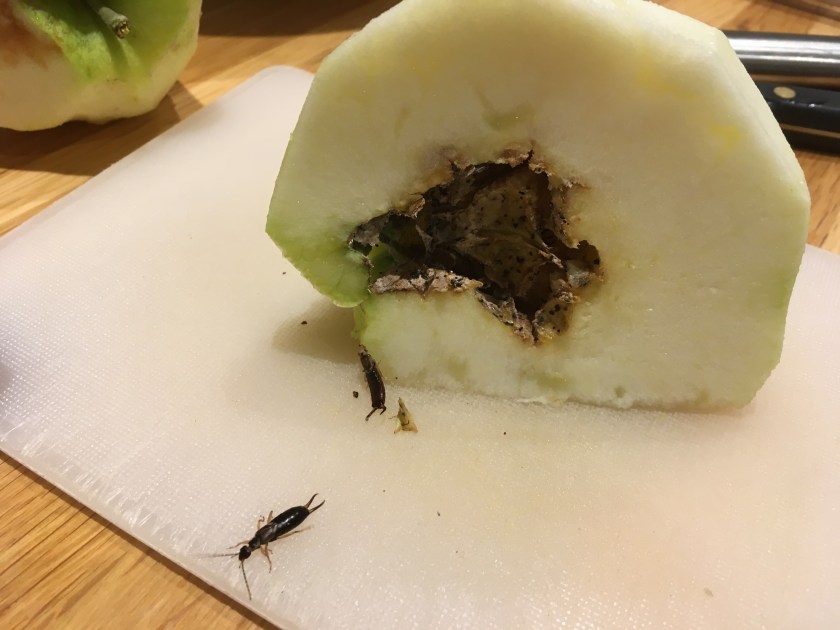
This year, although a lot of the fruit has been later than last, we’ve definitely seen fewer apples and plums affected – and about half of those only have partial damage, rather than the whole fruit being ruined. We put up pheromone traps in the spring and didn’t catch any moths, so that’s a good sign too. It’s still a little disconcerting to cut open a plum and find a little pink caterpillar staring back at you, and we’ve had one case of earwigs coming out of an apple, and found one caterpillar sticking its head out of the apple (we didn’t see that last year), but it feels like our efforts are working – albeit slowly!

Spraying nematodes is a pretty miserable job – you’re supposed to do it in the evening when it’s overcast, and the tree and soil needs to be soaked first. Because you’re spraying the trunk and main branches as well as the soil, you’re often spraying above your head, and when water drips down onto you, you’re not sure whether it’s the clean water from soaking or the nematode-filled spray. Not so nice either way! You’re also supposed to do up to three treatments a week apart, but as nematodes are living roundworms, they have an expiry date, which puts the pressure on to get the spraying done on certain evenings. Probably a good thing actually, as otherwise we’d be putting it off as late as possible!!
Hopefully this year’s treatment will make further inroads into removing the moths, and next year we can be confident in biting into the fruit, without having to cut it open first!

 Ley Farm Cottages
Hopefully after all your efforts, next year you will bite into unblemished fruit 🤞🤞
LikeLike